
Can Europe Learn from Its Mistakes?
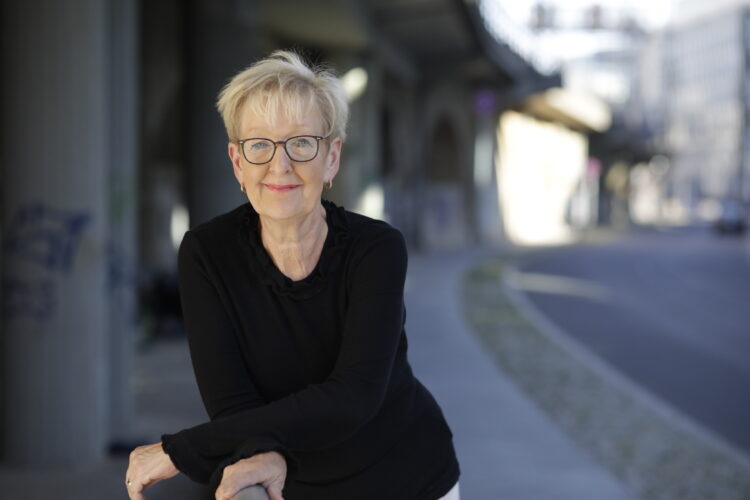 Dr. Stefanie Babst Photo: Babst
Europe underestimated Putin’s drive for expansion, continues to bank on Trump as a mediator, and remains stuck in reaction mode instead of taking the initiative. NATO veteran Dr. Stefanie Babst on a series of political misjudgments — and why the continent must finally find the courage to course-correct.
The consequences of political misjudgments are often severe and long-lasting. This is especially true for interstate relations. Whether the reasons lie in personal hubris, ignorance, or sheer folly is of secondary importance. Examples of fatal misjudgments that have led to massive instability, crises, and in the worst case war fill entire history books. And yet they keep repeating themselves.
Europe, which for decades saw itself as a bastion of peace, stability, and prosperity, is not immune to this. It studiously ignored Russia’s imperial expansionist ambitions. By 2008 at the latest, when Moscow attacked neighboring Georgia, Europe’s leaders should have grasped that President Putin would not shrink from using massive military force to pursue his fantasies of restoring ‘Russian greatness.’ That he had the pro-European Ukraine particularly in his sights was plain to see for anyone willing to look. It was a classic misjudgment on the part of many European leaders, especially in Germany, to underestimate Putin’s strategic ambitions and his willingness to wage war.
The human, economic, social, financial, and ecological consequences for the people of Ukraine are immense. It will certainly take longer than a generation before Ukraine can recover from Russia’s war. The strategic consequences of the brutal military attacks on Ukraine are equally unforeseeable. This is due above all to a second misjudgment that the majority of European leaders stubbornly cling to even in the fifth year of the war: they continue to hope that the Russian aggressor can somehow be persuaded into a ‘peace compromise’ with the help of U.S. President Trump, provided Moscow is not provoked, the West does not directly participate in Ukraine’s defensive struggle, and Putin is offered the prospect of impunity and coexistence between Russia and the West. Reality shows, however, that the fundamental premises of this calculus are wrong. Vladimir Putin has no interest whatsoever in abandoning his strategic objectives in Europe; and President Trump is neither interested in supporting Ukraine in its defense nor does he view Putin’s Russia as a security threat to Europe. Different as Putin and Trump may be in character, both see themselves as alpha males for whom no rules apply. Europe’s misjudgment of these two central actors means that it remains stuck in a reactive corner, with scarcely any visible capacity to shape the future strategic balance of power on the European continent.
The steps toward European sovereignty have so far been small and tentative
On the other side of the Atlantic, U.S. President Trump is in the process of engulfing the entire Middle East in war and instability. His military campaign against Iran is the product of pathological hubris, a multitude of domestic political motives central to his agenda, and a complete misjudgment of the ethno-religious and politico-economic complexity of the Middle East. That the world would be a better place without the brutal mullah regime in Tehran is beyond dispute. But by what means it could be effectively influenced or fundamentally changed from the outside, which global and regional actors would necessarily need to be involved in such an undertaking, and what multiple consequences for Iran itself, the balance of power in the region, international trade flows, and much more would have to be reckoned with — these and other questions Trump has generously ignored. Instead, he has presented the use of massive military force to the world as being without alternative.
Without being able to predict the concrete outcome of the Iran war, there is already today a wealth of plausible reasons to classify the joint military campaign of the United States and Israel against Iran as yet another historic misjudgment.
Political misjudgments, such as those we have been forced to witness repeatedly in recent years, can be adequately lamented, criticized, or talked up; public and political reactions vary depending on one’s point of view. In theory, however, one could also expect our political decision-makers to acknowledge and correct their mistakes. After all, admitting to errors is still a widespread practice in human relations.
Regrettably, however, Europe’s political decision-makers show no sign of rethinking their fundamental assumptions toward either Putin’s Russia or Trump’s MAGA America. While many capitals are happy to emphasize, frequently and loudly, their willingness to develop greater European sovereignty, the steps in that direction are small, hesitant, and take far too long. Moreover, they are not tied to a convincing narrative of what a future European security order based on democracy and the rule of law could look like.
Yet without a serious political willingness on the part of Europeans to set clear limits on Putin’s military expansionism by all means and above all together with Ukraine, Russia’s war against Ukraine will not end. Without the willingness to distance itself from a kleptocratic Trump-America that is increasingly transforming into an autocratic system, Europe will not learn to stand on its own feet. Those who argue that a deliberate but consistent de-coupling from America is impossible for political, economic, and military reasons are limiting not only Europe’s future prospects but also their own thinking. And those who say that the rules-based order is regrettably dead and that Europe has no choice but to accept the raw power of the ‘jungle kings’ Putin and Trump are reinforcing the already palpably fading belief in Europe. Mistakes can be corrected. Europe should summon the courage to do so.
About the Author: Dr. Stefanie Babst is a German political scientist, strategic consultant, and author. She served on NATO’s International Staff for 22 years—from 2006 to 2012 as Deputy Assistant Secretary General for Public Diplomacy, and subsequently until 2020 as Head of the Strategic Planning Staff. This made her the highest-ranking German woman at NATO Headquarters. Today, she works as a publicist and is a co-founder of the consulting firm Brooch Associates.