
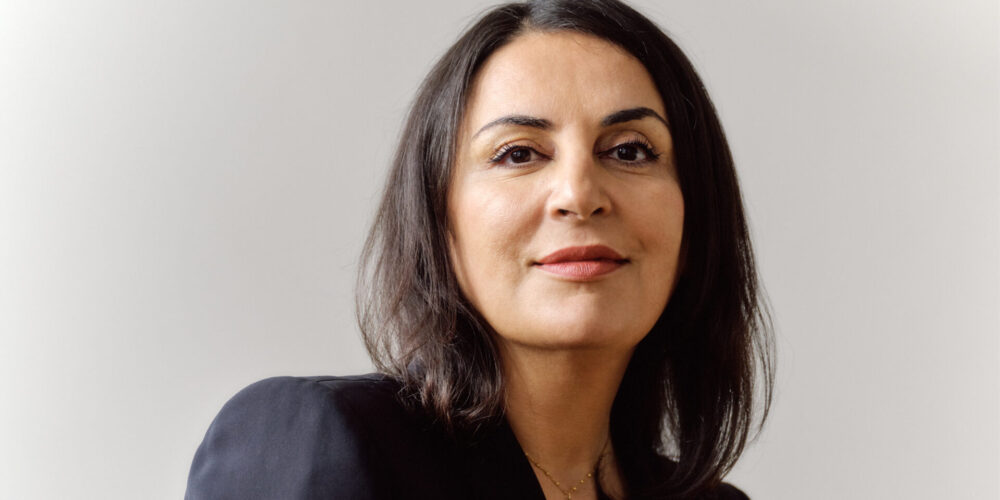
ATLANTIK-BRÜCKE: Ms. Tekkal, looking at current global conflicts, are we witnessing a world order in transition?
DÜZEN TEKKAL: Clearly, we are experiencing a true Zeitenwende, if I may use that word again. Francis Fukuyama’s thesis that liberal democracies would prevail everywhere at the “end of history” has not come true—quite the opposite. The Western era is over. We are seeing a shift from a bloc-based system to one of single nations increasingly positioning themselves individually. The international architecture as we knew it no longer exists. States act today more “à la carte,” and global politics is more complex than ever. The central task now is to create order—in our thinking, feeling, and action—especially for liberal Western democracies.
Does a “new world order” bring more opportunities for peace—or new risks for conflict?
We see profound identity crises everywhere. We are once again in the midst of a “clash of civilizations” and identity conflicts. What Samuel P. Huntington once described as an open confrontation of cultures has become our reality. Conflicts arise when warlords deliberately instrumentalize identity, ethnicity, and religion. The credibility problem of the West is obvious—too often, values were preached while only self-interests were pursued. This can be seen in conflicts around Ukraine, Israel, and Gaza. Extremists are more active worldwide than ever before. Peace is not a given; it must be actively defended, something we in Europe have ignored for too long.
Much is at stake—our democracy and the rule of law are under threat. Democracy faces unprecedented hostility and fragmentation. Values such as self-criticism and openness to discourse are fading. Social polarization is increasing further through phenomena like “cancel culture.”
Where do you see that democracy is fighting for survival?
Most clearly in the United States, where the rule of law is being eroded piece by piece. Donald Trump governs more and more like someone wielding emergency powers—deploying the National Guard in major cities and using the ICE immigration agency aggressively, which has even led to U.S. citizens being deported. His policies divide the nation and poison the social climate. Extremist political views have become socially acceptable, fueling one another—even through political assassinations, which are disturbingly being normalized in public discourse. For some political observers, the question is no longer whether the United States is on the path toward fascism—it already is. We in Europe must also remain vigilant and resist disinformation campaigns, the hollowing out of democratic institutions, and politically motivated violence.
Right-wing populist parties are gaining traction globally. Should we be seriously concerned about democracy, freedom, and human rights?
Right-wing populists pose a major danger—the AfD (the far-right party Alternative for Germany) shows how extreme positions conquer parliamentary space. But extremism is not confined to the right; left-wing extremism, Islamism, and antisemitism are equally serious threats. My impression is that democrats give up too early. It is alarming to see how many from the political center now believe they can benefit by adopting the AfD’s policies and rhetoric. Yet political barometers show they are not rewarded for tearing down the so-called “firewall.” There is every reason to fear that in next year’s local and regional elections, voters will choose the “original” instead.
The reasons for the shift to the right also lie within the political establishment: many people truly feel left behind, as reflected in the success of radical parties like the AfD and the BSW (the left-wing populist party Bündnis Sarah Wagenknecht) —and not only here; we see the same in America. We must reclaim the spaces of debate and stand up more strongly for our values. Right now, I observe a dangerous “spiral of silence.” People are no longer willing to take risks, as those who clearly voice their anti-fascist stance are immediately attacked. This is especially visible on platforms like TikTok, where the AfD and Islamist groups dominate discourse and deliberately spread their content. Algorithms fuel polarization and lead to dangerous disinformation in parts of society.
Is social media amplifying these developments?
Social media acts like a magnifying glass for society. Algorithmic dynamics often escape any meaningful control. Tech companies fail to take sufficient responsibility, with the result that hate and threats often go unpunished. In my view, we are facing a crisis of democracy.
How can we save our democracy?
It’s now about breathing life back into this democracy—online and offline. That means building a democratic ecosystem. We need civil society actors, but also businesses and organizations like Atlantik-Brücke, to engage in discourse with motivation and courage. Politics has not yet realized that it must give people a sense of what Germany stands for. We must not leave the narratives about Germany to the wrong people.
What role do the United States play in the new world order?
The U.S. is deeply divided and has partly turned away from its international leadership role. Transatlantic relations are more strained than they have been in a long time. Polarization and populist tendencies—especially under Donald Trump—are attacking the democratic core values head-on. Europe is increasingly being seen as an adversary in U.S. politics.
In Europe, we often hear of “strategic autonomy.” Is that a realistic option, or does the continent remain dependent on the U.S.?
Europe is more important than ever for those who defend freedom and democracy. Strategic autonomy is therefore indispensable, and the “European Dream” must be actively advanced. Europe’s ability to defend itself and articulate its position is crucial to our future—this must finally sink in, even for peace-accustomed Europeans. We must convincingly convey that freedom and peace give meaning and life—and are therefore worth defending.
Many European countries are again introducing border controls. Are these signs of the EU’s disintegration?
These are indeed worrying signals. However, their causes often lie within rather than outside. The lack of integration and the failure to convey democratic values are central problems.
Turning to the Middle East: What long-term consequences will Israel’s military actions have for the region?
The Middle East clearly shows that conflicts are no longer regional but have become globalized. Decisions made there have far-reaching consequences because the issue is like social dynamite. We see a dramatic surge in antisemitism worldwide—but also growing dehumanization and lack of solidarity with Palestinians. We must not leave discourse to extremists who exploit the issue for agitation. Many of them are not genuinely concerned about Gaza—otherwise, they would also highlight Hamas’s role or support Palestinian voices calling for a peaceful solution. On the other hand, Prime Minister Netanyahu’s government has been issued what amounts to a blank check. We must do everything possible to ensure a livable future for Palestinians in Israel-Palestine.
You have just returned from Syria. The new transitional government under President Ahmad Al-Sharaa is trying to consolidate control after Assad’s fall but faces numerous militias, religious groups, and international actors. Where do you see chances for a sustainable solution?
When I was recently in Syria, I sensed both a spirit of new beginnings and of fear. The Americans’ “easy way out” is, at best, naïve. One cannot ignore or forget Al-Sharaa’s background—and his example shows how one can be both Islamist, jihadist, and statesman. We will pay a bitter price if we don’t view Syria realistically and continue to look away while minorities are threatened. It should be in everyone’s interest that the Syria of the future represents all people—Druze, Christians, Kurds, Alawites, and Yazidis alike. The West’s main mistake is choosing the wrong interlocutors. The massacres committed in Syria, now confirmed by the UN, are driving migration. Where are minorities supposed to go if they no longer feel safe there?
Iran remains a key factor in the region. How will power relations between Iran, the Gulf States, and the West develop in the coming years?
That is the key question. Iran remains a central actor with an aggressive policy, particularly toward Israel. The human rights situation in Iran remains dire, as ongoing protests by the “Woman, Life, Freedom” movement and strikes over supply crises show. The Islamic Revolutionary Guard Corps should finally be placed on the EU terror list, as many human rights organizations have demanded. Regarding the nuclear program: pretending that one can deal realistically with the Islamist regime is, in my view, naïve. It remains to be seen how the Gulf States will position themselves in the face of the Gaza war. Hamas and the Islamic Republic have succeeded in one respect: talks about the Abraham Accords have stalled, and normalization efforts among the Arab population have likely lost support—as the Israeli government takes steps undermining a two-state solution.
What role does Turkey play in the new world order?
Turkey acts strategically and exploits its position. President Erdoğan has become a symbolic figure for parts of the Islamic world. But opportunistic interests also play a role: Turkey is considered an ally in stopping migration flows. At the same time, a NATO partner is carrying out heavy military strikes in Kurdish regions, especially in Northeast Syria—bombing villages and destroying civilian infrastructure. Why is this reality barely discussed in political debates, and why does hardly anyone call for an end to arms deliveries to Turkey?
Many people fear Russia. Do you think this fear is justified?
Of course. It should now be clear to everyone: Ukraine is Europe’s defense line. Ukraine is not only defending itself but all of us. Therefore, it is unbearable that some are now turning perpetrators into victims. The policy of “change through trade” with Russia has failed. The fact that parties like the AfD and BSW win support despite echoing Putin’s propaganda is a clear sign of growing polarization and the poisoning of our society.
And what about China?
China’s influence is expanding immensely—especially in technology and, more subtly, in political matters. Control over information and algorithms, as seen with TikTok, shows how far China now shapes the global agenda.
You often say that civil courage must be thought of globally. What does that mean now, as the world order shifts and many feel powerless?
We in Europe cannot afford this sense of helplessness or world-weariness. I regularly meet people in war zones—in Iraq, Kurdistan, or Syria—who have far more to lose yet risk everything. We should take inspiration from that. We live in a country that guarantees freedom of expression—so why do we so rarely take a stand, even though we could? Civil courage is more important today than ever.
What gives you hope?
Despite all the challenges, humanity keeps rising again—even in the most difficult regions of the world. That is the source of courage and hope for the future.
What do you wish from the German government?
Courage, realism, and an uncompromising commitment to stand up against racism, religious extremism, and all forms of hostility toward humanity.
Thank you very much for the conversation, Ms. Tekkal.
Düzen Tekkal is a German journalist and human rights activist. Besides her work as a filmmaker, she is involved in several social projects and serves as chair of the nonprofit humanitarian organization HÁWAR.help.
Interview by Beate Wild, Director of Communications at Atlantik-Brücke.
[Disclaimer: This text was originally written in German. The English translation was produced with the help of AI.]