
“Reaching the next generation of transatlanticists”
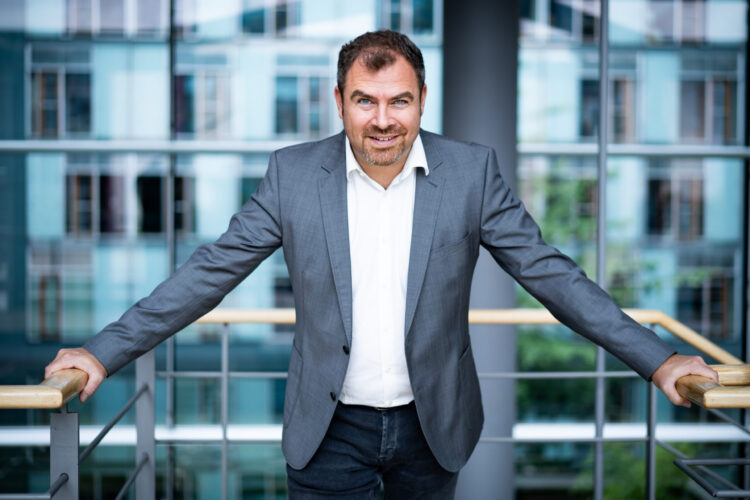 Photo: AA, Cosima Höllt
The current developments in transatlantic relations contain an important lesson for German foreign policy. In a time of global upheavals and geopolitical uncertainties, the federal government is determined to strengthen the alliance with the United States, while simultaneously considering new partnerships – for example with countries in Latin America. Our goal must be to reach the next generation of transatlanticists – for lasting security, vibrant freedom, and sustainable prosperity.
By Florian Hahn
The United States remains our most important ally and partner outside Europe. This is especially true with regard to global challenges and numerous conflicts, foremost among them the Russian war of aggression against Ukraine and the situation in the Middle East, and in particular for safeguarding our security, our freedom, and our prosperity. Despite all tensions and contradictions, the transatlantic relationship is a pillar of the federal government’s foreign policy, and the transatlantic alliance is the guarantor of our security. This remains true regardless of sometimes critical perceptions in the public sphere – for example, following the speech by US Vice President J. D. Vance at the Munich Security Conference 2025, concerning US trade policy and discussions about the future orientation of the European security architecture.
Through intensive diplomatic visits, since taking office, the federal government has underpinned this with not just words but deeds, including toward the USA. This success is evident in the good contacts between the Federal Chancellor and Foreign Minister with their US counterparts. Together with the US government and allies in NATO, we worked towards the Hague summit and led it to success as an alliance of 32 allies, with a clear commitment to continued collective defense and Article 5, as well as agreement on significantly increased investments in our deterrence and defense, which are crucial for Euro-Atlantic security—our security as the Federal Republic of Germany—given the long-term threat posed by Russia.
Security
The Russian airspace violations in NATO territory this September—whether by drones over Poland and Romania or fighter jets over Estonia—show us how tense the current situation is. In this critical situation, the importance of the transatlantic alliance—the most important and successful defense alliance ever—cannot be overstated. This is particularly true for Germany: about 37,000 American soldiers are stationed here, with key military facilities and infrastructure of the US armed forces located here. It is all the more important that we—together with our allies and European partners—do more for our own security and take responsibility.
The federal government has taken a decisive step with the reform of the debt brake to invest in our own defense capabilities. Like our NATO allies, by 2035 we will spend 5 percent of GDP—3.5 percent for defense expenditures and 1.5 percent for security- and defense-related tasks. At the European level, we have established an instrument that supports European member states in investing in their defense industry and thus their defense capabilities. Both are successes of determined German diplomacy that create new cooperation opportunities—including with the USA. This determination of the federal government to invest more in its own and European security and to strengthen the European pillar in NATO is also positively recognized by the US government.
Russia’s war of aggression in Ukraine, its military build-up, and revisionist goals beyond Ukraine represent the greatest threat to our security. Despite mediation efforts by the US president, Putin shows no serious willingness to negotiate. A ceasefire or an end to the war is not in sight. It is clear to us: we cannot do without the USA. Therefore, a determined and sustainable engagement by the USA—whether through supporting Ukraine with US weapons systems and sharing intelligence, or through coordinating sanctions and other pressure measures within the G7—is an even more important signal to Russia. At the same time, we Europeans must, within our means, do more to support Ukraine. Since 2022, Germany has already provided or committed bilateral military support amounting to 40 billion euros for the coming years. By supporting the financing of US arms deliveries through a newly established NATO mechanism of up to 500 million euros and the Chancellor’s proposals for the legally secure use of immobilized Russian assets to support Ukraine, we are going a step further. We call on our European EU partners and NATO allies to follow our example.
Freedom
The USA, through their landmark decisions after World War II and their support for German reunification, remain a guarantee of security, freedom, and prosperity in Germany and Europe. Without the courageous decisions of the then US government, there would neither be a reunified, democratic, and economically strong Germany nor a free Europe. For this, we remain very grateful to the USA.
However, this gratitude does not mean that we would adopt every critical statement about freedom of expression and democracy in Europe, not even those from some representatives of the current administration. On the contrary: the values that make Europe strong and the liberal-democratic basic order of Germany are the cornerstones of our freedom. Freedom of expression and democracy are highly valued in Germany and Europe and are preserved and defended through our rule of law.
Prosperity
The numbers are clear: The USA are the most important destination for German exports outside the EU. The USA are the largest non-European investor in Germany. Germany, in turn, is the third-largest investor in the USA. German subsidiaries currently provide about 870,000 jobs in the USA, US subsidiaries in Germany about 640,000, underpinning the importance of the transatlantic economic area. Such close economic interconnections have developed over decades and cannot be substituted in the short term. It is also not in mutual interest to dissolve these closely intertwined supply chains—partly in critical sectors—and thus weaken the resilience of the transatlantic market in the face of major geopolitical and geoeconomic challenges.
“The values that make Europe strong are the cornerstones of our freedom.”
Looking ahead, transatlantic cooperation holds immense potential: together, Europe and the USA account for 43 percent of global GDP and nearly 30 percent of global trade in goods and services. European research institutions, universities, and companies are innovation engines for the critical technologies of tomorrow. To fully exploit this potential, it will be important to strengthen our competitiveness and innovative strength in Europe as well—and thus to meet the USA on equal footing.
From the outset, the federal government has supported the removal of mutual barriers. The trade agreement achieved between the USA and the EU should only be an intermediate step, as its asymmetry poses great challenges to our companies and increases the risk of fragmentation of free trade. However, it creates short-term security and predictability for German and European companies and has prevented an escalation of the trade conflict with potentially serious consequences for the European economy. Therefore, the federal government supports the European Commission in negotiations with the USA along our economic policy interests. At the same time, the federal government advocates European unity among member states and promotes further diversification of EU trade relations.
New lessons, new fields of action
Looking at developments in all three fields—security, freedom, prosperity—since the start of the US government and the federal government under Chancellor Friedrich Merz, it becomes clear: current developments in transatlantic relations also contain an important lesson for German foreign policy. Germany must “relearn” self-confident, interest-oriented targeted cooperation with states in the sense of the triad of security, freedom, and prosperity. This applies especially or even particularly when these states do not or no longer fully share our values.
What does that mean? In the case of the USA as a central partner and ally, opportunities and challenges present themselves equally. It is clear that we must preserve the long-grown shared values and interests and build them up where consensus is possible. At the same time, in the transatlantic relationship, alongside core topics of security and economy, we must also define new fields of action along our interests to not only secure this cooperation but also to bring it into a new era.
New target groups
Relations with the USA are changing—especially with regard to our populations: historically, fewer and fewer people in the USA and Germany are socialized transatlantically. To keep relations stable in the USA, it must also be about strengthening them in the middle of our respective societies. Therefore, we need to take care to reach the next generation of Transatlanticists. We want Germany to be positively perceived in all its dimensions in the USA. This means reaching as many diverse population groups as possible. In recent years, the federal government and its predecessors have invested a lot: we have intensified exchanges of our cultural mediators, alumni, and honorary consuls in the USA, strengthened cooperation with subnational partners such as state parliaments, mayors, and other officials in the states, and brought new target groups to Germany through customized programs.
We do not want to rest on achievements and will intensify our efforts. This includes, among others, sports diplomacy at upcoming major events like the 2026 FIFA World Cup and the 2028 Olympic Games in Los Angeles. It includes the Goethe-Institut opening new locations away from the coasts in Houston and St. Louis. It also includes winning many people in the USA who have contact points with Germany—for example alumni of exchange and scholarship programs or veterans who served in Germany—as ambassadors for Germany. Many of them are willing to actively commit to the German-American partnership.
Future technologies
Whether artificial intelligence, quantum computing, or space travel: when it comes to the critical technologies of the future, European researchers and companies are always involved. Even if we cannot always keep up with the entrepreneurial speed in the USA and the financing opportunities there, cooperation in sensitive technology areas is only possible among like-minded states for reasons of technical and national sovereignty. This is why there is great potential for deepened cooperation between Germany/Europe and the USA. We should focus on space travel; German space start-ups are already important suppliers for US giants SpaceX and Blue Origin, and ESA is already an important partner for NASA. We need to build on and offer proposals here since cooperation with the USA can also be a driver for our own economy and innovation strength. For us, this also means continuing to invest in our own innovative capacity and research security to be an attractive and trustworthy partner.
New partnerships
Whether in the Indo-Pacific or Latin America: the federal government has made it its task to establish new partnerships worldwide and deepen existing ones. This includes our commitment to the timely conclusion of EU free trade agreements with MERCOSUR and Indonesia, support for EU negotiations for free trade agreements with India, Malaysia, the Philippines, and Thailand, as well as intensifying our relations with Canada. This strengthens the resilience of the European economy, diversifies risks, and creates new starting points for cooperation with the USA and transatlantic relations.
“We must continue to invest in our own innovation capabilities and research security.”
This also applies particularly to Latin America: The US government aims to focus more on Latin America in foreign policy. This involves—especially in competition with China—the question of who will set narratives and exert influence in South America in the future. Germany has a close network on the continent and is seen as a credible partner in many countries. That is why we should coordinate our commitment with the USA and act jointly wherever possible. Especially in connectivity, we can offer alternatives to the Belt and Road Initiative with the EU’s Global Gateway and deepen economic ties. We can also contribute importantly in crisis contexts. For example, Germany pledged another five million euros at the UN General Assembly to support international efforts to restore peace and security in Haiti. This sent a signal of our engagement for the region that was closely observed in Latin America and the USA.
Outlook
Our relations with the USA have rarely been straightforward since the end of World War II but have always been of central importance to the Federal Republic of Germany. Even more than a year after Donald Trump’s election as the 47th US president, they will continue to intensively occupy German and European politics. It is therefore all the more important to continue investing beyond everyday business and beyond the major lines of our time in the future of these relations, in the USA and beyond.
About the author: Florian Hahn (CSU) is Parliamentary State Secretary at the Federal Foreign Office.
[Disclaimer: This text was originally written in German. The English translation was produced with the help of AI.]