
„Strategic decoupling would be damaging for Europe“
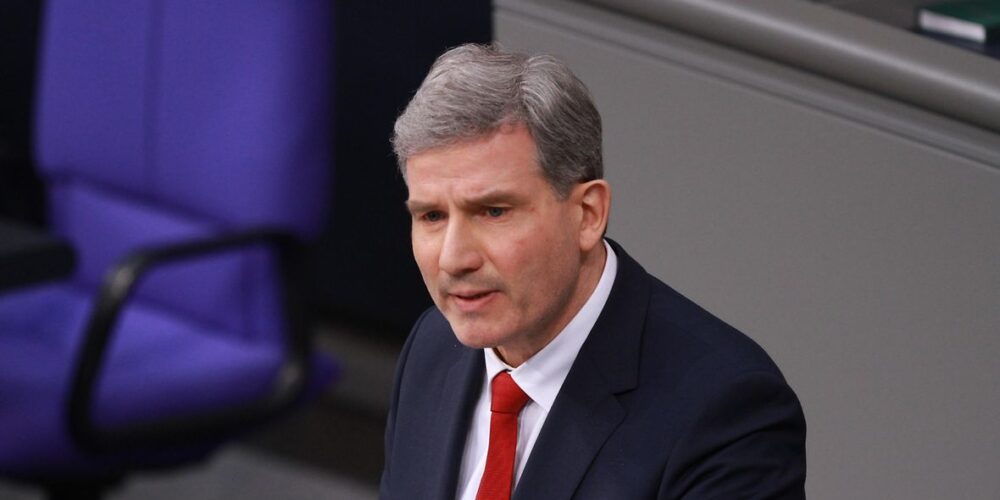 Photo: dts Nachrichtenagentur
Transatlantic Coordinator Metin Hakverdi continues to see the United States as Europe’s partner – he sees it as in the continent’s own interest. His commentary was written in German, read the original here.
“Are the United States still Europe’s partner?”
These days, it might be tempting to say no. National security strategy, tariffs, Venezuela, Greenland — there are plenty of reasons to question our relationship with the U.S. No doubt: the Trump administration enforces its interests in drastic ways, strains our alliance with territorial demands, carries ideological conflicts from U.S. domestic politics into Europe, and openly supports European right-wing populists.
And yet, on sober reflection, the United States are still our ally and should remain so. That is not just a legalistic statement with regard to our NATO alliance, which continues despite some fears. It is also neither nostalgia nor habit.
Beyond daily politics, the U.S. on the one hand — and Germany and Europe on the other — objectively share a wide range of common interests. We are closely connected economically and militarily. Europe currently lacks sufficient conventional capabilities and credible nuclear deterrence to protect itself in the near term. We can only face the challenges posed by China and Russia together.
Our economic relations with the U.S. are of outstanding importance, creating jobs and prosperity on both sides of the Atlantic. Research, supply chains, and investments are deeply intertwined. A strategic decoupling would be economically self-damaging for Europe. Even in our own security and economic interest, we should not burn bridges. Partnership with the U.S. is (also) sober interest-based policy.
At the same time, this does not mean a free pass. Europe must strengthen its own sovereignty and set clear limits. Regardless of how American policy develops in the future, Europe must take on more responsibility. A stronger Europe is not an alternative to the transatlantic partnership, but its prerequisite: if the U.S. drifts further away, Europe must be capable of acting on its own; if they draw closer, Europe is a resilient partner.
Furthermore: the transatlantic relationship is far more than the relationship between individual governments, more than Berlin and Washington, D.C. Our partnership is based on a myriad of contacts and networks at all levels — in politics, the economy, and civil society. And yes, at its core on our shared values. Politics can change, but these transatlantic bonds are enduring. They must, however, be tended to despite all adversity.
The alternative to partnership with the U.S. would be sobering: strategic dependence on authoritarian powers or European great-power fantasies without real basis. Neither is in Europe’s interest. The real conclusion, therefore, is this: the United States are still Europe’s partner. But Europe must make this partnership more European so that it remains transatlantic.
Metin Hakverdi, Member of the German Bundestag (SPD), serves as the Coordinator for Transatlantic Civil Society, Cultural, and Information Policy Cooperation of the Federal Government at the Federal Foreign Office. He is a board member of Atlantik-Brücke.
Also see the contra position of Norbert Röttgen, MdB (CDU/CSU), deputy parliamentary leader of the Christian Democrats in the German Bundestag and deputy chairman of Atlantik-Brücke here: “The U.S. positions on Russia are not compatible with our own security interests.”