
“Those who avoid risk miss opportunities”
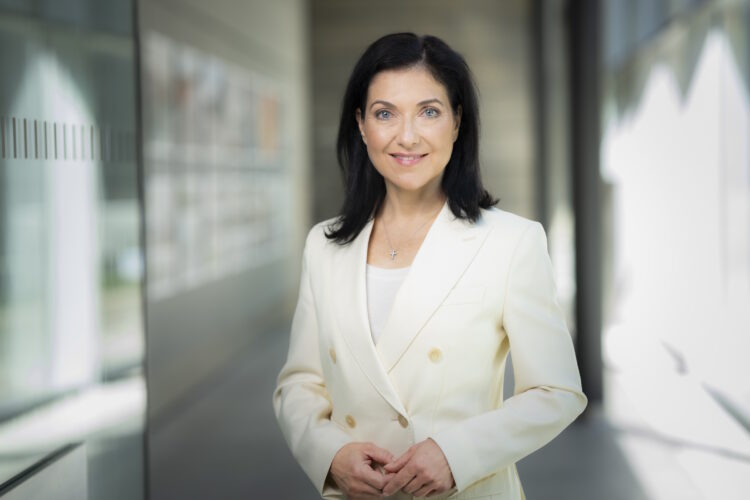 Katherina Reiche Photo: Bundespresseamt
Global power relations are shifting, geopolitical tensions are rising: Germany therefore needs more willingness to take risks, bureaucracy reduction, and strategic diversification of supply chains. Germany can secure its role as an economic and geopolitical power, but this requires more courage and the readiness to take new paths.
By Katherina Reiche
Germany today stands at a crucial turning point. For decades, export strength was the foundation of our economic success and made us one of the leading economic nations with a strong voice in Europe. The ability to export goods and services worldwide was synonymous with economic strength and international influence. But the days when Germany automatically benefited from global growth are over.
The international dynamics have shifted, other countries are developing faster, and the challenges for our economy have become more complex and multifaceted. The causes of this development are as varied as they are profound. Structurally, a thicket of regulations has spread in Germany, increasingly burdening companies. Energy costs have risen due to political decisions and ideological commitments, while the welfare state has expanded further. These factors have weakened the competitiveness of our economy and slowed innovation. Added to this is a cultural component: in Germany, failure is often seen as a stigma, and the willingness to take risks is low. Especially in a time when technological innovations progress ever faster and new business models emerge, this attitude can become a disadvantage. Those who avoid risks miss opportunities—and in a world that is changing ever faster, this is a serious problem.
Changed foreign policy conditions
The international political framework has also fundamentally changed. Trade conflicts, tariffs, and export bans are expressions of a new geoeconomic world order in which economic interconnections increasingly become the arena of geopolitical interests. The USA and China deliberately use economic power as a political instrument, and Germany is at the center of a global tension between open markets and power-political interests.
The forces that once supported our economy now often act against each other, putting our competitiveness under pressure. The economically liberal world order as we knew it is a thing of the past. Today, economic interconnections have become a field of geopolitical tension, and Germany must assert itself in this new reality. In this changed environment, successful economic policy is inseparably linked with an active and strategic foreign economic policy. It is no longer enough to rely on open markets and growth. Rather, we must strategically use our economic strength to help shape international rules and represent our interests.
“Today, more than ever, the economy is a central instrument of geopolitical shaping.”
Stabilizing transatlantic relations, diversifying our trade and supply relations, and strengthening multilateral structures such as the World Trade Organization are central tasks to be tackled decisively.
Deepening the European single market
Europe must become more competitive again. This means reducing unnecessary bureaucracy and deepening the European internal market. Only in this way can we withstand and use the tensions in the global system to our advantage. Resilience arises from competitiveness, and this must again become the guiding principle of European economic policy.
The European Union must once again focus on being a driver of strong competition and no longer see itself as a regulatory brake. Initiatives such as the investment booster and tax reliefs are important steps to increase attractiveness for direct investments and to establish new companies. Foreign greenfield and expansion investments in Germany have recently declined, and the number of settlement projects has also decreased. This shows how urgently action is needed. Security must become a guiding principle, especially in dealing with China. Relations have become more complex, structural imbalances and dependencies threaten to solidify. China has almost monopolized the mining and processing of rare earths and uses this position deliberately as a political instrument. A well-thought-out risk management and targeted reduction of one-sided dependencies are therefore indispensable.
Germany and Europe must protect their key areas and strengthen the resilience of their economy to be able to exist in an increasingly fragmented and regionalized world order. For the global economy is evolving away from a unified, liberal order towards a system of competing geopolitical blocks. Regional alliances and spheres of influence are gaining importance, protectionist measures and new alliances shape the international order. For Germany and Europe, this means strategically managing economic interconnections, reducing dependencies, and increasing resilience against external shocks.
Free trade agreements offer great opportunities
Diversifying our trade and supply relations is key to keeping supply chains stable and opening up new markets. The free trade agenda of the European Union must be strengthened, and relations with Latin America, the Indo-Pacific, and Africa also offer great opportunities. The MERCOSUR agreement and free trade agreements with Mexico, Indonesia, and other countries are important milestones to open up new sales markets and deepen economic cooperation. At the same time, the multilateral trading system with the World Trade Organization remains a central anchor of stability, which needs to be strengthened but also reformed. The WTO stabilizes the global trade order and creates predictability and security—values that are particularly important in a world shaped by volatility. Foreign trade promotion and development cooperation must be more strategically aligned. Funding programs should be targeted at the needs of companies and also include new sectors such as the security and defense industry. Development cooperation must contribute to competitiveness, for example through support for large infrastructure projects and the development of new raw material sources.
“We must be prepared to challenge old ways of thinking and break new ground.”
Cross-departmental working groups dealing with project awards, raw materials, and Africa are an important step to intensify cooperation and exploit synergies. Today, economy is more than ever a central instrument of geopolitical design. Energy, infrastructure, technology, and supply chains are no longer only issues for companies but also for states. Governments worldwide no longer only secure their borders but also networks, data flows, and raw material sources. This is where the world order of tomorrow is decided, and Germany must be ready to actively represent its interests.
The state must ensure stable conditions
The challenges are great, but they also offer opportunities. Germany has proven in the past that it can master crises and reinvent itself repeatedly. The ability to adapt, drive innovation, and open up new markets is part of our economic DNA. But for this, we must be willing to question old mindsets and take new paths. This means showing courage, taking risks, and accepting failure as part of the innovation process. Only in this way can we master the technological transformation and secure our competitiveness in the long term.
The role of the state is clear: it must provide stable conditions that offer companies planning security and investment incentives, without paralyzing the economy through excessive regulation. Politics must have the courage to consistently implement reforms to make Germany future-proof. Debates on lifetime working hours, social security, bureaucracy, and defense capability must not be shied away from. Control over money and goods flows, infrastructures, and key technologies becomes the central lever of power. Companies are no longer merely objects of state policy but central actors themselves in the global competition for resources and influence.
They must adapt their business models to the new realities, drive innovation, and seek international partnerships. Digitalization and globalization offer enormous opportunities but also require flexibility and readiness for change. Germany must assert itself as a strong, resilient, and innovative economic power. This requires courage, determination, and willingness to take new paths. Only if we preserve and further develop our economic strength can we influence the new world order and represent our interests.
The world out there will be better if Germany has influence in it. Our economic strength will also be the foundation for this in the future.
About the author: Katherina Reiche is Federal Minister for Economic Affairs and Energy.
[Disclaimer: This text was originally written in German. The English translation was produced with the help of AI.]