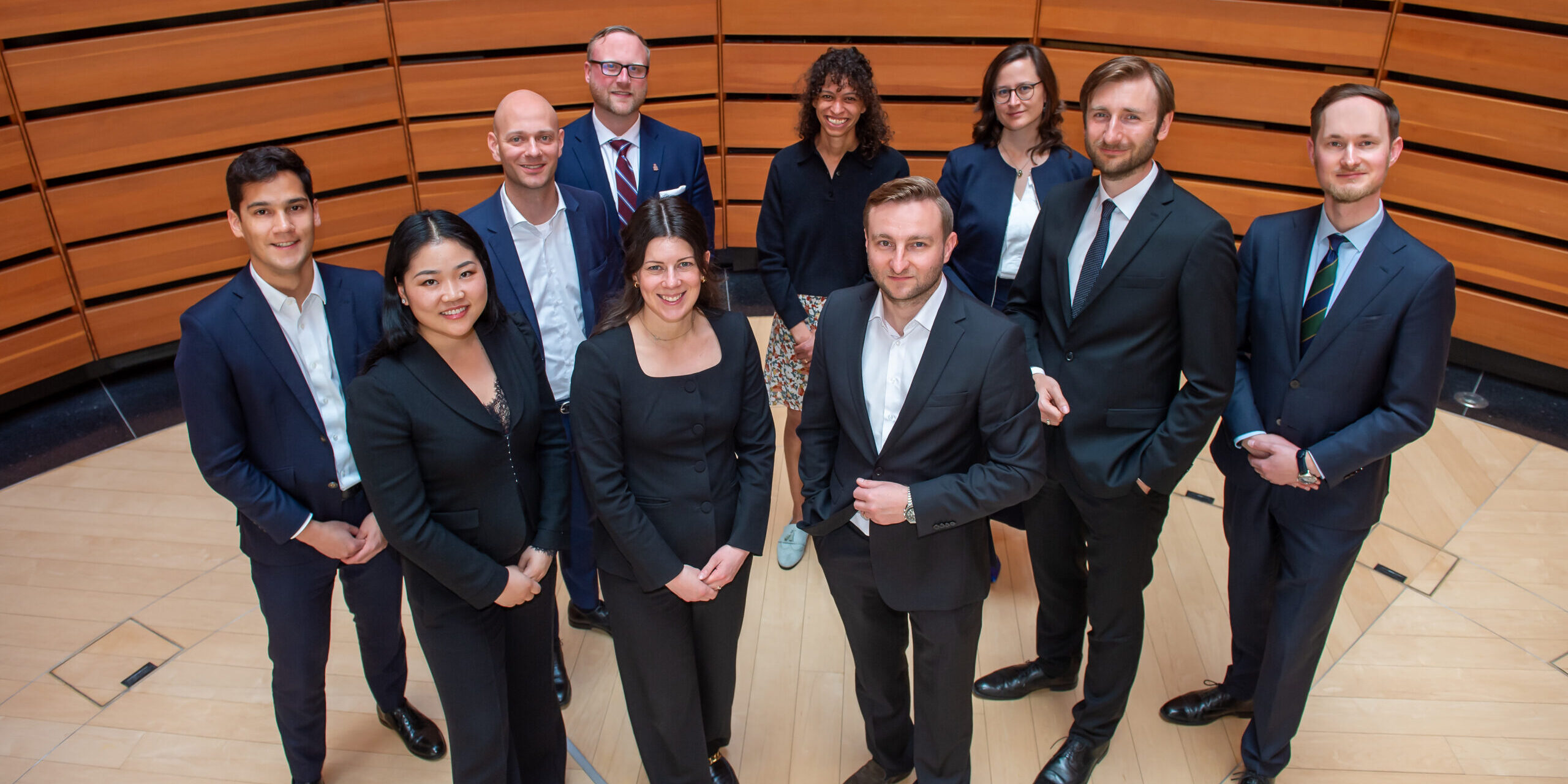

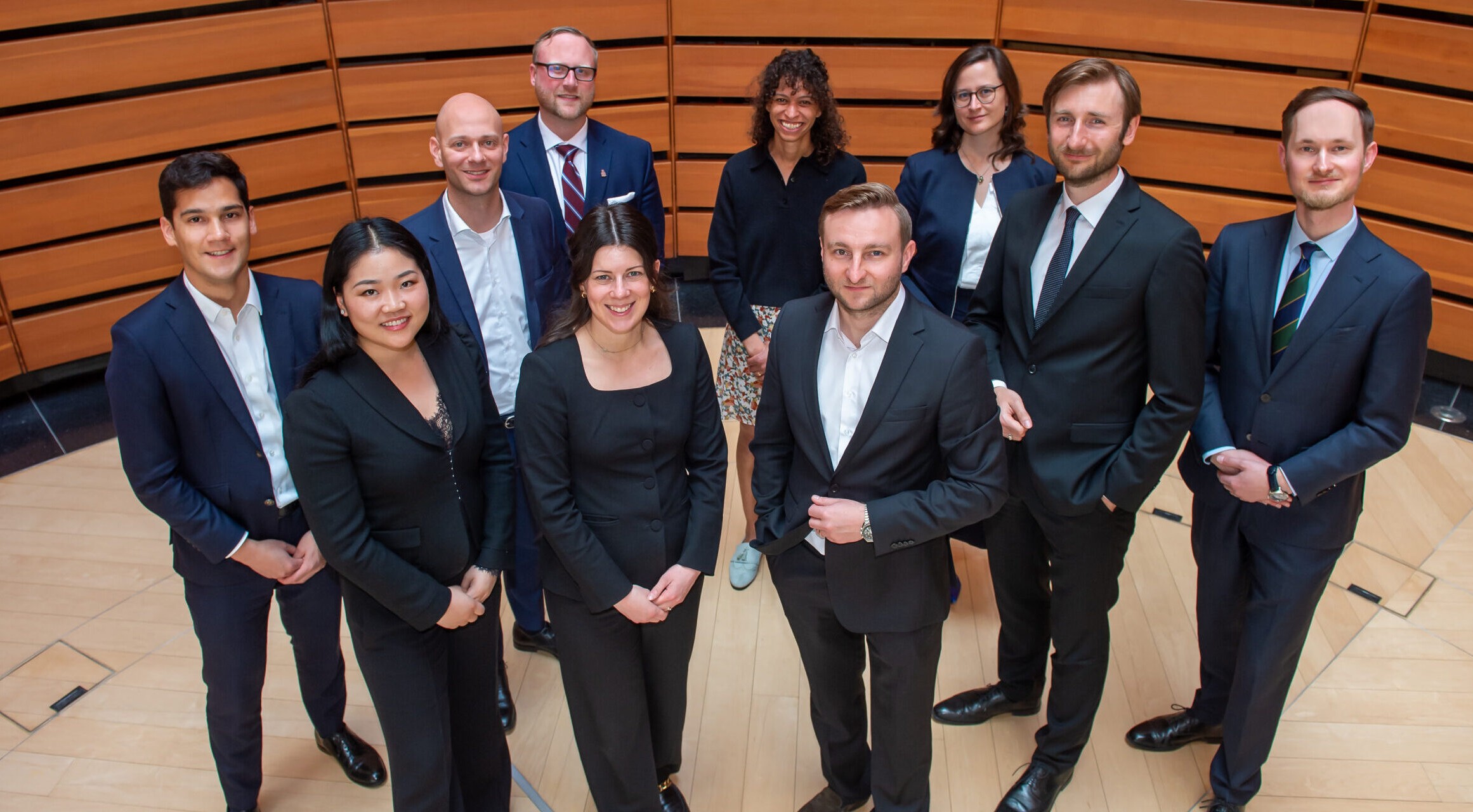
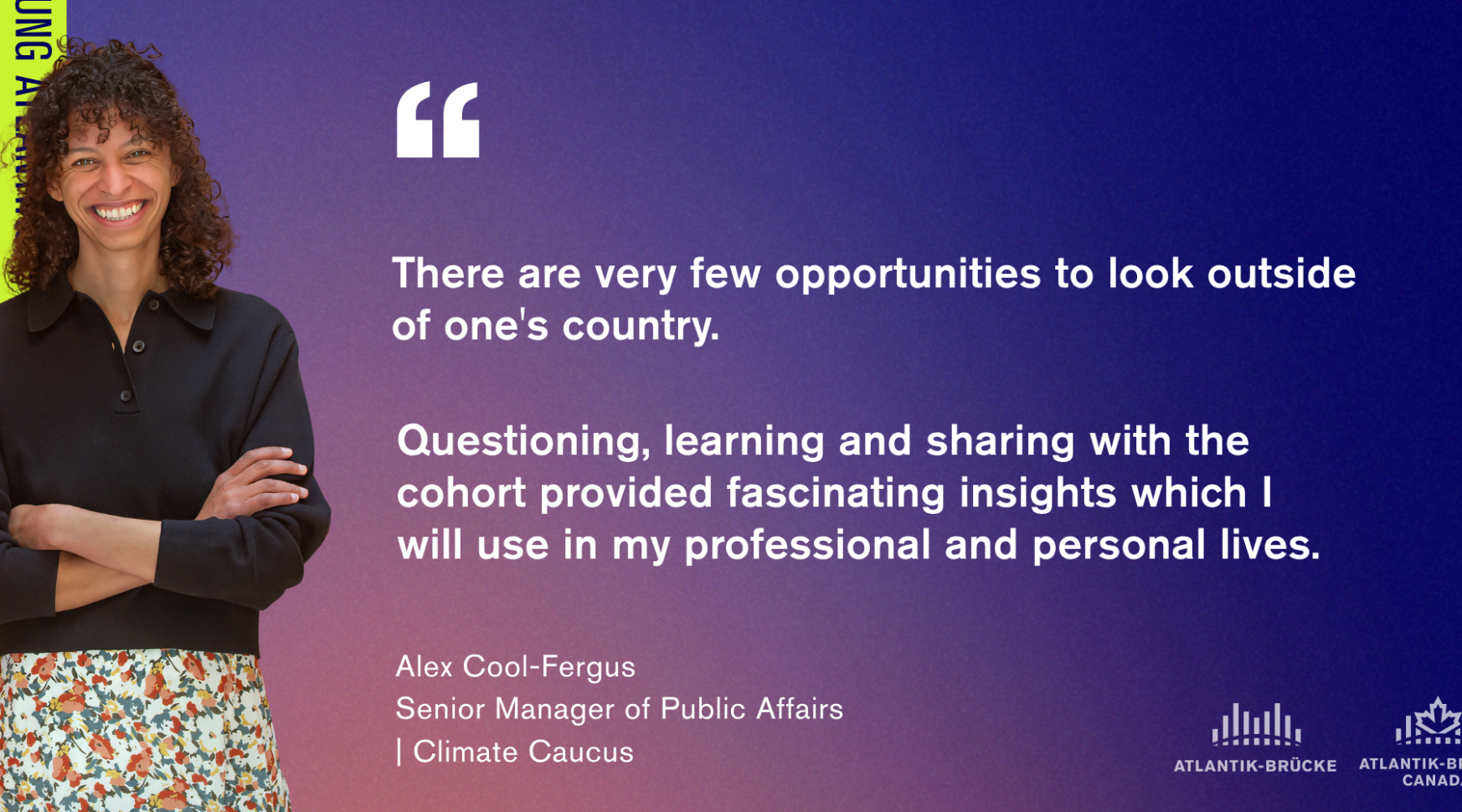
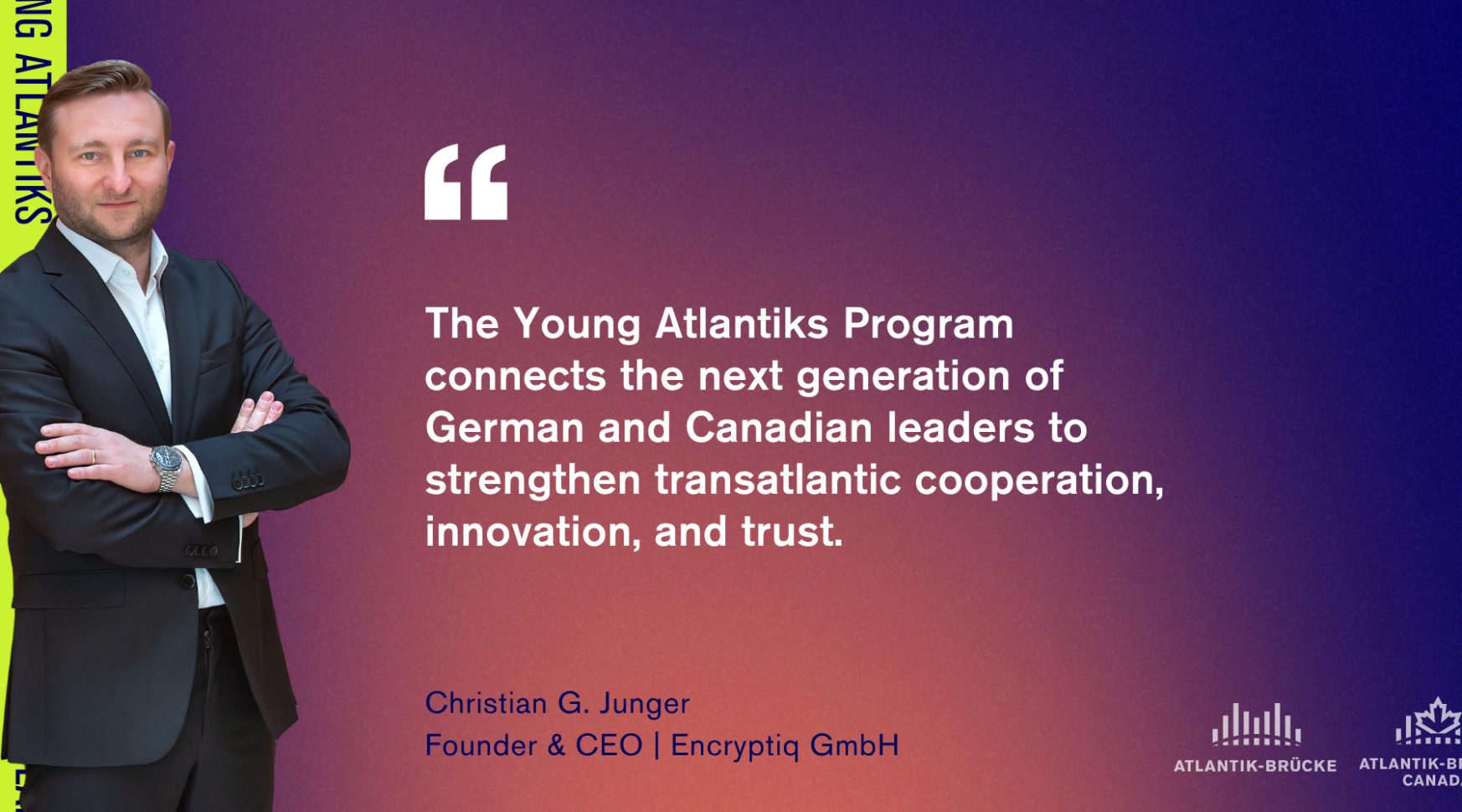
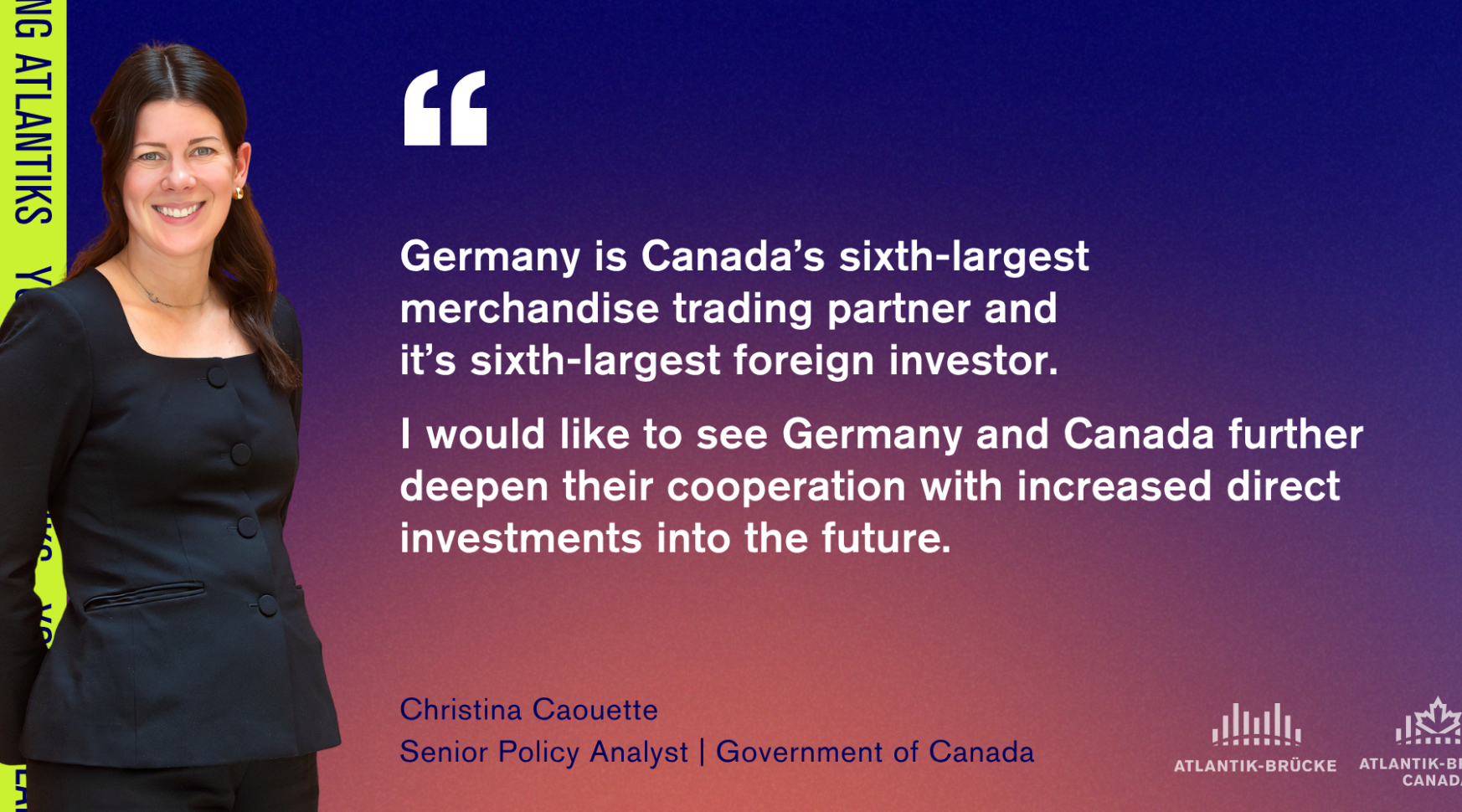
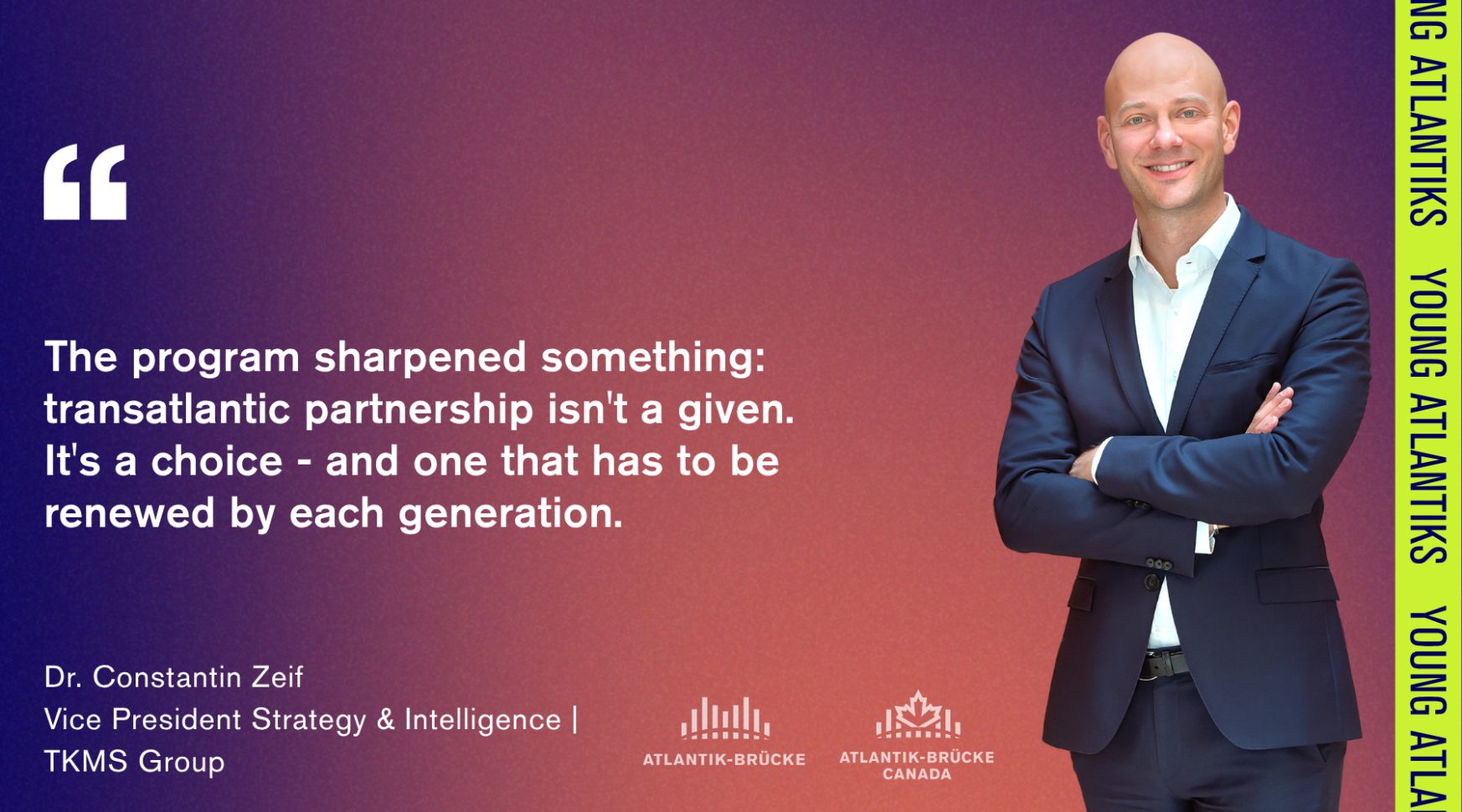
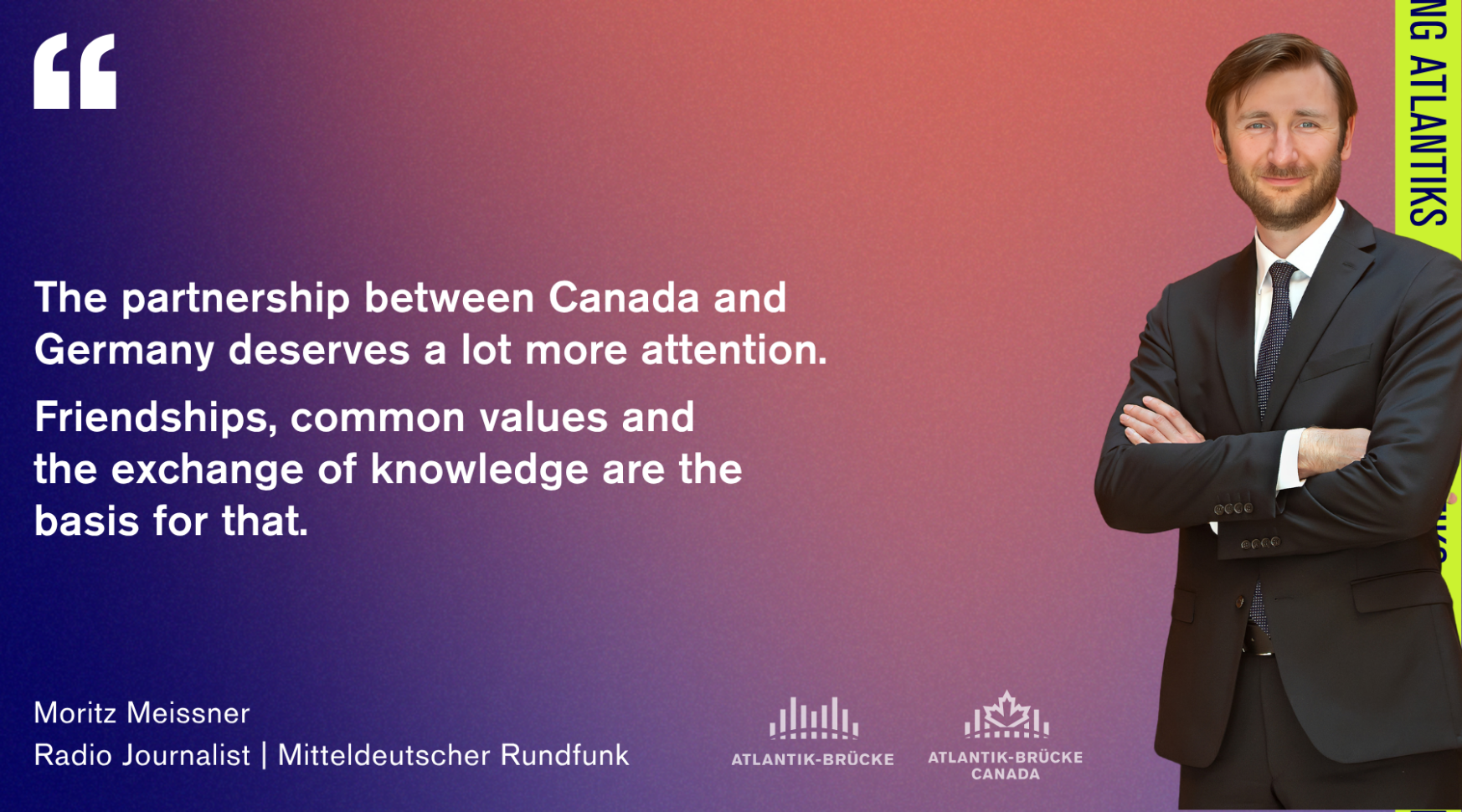
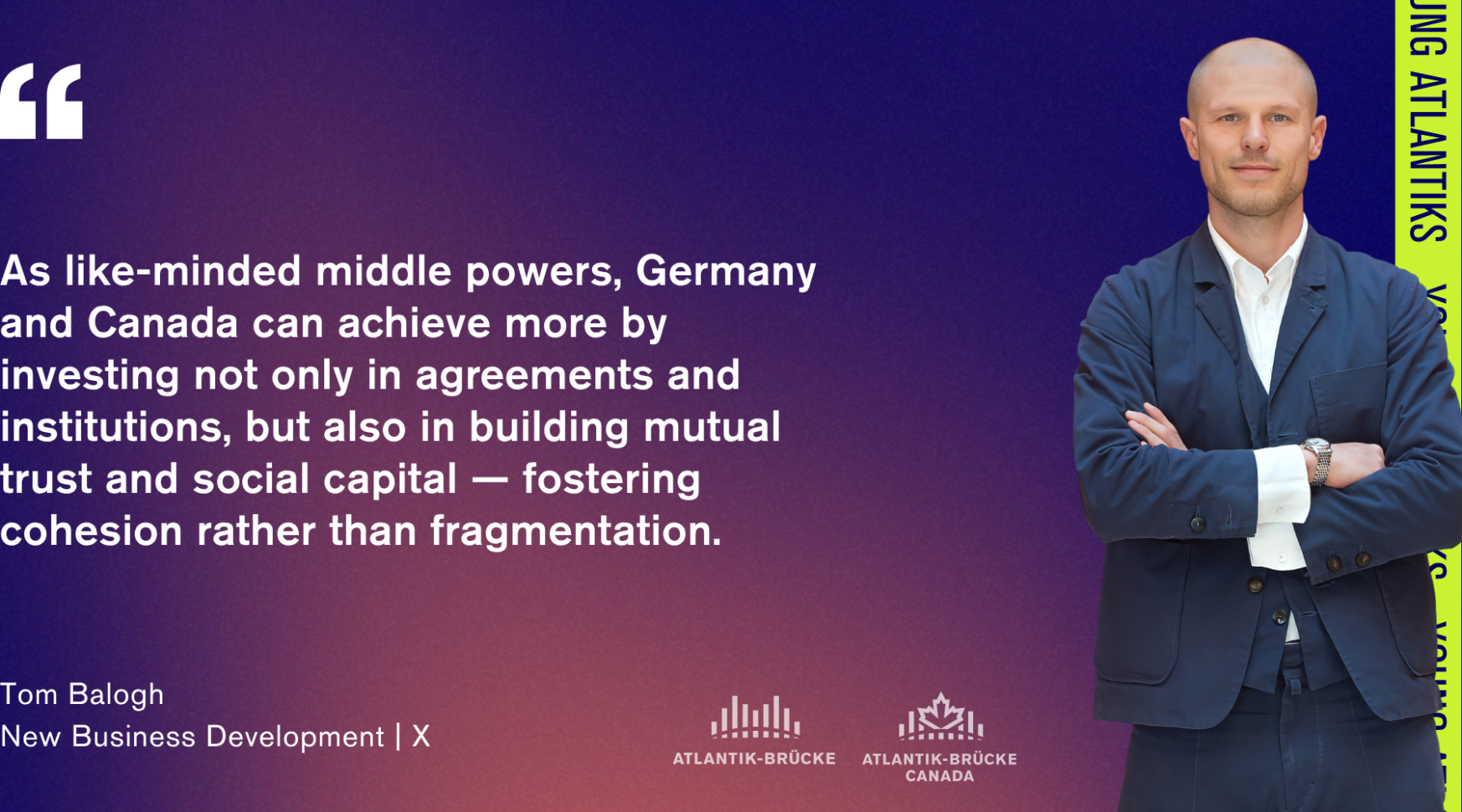
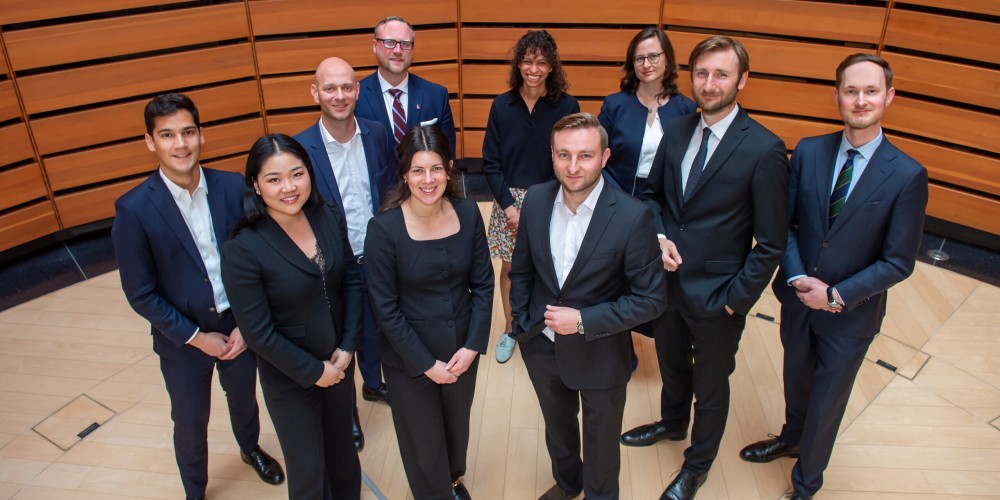
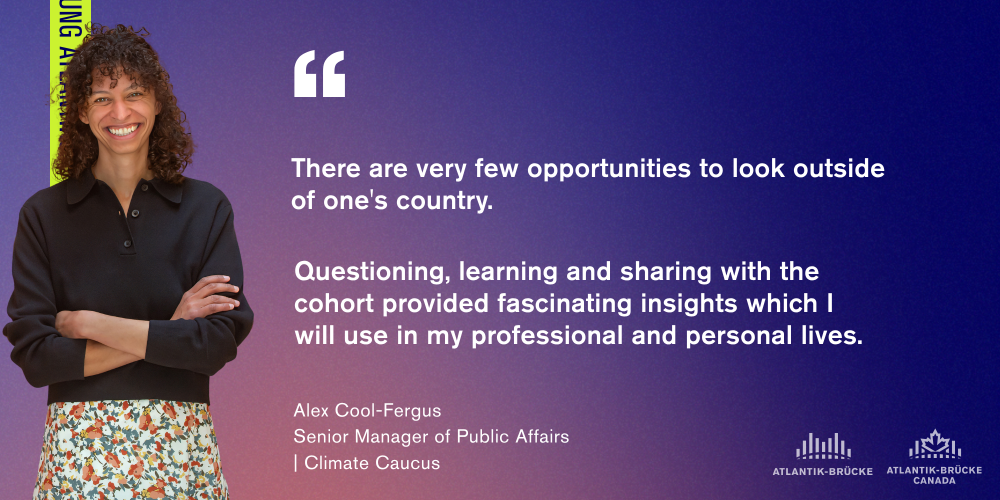
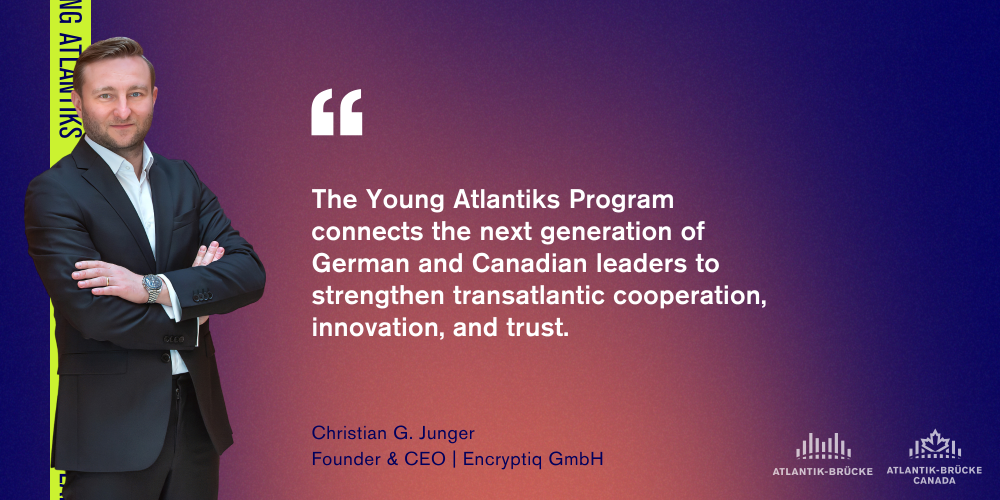
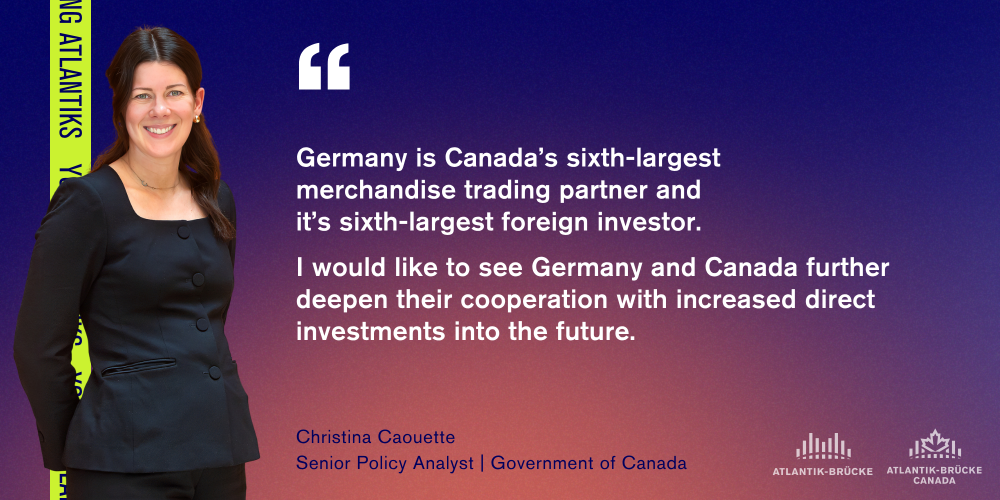
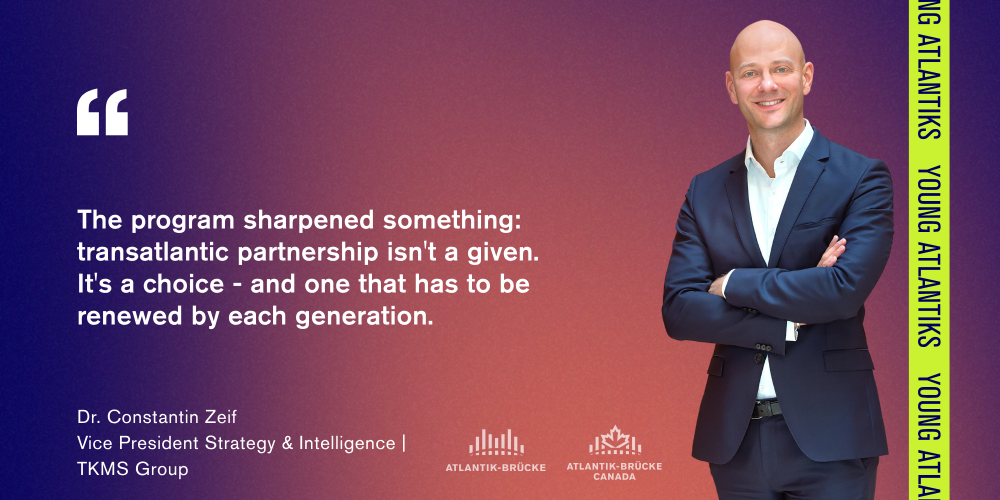
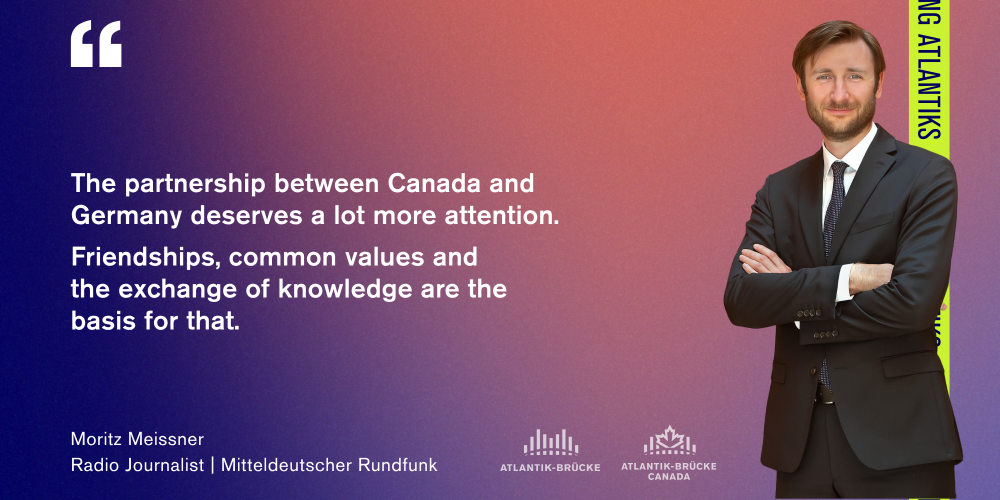
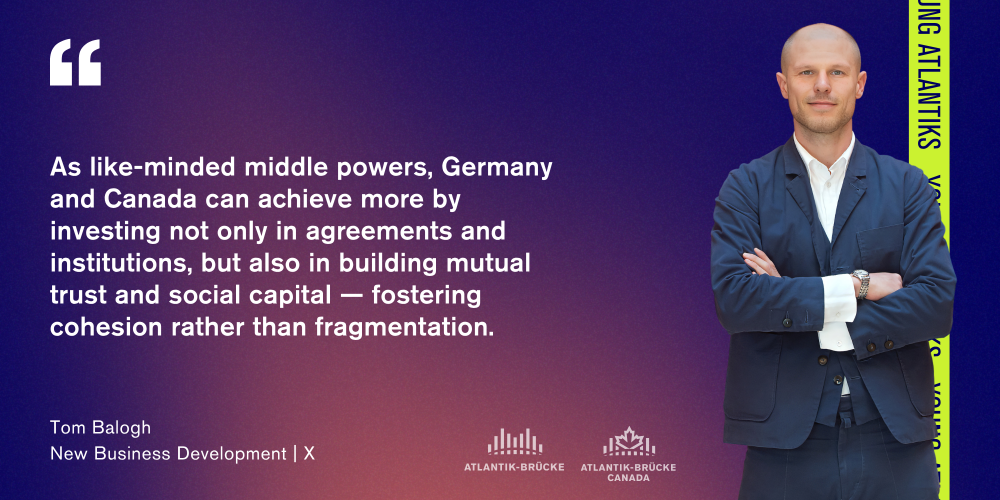
From May 17 to 21, the 2026 Young Atlantiks cohort gathered in Berlin for five days of exchange running alongside the 39th German-Canadian Conference. Ten young professionals from Canada and Germany — among them policy advisors, an economist, a naval veteran, entrepreneurs, civil servants, and journalists — spent the week probing a single question from many angles: how can two middle powers, facing a more contested and unpredictable world, strengthen each other’s position rather than navigate it alone?
The setting gave that question real stakes. This year marks the 40th anniversary of the German-Canadian partnership and the 75th anniversary of diplomatic relations between the two countries. It also arrives at a moment when the assumptions that long underwrote transatlantic security and trade can no longer be taken for granted. Across the program, the same themes surfaced again and again — and so did the recognition that goodwill, on its own, is not a strategy.
Nowhere was the opportunity clearer, or the gap between ambition and execution more visible, than on critical minerals. German industry needs reliable, diversified supplies; Canada has the resources and, since the August 2025 Joint Declaration of Intent on Critical Minerals Cooperation, a framework to match them. Sessions featuring voices from Vale Base Metals, PowerCo, Merck Electronics, and former senior officials who helped negotiate Canada’s recent battery investments made the logic plain. They also made the challenge plain: a declaration is not a mine, and Canadian projects take years to permit and build while German manufacturers need supply now.
Bridging that timing gap — through patient capital, faster permitting, and a shared appetite for risk — emerged as one of the most concrete tests of whether the relationship can move from strategy to execution.
Security cooperation told a similar story. With the EU-Canada Security and Defence Partnership concluded in 2025, the two sides now have a framework for working together on cyber and hybrid threats, crisis management, and the defence-industrial base. Discussions among speakers drawn from Canadian and German security circles returned repeatedly to one design principle: the partnership must reinforce NATO, not duplicate it. The harder, quieter question was how to give it genuine substance — opening defence-industrial collaboration, deepening intelligence ties — so that it amounts to more than another dialogue.
The week’s discussions on technology pointed to what may be the most forward-looking strand of the relationship. The German-Canadian Digital Alliance, launched in late 2025, has already produced its first concrete result in a transatlantic partnership between Canadian and German AI companies — an effort to build trustworthy, sovereign AI capacity less dependent on providers from the United States and China. For two countries that share democratic values and a wariness of technological dependence, digital sovereignty is fast becoming a field where cooperation is not merely desirable but strategically necessary.
Yet the most striking insight of the week came less from the formal panels than from the cohort’s own conversations. Time and again, the participants found that the obstacles to closer cooperation are rarely grand and almost always practical: how to recognize one another’s professional qualifications, how to move skilled people across the Atlantic without each case becoming a special project, how to give researchers and businesses rules predictable enough to build on. The German-Canadian relationship is rich in summitry.
What it most needs is the unglamorous infrastructure — mutual recognition, mobility, stable investment rules, research ties that outlast electoral cycles — that turns goodwill into habit.
That, perhaps, is the clearest idea to come out of the 2026 program. The temptation of middle-power partnership is to reach for the dramatic gesture. The more durable work is patient and institutional, done before a crisis rather than during one. The countries that end up shaping the order they want are those that have built the connective tissue in advance.
The Young Atlantiks Program exists precisely to build that tissue at the human level — connecting the next generation of Canadians and Germans who will carry this relationship forward. If the 2026 cohort is any indication, the partnership is in capable hands. Whether both governments will provide the time, resources, and political will to match that ambition is the question the week left open — and the one most worth watching in the year ahead.