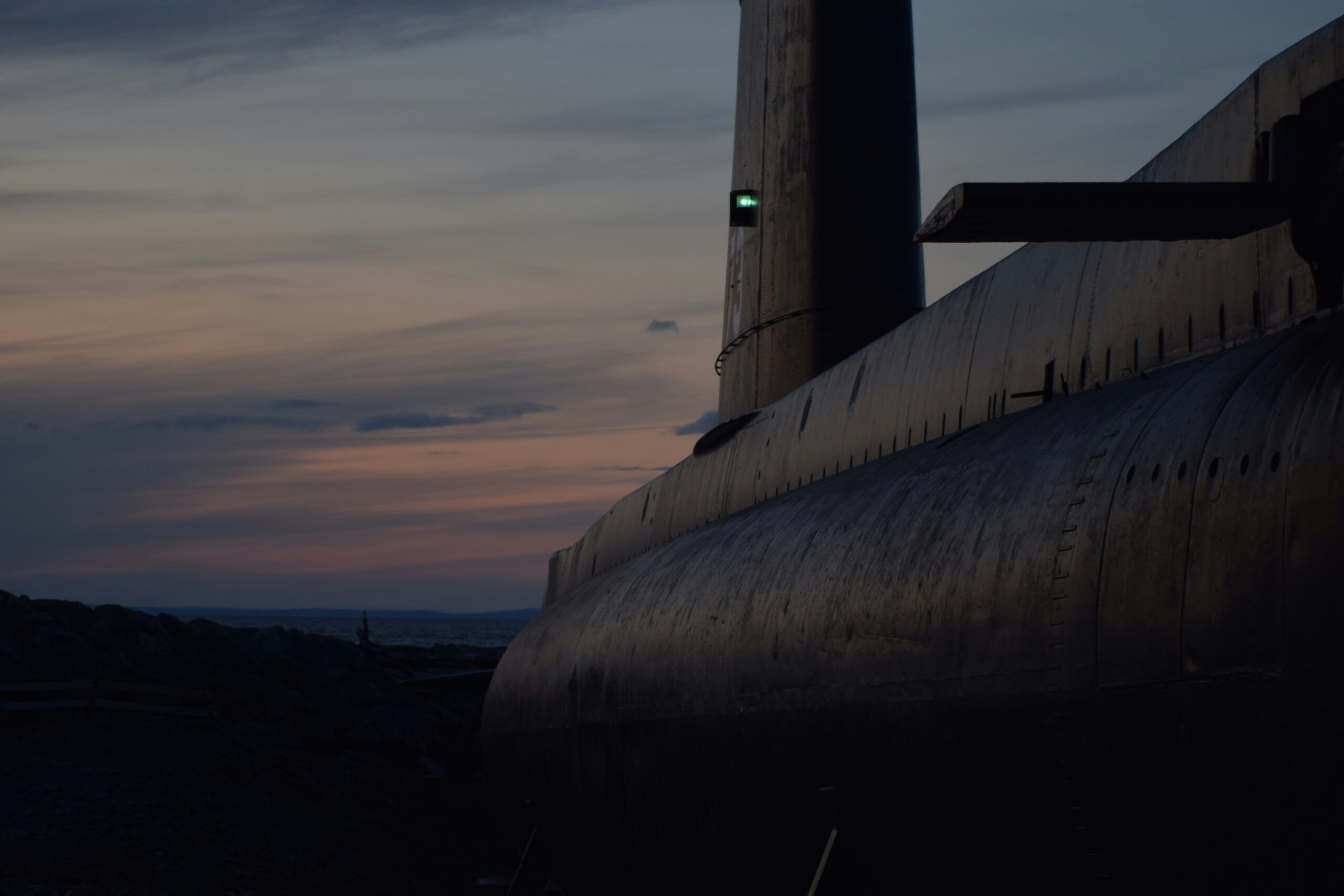

When Canada decides which submarines to buy, it is not just choosing a weapons system — it is declaring where it stands in the world. A new Atlantik-Brücke Canada paper argues that Ottawa’s pending procurement decision between German and South Korean subs will reveal whether Mark Carney’s talk of a European pivot is genuine grand strategy or geopolitical window-dressing.
The briefing paper by David Bosold and David G. Haglund examines the “special relationship” between Canada and Germany through the lens of “strategic culture,” using the symbols of middle power and linchpin as analytical anchors. The authors compare the landmark speeches by Canadian Prime Minister Mark Carney at Davos (January 2026) and German Chancellor Friedrich Merz at the Munich Security Conference (February 2026), arguing that media coverage has glossed over a crucial divergence: Carney declared a definitive “rupture” with the old transatlantic order and called for broad middle-power solidarity, while Merz urged allies to “repair and revive transatlantic trust” within an explicitly Western, values-based framework.
The paper then turns to Canada’s pending submarine procurement decision — German/Norwegian TKMS 212CD versus South Korean Hanwha Ocean — framing it as a strategic litmus test. The authors argue this choice should not be read as a revival of Pierre Trudeau’s failed “Third Option” trade-diversification strategy, nor should it be driven primarily by economic offsets. Instead, they contend that NATO interoperability, Arctic sovereignty, and transatlantic alliance cohesion must take precedence, making the German/Norwegian bid the strategically superior choice.
Read the full paper here: A different kind of linchpin