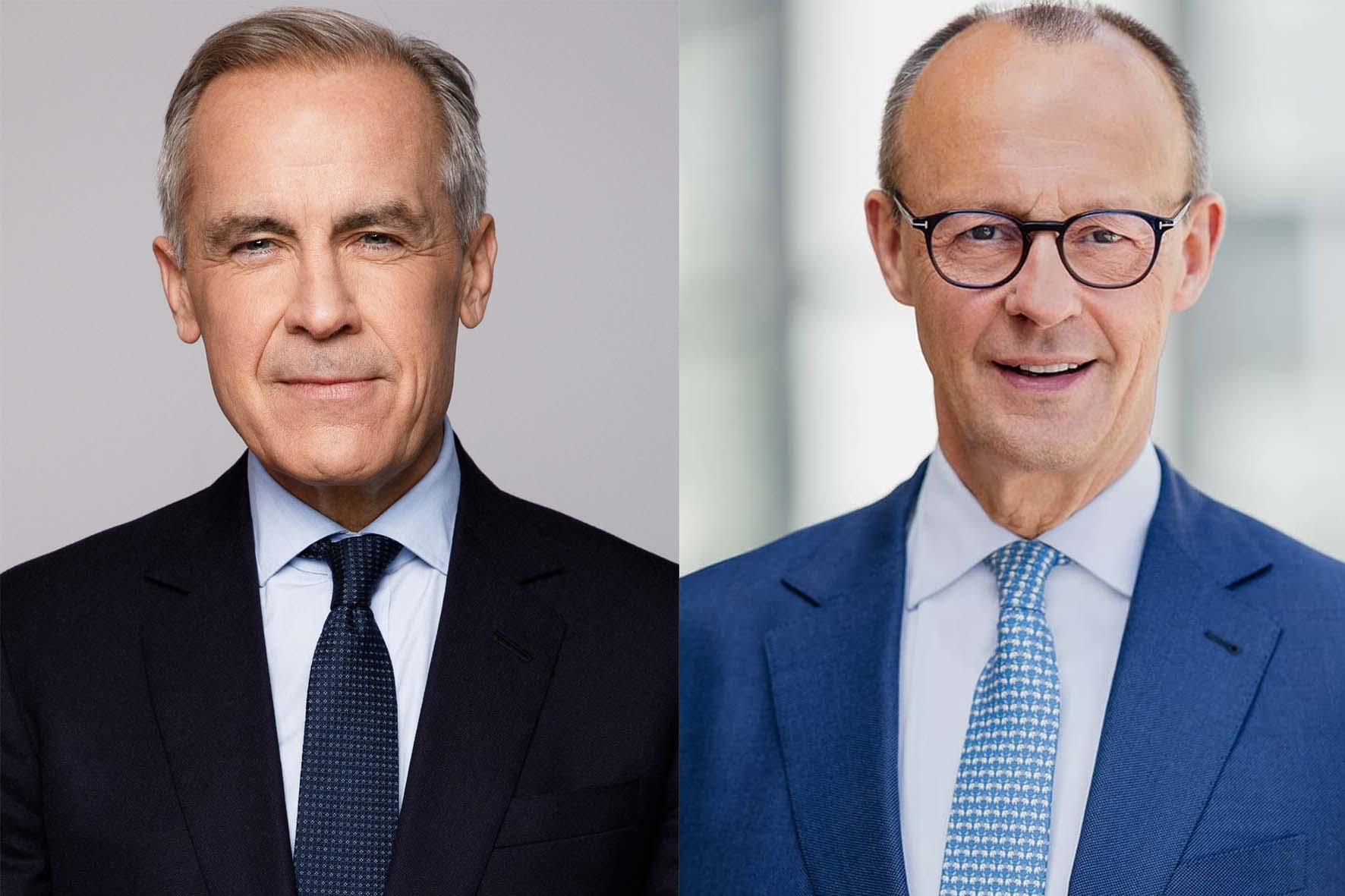

At the 39th German-Canadian Conference in Berlin, one question framed every debate: what does it take to lead in an era of disruption? Mark Carney and Friedrich Merz both took office in 2025 facing Trump’s trade wars and restless electorates — yet one has emerged as an unlikely voice of the free world, while the other struggles to win the trust of his own people.
By Moritz Meißner
If there was one single event on everybody’s mind at the 39th German-Canadian Conference in Berlin in May 2026, it certainly was Mark Carney’s speech at Davos four months earlier. The speech, which could be dubbed the Middle-Powers-Declaration, was quoted by almost every panelist and took a prominent role in the discussion One Year in Office: Balancing Global Focus vs. Domestic Challenges about the first years of Carney as Canadian Prime Minister and Friedrich Merz as the German Chancellor. Although some speakers voiced their scepticism about whether Carney could deliver on the high expectations he had raised, his speech was praised by most participants for its bravery and Carney, remarkably popular at home and abroad, appeared to have inherited the title as the de facto leader of the free world.
Trump helped Carney to find his role
What is striking about this speech is not only the content but also its improbability. When Mark Carney took over as prime minister from Justin Trudeau in January 2025 and called a federal election, nobody expected him to win. Every major poll predicted a landslide victory for the Conservatives and Pierre Poilievre. It was Trump’s trade war against Canada and his infamous 51st state campaign that allowed Carney to find his role. He took a firm stand against Washington, appealed to Canadian patriotism and presented himself successfully as the leader who would preserve Canadian independence. Having earned a good reputation as a highly competent banker during the financial crisis in 2008 and focusing on the economy, he also presented a noticeable pragmatic departure from idealist Trudeau. Carney himself called for a value-oriented realism – a term that is echoed in the Davos speech. Part of that realism is to acknowledge the ever-present threat from south of the border and to realize that the geopolitical landscape has changed for good. It was no surprise then that Carney focused on Canadian resilience in economy, trade, energy and security. The One Canadian Economy Act, which passed parliament in June 2025, attests to that.
“While Carney accepted the departure from the old-world order under Trump as the new reality early on, Merz tried to keep the status quo and lost not only political capital but also credibility.”
So far, Carney’s once unlikely reign can show some success. Canada’s GDP grew by 1.7% in 2025, the second highest growth among the G7. The major projects office – a key institution for accelerating strategic construction projects like pipelines or data centers – was installed at Calgary, currently developing 16 projects of so-called ‘national interest’. The Canadian armed forces have seen the highest enrolment in 30 years, according to Ottawa. And Carney enjoys a remarkable popularity among voters. In a recent poll Abacus Data 59% of Canadians support the course of the government – the highest number ever recorded.
At the same time, Carney faces criticism from environmental groups and members of the First Nations who fear that fast-tracking projects of national interest will lead to disregarding environmental protection standards or the right of co-determination of Indigenous groups. Speakers at the panel also identified the Alberta independence referendum as a problem for the Carney administration. A successful referendum is highly unlikely, but the campaign itself and the discussion could foster division among Canadians and damage the government.
Merz tried an appeasement strategy with Trump, but this was a fruitless endeavour
When Friedrich Merz took office in Berlin in May 2025, he had a very different start than Carney. Although he was never very popular as a politician, his new coalition conjured some hopes – especially in the business sector – after the disastrous end of the highly unpopular ‘Ampel’ government of his predecessor Olaf Scholz. Merz inherited an economic crisis and focussed on reviving the industrial sector. Unfortunately, Germany was one of the main targets of Trump’s trade war. Key industries like the automotive or the chemical sector suffered because of tariffs, high energy costs and a growing feeling of economic insecurity.
The US-Israeli War against Iran made things worse due to oil shortages that made gas prices skyrocket and led to anger and resentment in the population. Like the British prime minister Keir Starmer or NATO chief Mark Rutte, Merz tried an appeasement strategy with Trump, flattering him and bringing gifts to Washington. He learned the hard way that this was a fruitless endeavour. While Carney accepted the departure from the old-world order under Trump as the new reality early on, Merz tried to keep the status quo and lost not only political capital but also credibility.
Despite all this, Merz can still claim at least some moderate success. After the recession of the previous government, the GDP actually grew in 2025, even if only by 0.2%. Illegal migration, the second big issue of the administration, has been reduced significantly. Only about 47,000 illegal border crossings have been registered in 2025 – that number was three times as high just two years ago. However, German companies still lament a suffocating amount of regulation, high energy costs and a weak demand, all of which darken companies’ visions of the near future. So far, the administration has produced no permanent solution for that. Instead, the coalition of Christian Democrats and Social Democrats seems to repeat the fatal flaw of the previous government: key reform projects like pensions, health care or taxes are overshadowed by open quarrels that erode trust in the cabinet.
“While Mark Carney is keen on presenting himself as a leader who cares, who shows empathy, humour and real interest in his fellow Canadians, Merz seems to lack good PR advisors.”
This leads to another major problem for Merz – his style of leadership. While Mark Carney is keen on presenting himself as a leader who cares, who shows empathy, humour and real interest in his fellow Canadians, Merz seems to lack good PR advisors. He has faced backlash on numerous occasions during his first year, implying that Germans are basically too lazy and do not work enough, that they take too much sick leave and that migrants – be they legal or illegal – present a problem in German society. Polls show that Merz appears to many Germans as cold, arrogant and – being a millionaire – detached from the everyday struggles of ordinary people.
According to ZDF, 65% of Germans have a negative opinion about Merz and his government, an all-time-low for a German chancellor, as was highlighted by the panelists at the conference in their conclusion. They warned that the weakness of the Merz administration will further strengthen the AfD, the right-wing party. Once in power in states or the federal government, the AfD could impose unconstitutional measures and become a major threat to the political system in Germany that is founded on a liberal democracy.
About the author: Moritz Meißner is a Young Atlantiks alumnus from the class of 2026 and works as a news editor at Mitteldeutscher Rundfunk (MDR).