
Shaken but Not Deterred: Why I Still Have Hope for International Development After 2025
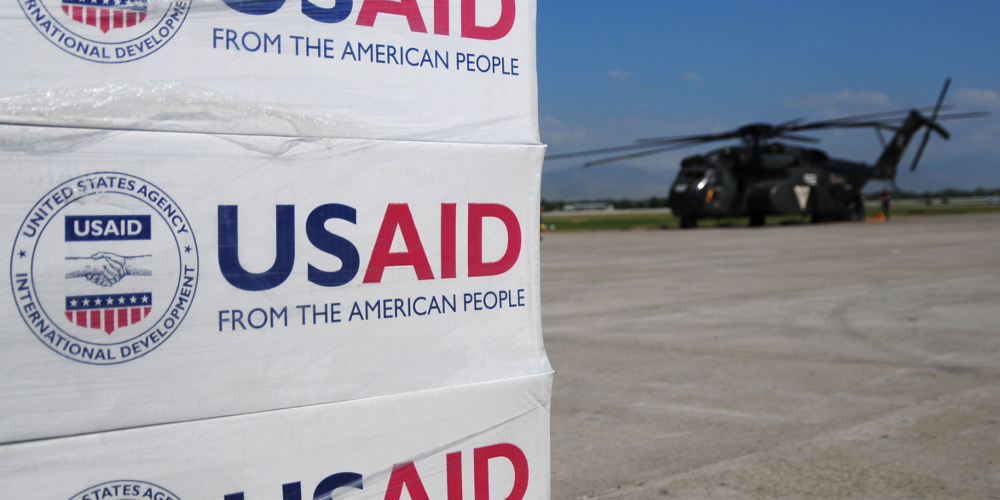 USAID via flickr | https://www.flickr.com/photos/usaid_images/4288415235 Photo: CC BY-S 2.0
The United States Agency for International Development (USAID), the world’s largest foreign aid agency, faced significant cutbacks in spring 2025 and was abolished by the Trump administration in July 2025. Tessa Coggio, who worked for a partner NGO of USAID, reflects on this process as well as its long-term implications.
There was much speculation in the days following the January 20th, 2025 executive order to freeze all U.S. foreign aid spending. Working for a partner NGO of the U.S. Agency for International Development (USAID), my colleagues and I speculated that the Secretary of State would defend development assistance as a critical foreign policy tool–as he had publicly for more than a decade. When instead we were faced with blanket stop work orders, we speculated as to how 6,200 aid programs would be fairly reviewed in only 90 days. We speculated about which words we should use–and shouldn’t use–to justify our work. How could we explain programs that improve water systems in Ghana or the Gaza Strip, provide meals to students in Madagascar, or operate community centers for women and children displaced by the Syrian War in the context of making America safer, stronger and more prosperous?
“A staggering human toll of half a million lives lost.”
This was no easy task. For decades, NGOs implemented programs on behalf of the federal government whose merits were measured more intrinsically: the number of lives saved, jobs created, school attendance rates improved, agricultural output increased, disease incidence reduced. As we compiled such impact metrics to facilitate the 90-day review, we questioned whether they would still be compelling. We speculated about whether we’d be paid for work already conducted or whether the dismantlement of USAID was constitutional. Many of these questions remain tied up in complex court cases. No matter the answer, the damage was done. Before the 90 day review period had even concluded, 83% of programs were terminated. Quite literally overnight, from Sub-Saharan Africa to Pacific Island nations to the frontlines of Ukraine, health clinics closed, food aid sat undistributed in warehouses, child vaccination campaigns ceased, demining efforts stalled. This amounted to more than disrupted programs, layoffs, and contractual questions for implementing organizations. According to estimates by the Center for Global Development, the shuttering of USAID exacted a staggering human toll of half a million lives lost and counting.
There was also speculation as to which donors might step up to fill the gap in humanitarian and development assistance vacated by the United States. The European Union, Germany, France, or the United Kingdom were floated in many conversations as alternative donors we could pitch our programs to. I was more skeptical. In 2024, Germany had already passed steep reductions to foreign aid, cutting its humanitarian budget nearly one-fifth over 2023 and slashing it another 50% in 2026. The imperative to fund more military spending in support of Ukraine’s right to self-defense has provided several European nations further ground to renege on foreign aid commitments.
“What is needed are commitments to international development with staying power.”
One year since the first executive order, I continue speculating often about the future of international development and humanitarian assistance. At the time of writing, the U.S. Congress is moving forward a bill that would provide $20 billion more in foreign aid than proposed in the President’s budget package, and global health programs in particular seem poised to return to prior funding levels. Though I enthusiastically welcome this news, international development proponents would be loath to return to the previous reliance on U.S. assistance. What is needed are commitments to international development with staying power—commitments that survive political cycles, crowd in diversified private and public funding, and cultivate locally owned solutions. Multilateral institutions, including UN agencies, the European Union, and international development banks, remain potent examples of how pooled resources can buffer against the shifting priorities of any one country and safeguard the extended time horizons needed to tackle the world’s most intractable development and humanitarian challenges.
The events of 2025 left many of us in this sector shaken but not deterred. I do this work because I believe strongly that development is not zero sum. Economic security, political stability, social justice, healthy people, and a healthy planet: more of this everywhere is a win for humankind.
 Tessa Coggio is a 2023 Atlantik Brücke Young Leader. She is a Monitoring and Evaluation practitioner with a background in international development and humanitarian assistance across Africa, Asia, Europe and the Middle East. Tessa is a graduate of the University of Wisconsin and Georgetown University Walsh School of Foreign Service. The views expressed by the author are shared in a strictly personal capacity.