
By Robert Greenway and Anna Gustafson
Midterm elections are generally shaped by the conditions of the country at home, but this year, events in the Middle East are playing an outsized role as they have on a recurring basis for decades — one reason that reducing the threat is so important. And while attacks and uncertainty over energy shipments have reached American families through higher prices, the war has, in fact, weakened a longstanding threat to the United States.
That combination, however, presents a demanding test for the Trump administration. American voters will want to know what has been secured, what Iran can still do, and whether the President has a plan to keep both prices down and the region stable after the fighting subsides. Those questions give the war a direct bearing on November’s vote.
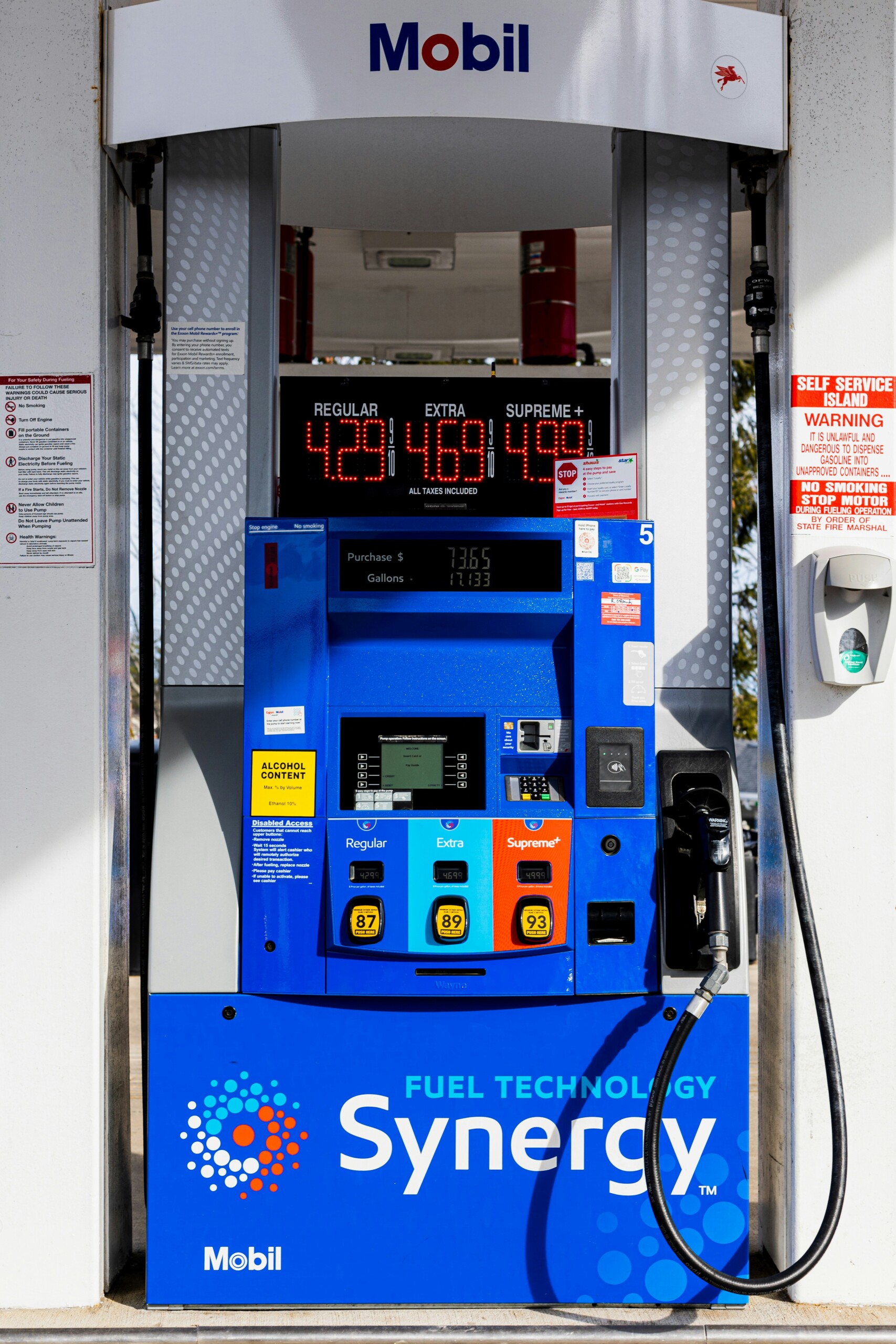
Today, the volatile nature of this conflict has led to continued fluctuations in energy prices and satisfaction. Unfortunately, this has lent itself to diminished enthusiasm and support for incumbent candidates heading into the midterms. Thus far, the public has judged the administration harshly on both the war and gas prices, which has been evident by the President’s approval ratings since the spring.
What they must understand though is the rightful adage: short term pains for long term gains.
Consumer conditions are very likely to improve as the general election approaches as the interim period between the two election cycles will provide the President an opportunity and greater latitude to further degrade the Iranian threat to vital U.S. national security interests.
Naturally, this will reduce costs and steady global markets. But in order for this to happen, there are three elements that dictate what lies ahead.
The security element
First, the U.S. and Israel have largely eliminated Iran’s nuclear program, its air defenses, naval forces, and power projection. Any residual capacity is severely constrained by the lack of support it receives from Tehran under unprecedented economic distress and limited in its ability to sustain a threat to the U.S. and its partners.
However, if left unchecked and not destroyed in the near term, this can be developed into greater capacity once again. For this reason, it is vital that we continue to disrupt, degrade and deny the IRGC and its proxies the capacity to harm American interests, our partners, and maritime commerce. That effort must proceed alongside the mission to complete a new and enduring regional security architecture, which is paramount to contain what remains and preclude its restoration.
The diplomatic element
The diplomatic aspect includes the foundation established by the Abraham Accords in President Trump’s first term. This proved that regional cooperation can indeed survive regional upheaval.
The Mecca agreement — signed by Saudi Arabia, Turkey, and Pakistan in August of this year — constitutes a milestone towards tripartite coordination but it has not yet yielded a dramatic shift in the use of force to defend mutual interests. For instance, the Houthi strikes on Saudi Arabia have continued despite the pact’s pledge to treat an attack on one as an attack on all.
Convergence of interests among key U.S. partners and allies, like those that enabled the Abraham Accords, must be leveraged to provide ample incentives to expand cooperation, build shared defense capabilities, reduce U.S. force posture, and safeguard global energy markets and trade. But to achieve this burden sharing, Washington must assign Israel and our Arab partners responsibilities that each are able to fulfill.
The economic element
Finally, and perhaps most important to midterm voters, is the economic element. Since the start of the conflict markets have been consistently disrupted, yet they will stabilize as shipping resumes and the risk of further Iranian attacks recedes. And while neither outcome is assured before November, in time, more reliable energy flows will bring a marked advantage to both global markets and the U.S., as the principal beneficiary and guarantor now.
Given that fact, it is equally vital to appreciate the President’s efforts to dramatically increase domestic energy production and exports while removing obstacles posed by adversaries and increasing cooperation with Venezuela and our gulf partners, all while taking decisive action taken to eliminate the Iranian threat.
The world has also witnessed the U.S. aggressively pursue its vital interests without impediment. Neither Russia nor China have been willing or able to demonstrably avert actions taken against their erstwhile allies damaging their reputation as an ally alternative to the U.S.
The result of these actions has led to the constraining of Moscow’s access to export revenue through effective market controls, curbing their capacity to sustain the war in Ukraine, as well as constraining Beijing’s ambitions which are wholly dependent upon access to external energy. This strategic leverage is incalculable, and the administration is owed credit on this front.
Regardless, the public must keep in mind, markets will stabilize, efforts will be redirected homeward, and Iran will no longer pose a threat to U.S. interests. This is the purpose of America First: we battle external threats in order to tend to domestic needs and seek a more prosperous future as a nation.
As American voters and allies abroad look to November, I would ask them to measure this war by the dangers it has removed and the order it will leave behind and to remember that this conflict is not being carried out by the Trump administration in spite of them, but rather to protect them. Foreign policy comes with no shortage of trade-offs, but the total elimination of the Iranian threat will only make the world safer for all.
About the authors

Robert C. Greenway is Senior Vice President at American Global Strategies.

Anna Gustafson is Research Associate at American Global Strategies.