
Professor Simms, how does the return of the Great Powers materialize politically, economically and militarily?
It means the end of a twenty-year or so run from the end of the Cold War during which we assumed that the world was inexorably globalising, governance had overcome geopolitics, and that Great Power war had become, to use Kishore Mahbubani’s term, a ‘sunset industry’. We must now assume that supply chains will be threatened, that industries will have to ‘onshore’ or at least ‘friendshore’ to some degree and that adversaries will exploit ‘chokepoints’ and other vulnerabilities. The return of Great Power politics also means that the military – especially nuclear strength – of the Russian Federation outweighs the economic heft of the EU when it comes to questions like Ukraine and European security, or so it would appear.
What is the main consequence of the new Great Power competition between the United States, China and Russia for the transatlantic partnership between Europe and the US?
The immediate risk is that Europe gets dragged against its will into a conflict, or at least without being consulted. There is also, paradoxically, a danger that the three powers will combine in a kind of ‘Yalta 2.0’ and divide the world up between them, though I think that prospect has been overstated. One consequence that is often missed is that the EU has become more dependent on UK support, generally but especially in military terms. One sees this, for example, in the importance placed by Brussels on the British-led Joint Expeditionary Force in the Baltic and the High North which it had resolutely ignored for several years.
How do you assess Prime Minister Carney’s approach outlined in his speech at Davos this year that in this geopolitical phase of history middle powers like Canada, Germany, Japan, South Korea and many others should collaborate in a strategic alliance?
Yes, they should certainly do that, preferably through NATO and/or the EU as far as the Europeans are concerned. I think that the new strategic alliance should actually be the ‘Rest of the West’, made up of the UK, Japan, Canada, Australia, South Korea and a few odds and ends. This would be economically almost as strong as the EU and militarily stronger. Together with the second West, the EU, it could compensate for the unreliability of the former leader of the West, the US, and help to balance the west’s two great adversaries, the eastern autocracies of the Russian Federation and the People’s Republic of China.
European Commission President von der Leyen has offered Canada an ‘associated EU membership’. What do you think of this unprecedented invitation?
This strikes me as basically a gimmick, given the past difficulties in concluding trade deals. It is largely a question of ‘mood music’ to indicate that the two will hold together in the face of the threats from President Trump. There is also some political posturing here from Prime Minister Mark Carney, who is positioning himself within his own country as the defender of Canadian sovereignty. In reality, the security of Canada is guaranteed by NATO (we hope).
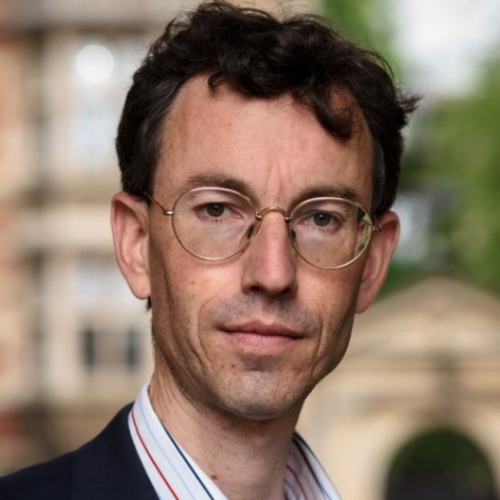
About the author: Brendan Simms is the director of the Centre for Geopolitics at the University of Cambridge and the author of The Return of the Great Powers.