
„This is an issue that unites both sides of the political aisle“
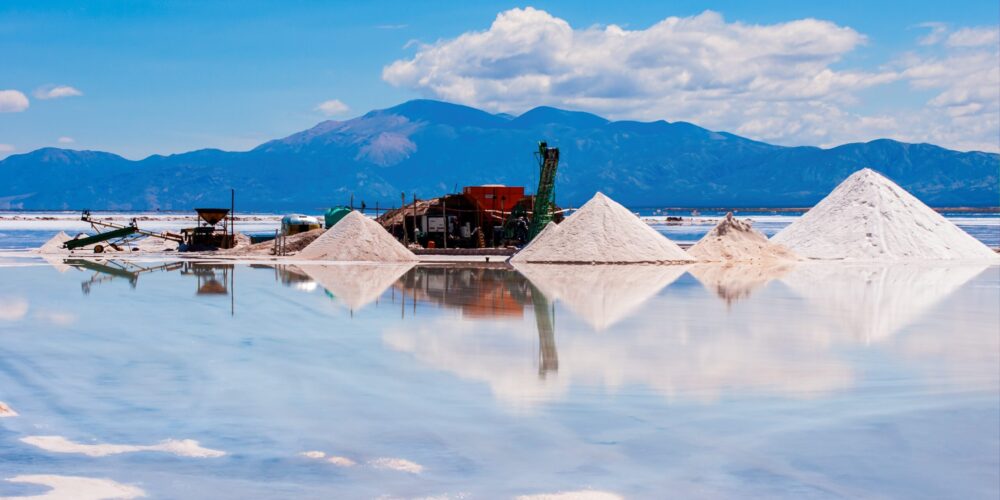
Critical minerals have become a key factor for economic security and technological innovation. Together with our Regional Chapter Hamburg, US Consul General Scott Woodard discussed strategies to reduce dependence on China for critical minerals during an event in April. In this interview, he sketches out the US‘ government’s strategy to increase supply chain resilience.
- Dear Consul General, can critical materials mined and processed outside China realistically match Chinese pricing without long-term government support, or is a permanent cost gap inevitable?
Woodard:
Given the scale of the challenge, the West requires a serious response. This is why the Trump administration has proposed significant new policies and proposals for working with other countries also concerned about secure supply chains, like Pax Silica, FORGE, and Project Vault. It is also why the Department of War launched its unprecedented engagement with MP Materials and is supporting historic investments in U.S. mineral processing capacity. The United States and its partners need to take these kinds of measures to ensure the security of critical minerals supply chains. This administration is also taking strong action to reduce the red tape that slows the process of bringing new mines and processing online in the United States.
- China has built its dominance across the critical materials value chain over decades. How long will it take for the U.S. and Europe to achieve supply security and reduce dependency?
Woodard:
Significant progress is already being made, given energetic action by the Trump administration and partner countries that recognize the risks in current supply chains. These and other actions will continue until we assess that the risks are successfully managed. This is an issue that unites both sides of the political aisle in the United States, ensuring long-term support for these efforts. We want to establish a marketplace of trusted buyers and sellers that reflects the real cost of extraction, recycling and recovery, processing, and trade of critical minerals and refined products in a market-based economy. As Secretary Rubio said, “Our goal is to have a global market that’s secure, a global supply that’s enduring and is available to everyone, every nation, at an affordable price.”
- Some incentives under the Inflation Reduction Act are attracting critical materials projects from Europe. Is Washington willing to adjust these incentives to avoid putting Europe at a structural disadvantage?
Woodard:
One of the purposes of initiatives like Pax Silica and FORGE is to identify where and how we can create and strengthen pathways towards dependable supply chains. As Vice President Vance said at the Critical Minerals Ministerial in Washington in February, “The international market for critical minerals is failing. Supply chains remain brittle.” FORGE partners, for example, will collaborate at the policy and project levels to advance initiatives that strengthen diversified, resilient, and secure critical minerals supply chains.
- Germany’s automotive and chemical sectors remain heavily dependent on Chinese suppliers — and Berlin has so far resisted calls for aggressive decoupling. In Washington’s view, where should Germany draw a harder line on supply chain diversification, even at the cost of industrial competitiveness? And where does the U.S. accept that economic pragmatism will prevail?
Woodard:
All of our partners in FORGE – and Germany is one – recognize the risks inherent in the status quo. The United States has announced Action Plans for Critical Minerals Supply Chain Resilience with Mexico, Japan, and the EU. These Action Plans will serve as a foundation for the U.S. Trade Representative’s (USTR) work to develop a binding plurilateral agreement to secure our critical mineral supply chains. As Secretary Rubio said, “This must be an international, global initiative with likeminded countries who all have one thing in common. We want to see a diverse supply of critical minerals and secure and resilient supply chains across the world.”
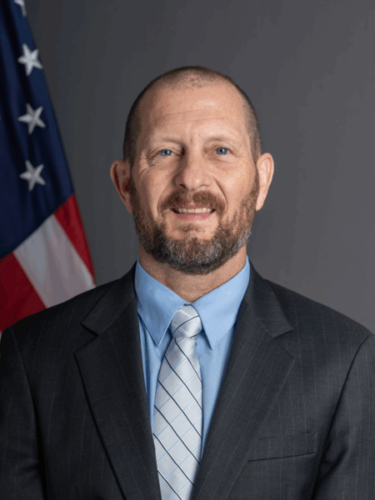 Scott Woodard has been serving as Consul General at the U.S. Consulate General in Hamburg since August 2025. Prior to this role, he worked at the U.S. Department of State’s Bureau of Energy Resources as Acting Deputy Assistant Secretary for Energy Competitiveness and Supply Chains, focusing on strengthening resilient energy and mineral supply chains. A career member of the U.S. Foreign Service since 2002, he has previously served at U.S. embassies and consulates in Manama, Vilnius, Chennai, Bern, and Munich.