
Trotz horrender Kosten für Tickets, Hotels und Transport und der schädlichen Wirkung der ICE-Einsätze in US-Städten geht der frühere Botschafter und Gouverneur Phil Murphy von einem Erfolg der Fußball-Weltmeisterschaft für die USA, Kanada und Mexiko aus. Was die sportliche Leistung der US-Nationalmannschaft und der DFB-Elf angeht, ist er ebenfalls ein Optimist.
By Robin Fehrenbach
Governor Murphy, what is your perspective on the meaning of the upcoming tournament for the state of New Jersey with the MetLife Stadium being the location for the final?
It’s a huge deal. We are co-hosting the World Cup with New York City. So, it’s New York and New Jersey as partners. My wife, former first lady of the state of New Jersey, Tammy Murphy, is the chair of the host committee. We’ve got a great relationship with New York, and that’s interestingly through three different mayors: Bill de Blasio and I pitched this initially; Eric Adams and I were the honorary chairs, if you will; and now Zohran Mamdani, who’s a huge soccer or football fan, in his case of Arsenal London.
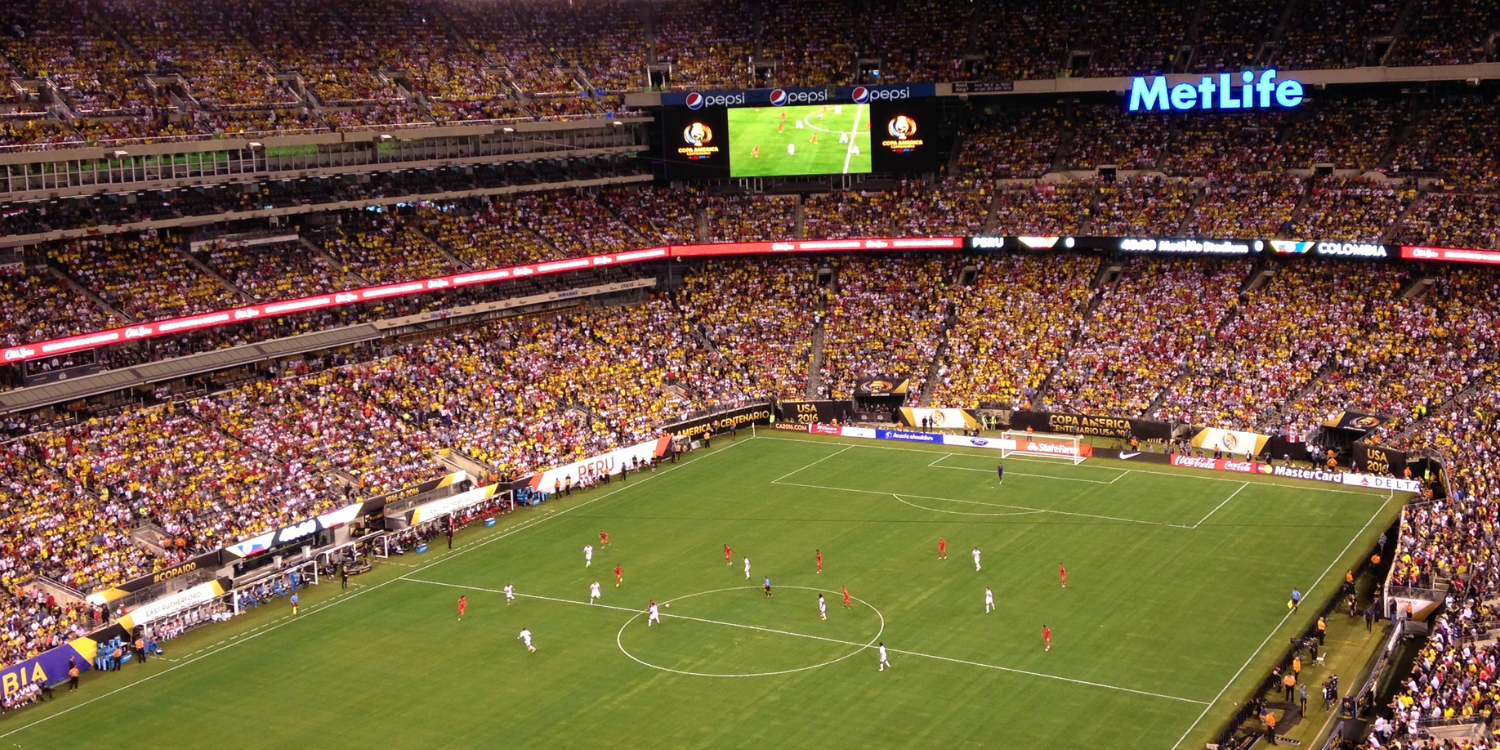
[related]We have eight matches at MetLife Stadium, which will be renamed New York, New Jersey Soccer Stadium, with five first round matches, including Germany vs. Ecuador, which should be terrific. That’ll be Germany’s toughest match in their group stage. Then we have a round of 32. As you know, this is now for the first time ever a 48 nation tournament, which is a new wrinkle with a bigger field. We then have a round of 16. And as you rightfully point out, we have the World Cup final at 3 pm New Jersey time on Sunday, July 19.
We expect visitors somewhere between two to three million coming into the region. The economic impact is measured in the billions of US Dollars. Employment is measured in the double-digit thousands. Not to mention what this will do to football in America, the legacy, that will unfold long after the 39 days. For all the above reasons, it‘s a tremendous deal, both for New Jersey and New York, but more broadly for America, Canada, and Mexico.
You just mentioned it briefly: What are the most important economic ramifications of the biggest sports event in the world for New Jersey and the United States as a whole?
I don’t have a number for the US, but the estimate of the economic impact is 3 billion US Dollars for the New York, New Jersey region. Each of the state of New Jersey and the city of New York and state of New York, plus private sector money will be financing this. But you’ll get a 7 to 10 times return on any amount of money that gets invested in terms of economic impact. I mentioned employment. The number for the United States more broadly, Canada, and Mexico, will be much bigger.
The estimate of the economic impact is 3 billion US Dollars for the New York, New Jersey region.
Interestingly, the last time the US hosted the World Cup was 1994, and it was a 24-team tournament. That was the last year in the history of the event with 24 teams competing in the tournament. To this day, that World Cup set the all-time attendance record. That tells you two things, certainly for America. Number one, the interest in soccer or football and specifically the World Cup is very high. And number two, we have very big stadiums, and we will fill them.
Let’s get to another issue. The brutal ICE operations have shocked not only citizens in the United States, but people around the world. What are the implications for the security of international guests during the event?
First of all, Donald Trump got elected or reelected in large part because he promised to secure our borders. President Biden actually had done that towards the end of his administration, but it was perceived that we had not secured our borders sufficiently, particularly the Southern border. So, President Trump runs full square on that commitment. And that is the case today: The southern border is largely secure. It has been done in a way that I wouldn’t have done it in terms of separating families, diminishing our status as the world’s immigration nation. In other words, there’s a humane, smart way to do that and still achieve the same results. Overwhelmingly, the American people want secure borders. And Donald Trump tapped into that. The problem is he took a very unwise, ill-advised, and brutal step that the American people did not ask for, which was inside of the United States to aggressively prosecute an immigration agenda. He’s paid a price for that. It’s clear that the public pushed back on that, not just in Minnesota, but elsewhere, certainly in New Jersey.
The American public is not just okay with secure borders. They also want a low crime, safe country. They want their communities, their streets, their cities, their states, their country to be crime-free. New Jersey is rated the safest state in the nation when I left office three months ago. A big part of that reason, not the only reason, is that we pursue a criminal justice agenda and not an immigration agenda. If you’re a criminal, we’re coming after you – we don’t care what your immigration status is. As opposed to, we’re coming after you because we want to check on your immigration status when there’s no evidence at all that you’ve ever committed a crime.
I have absolute and complete confidence it will be secure so that families can go feeling good about their personal safety, the fan experience, the transportation to and from.
Specifically to the World Cup, I have absolute and complete confidence it will be secure so that families can go feeling good about their personal safety, the fan experience, the transportation to and from. I cannot speak for the Trump administration. But as we sit here in late April – and I base this as well on our experience hosting nine matches, including both semis and the final for the Club World Cup last summer, where there was some noise around ICE agents at matches, that turned out not to be the case – I don’t expect that will be an issue for this World Cup either.
Could you elaborate on the overall image the United States under the Trump administration would like to convey to the rest of the globe, particularly in the partnership with its Mexican and Canadian neighbors after having some tensions on different policy fields like most of all trade and tariffs?
You can imagine my perspective. I did not vote for President Trump. I’ve tried as Governor and I will always try to find common ground. And we were reasonably successful at that. But so much of what he stands for our image, our turning our back on 80-year-proofed institutions like NATO, on multilateral institutions, on our allies, not speaking to our allies, I don’t support any of that. That is against every fiber I have, both as a former Governor and as a former Ambassador, in my case, to the Federal Republic of Germany. Let me be crystal clear: I know for a fact that President Trump is a huge fan of the sport and of this tournament. You saw last summer a very successful Club World Cup. And you saw him very much in the middle of that, including at the final between Chelsea and Paris Saint-Germain. I’m optimistic that the Trump administration knows that this is a big deal and the world is watching. Frankly, that Americans are watching and this will be a success because they will realize that is in their self-interest to make sure that this is a success.
I know for a fact that President Trump is a huge fan of the sport and of this tournament.
When I first became Governor, it was not yet clear that the US, Mexico, and Canada would win the right to host the World Cup. As a Democrat and as a sitting Governor, I supported President Trump’s inclinations and was pitching that he would do the right thing at the end of the day. As much as I’m not a fan, and I’m certainly not a fan of our global image right now, I believe with a high degree of conviction, that this will be a successful World Cup.
Yes, we’ve had our differences with Canada and Mexico. Canada is the principal trading partner with 36 of the 50 American states, including New Jersey. In Mexico, where I’ve been twice in the past six months, there are clearly some more challenges, particularly with the drug cartels and the Southern border, which I understand. But this is our neighborhood. Again, I believe, the tournament will be a success, not just through the American lens, but through the lens of all three countries.
Affordability is a major social issue in the United States. However, tickets for the World Cup matches are very expensive, costs for transportation and accommodation are high. Will the World Cup only be an event for wealthy people and exclude other citizens from participating?
No, with a high degree of certainty. Where that debate is today versus where things settle in June and July, may be very different worlds. But I’ll make a couple of comments. Number one, FIFA has already said they would put aside much more fair-priced tickets for fans of countries that are in those matches. That was a good first step. Secondly, FIFA uses dynamic pricing aggressively, meaning they are very good at finding the supply-demand crossover and getting that into equilibrium. One message I might have for fans is to watch and wait as this settles out. I’m confident that there will be tickets available that are affordable. Only FIFA controls ticket prices.
You mentioned affordability more broadly. Having said that, I know there’s been a lot of noise around the transit costs. That will also land in a place that is acceptable. With regard to housing, there’s still plenty of places where you can get a hotel room, an Airbnb, rent a house, whatever it might be. I’m confident that both the in-stadium experience and what it costs a family to get to and from and spend the night will settle in a more reasonable place.
One last comment: In New Jersey and in New York there will be a whole range of fan zones and fan neighborhood activations. We are the most diverse region in America. The diaspora is already present. If you went to Paterson, New Jersey, you’d find one of the largest Moroccan communities in America and in the world outside of Morocco. If you went to the East Ward of Newark and you said, I want to meet someone who speaks Portuguese, whether they be Portuguese or Brazilian, they will line up around the block with folks who speak Portuguese, just to pick two examples.
Do you think that European football or American soccer, as it is called, will finally have its breakthrough moment in the United States through the help of this big tournament?
I politely argue a little bit with your premise. First of all, the 1994 World Cup is responsible for the explosion of interest in soccer that’s already taken place. If you look at the youth level, it’s the number one participated sport in America. Secondly, the World Cup of ’94 gave birth to the men’s high-level professional league, the Major League Soccer, where Lionel Messi plays and David Beckham had played. This was a successor, if you will, to the professional leagues in which Pelé, Giorgio Chinaglia, and Franz Beckenbauer played the end of their careers in the early 1970s. Girls and women have participated, not just in soccer but in sports, at a very high level for five or six decades, partly because of a law called Title IX. It mandates that any public dollars spent for boys and men in athletics must be spent at the same amount for girls and women.
Let’s now accelerate from 1994 to 2026. The MLS has come a long way. It still needs to travel another long way. I think, this World Cup will help propel that. Put differently, I want to see Leo Messi in a club team at the age of 23, not 38. I love him. And I’d love to see Thomas Müller, who came to the Vancouver Whitecaps at the age of 36, at the age of 23. Our very best American players, for the most part, still go to Europe to play. The women are the top one, two, or three team in the world every year. We are the defending World Cup or Olympic champions almost no matter what year you look at for the past several decades. The NWSL, our women’s professional league, competes at world class level. My family and I own a piece of the New York, New Jersey team called Gotham FC. The German Ann-Katrin Berger is our goalie. Esther González, who was the striker for Spain, is our striker. Rose Lavelle, who I would argue is our best player, plays in our club team.
You’re going to see a lot more pitches built in neighborhoods that right now don’t have any access to soccer. You’ll see an increase of playing boys and girls who otherwise would not have played the sport.
I also think finally you’re going to see a lot more pitches built in neighborhoods that right now don’t have any access to soccer. You’ll see an increase of playing boys and girls who otherwise would not have played the sport. The World Cup of ’94 put us on the map and built a foundation. This World Cup will take us to new heights.
Let’s come to the final question. How will the US team and the German team perform throughout the tournament?
Well, those are two very different answers. Right now, if you look at the betting odds, you’ll see Spain, France, England in that order as the three favorites. Then you have a cluster, which includes Brazil, Argentina, Holland, and the Germans. By the way, we speak with our German friends, who know a lot more about this sport. Sami Khedira has become a very close family friend among others. The German lens on this team is more critical than the non-German lens. Folks look at the back line and perhaps the goaltender in the absence of Manuel Neuer, and I assume the answer is Neuer is still not going to be on the squad, and raise more questions than they normally would for a German team going into a World Cup. I have no issues with the midfield and the strikers. They hold up against everybody with the possible exception of France and Spain. I personally think they will surprise. It’s not hard to get into the round of 32. If you look at the brackets, I believe they would meet France in Philadelphia on July 4th, which is the 250th birthday of America. That will be their toughest match. They play Ecuador in New Jersey. Germany is at a minimum a quarter-final to semi-final team.
Regarding the Americans, I’m hopeful. They had a very challenging recent international window. They got outclassed by Portugal and Belgium. We’ve got a lot of good players. Mauricio Pochettino is a world-class trainer. The tournament needs the Americans to do well which means at least a quarterfinal presence. That’s where they were in 2002 when it was South Korea and Japan as hosts. The Canadians and Mexicans probably also are pleading the same. The Americans are our favorite team. Right behind that would be the Germans. But the tournament is a better tournament if the Americans go deep, certainly if the Mexicans go deep, if Alphonso Davies is healthy and the Canadians can go deep. If you’ve got the hosts still in it, you will keep the three countries, their citizens and fans excited. That has a spill-on effect into the broader success of the World Cup.
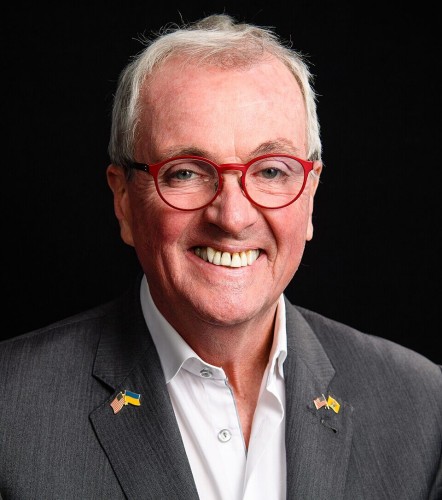 Philip Murphy was U.S. Ambassador to Germany and Governor of the state of New Jersey. He is also a long-standing member of the Atlantik-Brücke.