Ten young professionals will travel to Washington DC, Philadelphia and New York City with the New Bridge Program.
... more

Workstream Digitization
New Bridge to the US: Class of 2026
“There is nothing US trade partners can do to prevent tariffs of 10 or 15 percent”
Trade law expert Peter Harrell assesses what effect the US tariffs based on forced labor have for the Turnberry agreement with the EU.
... more
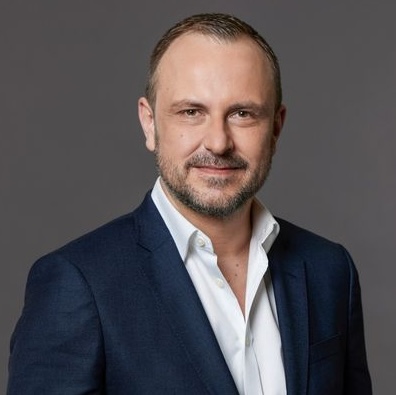
“We have to accomodate the U.S.“
In a short interview, Prof. Dr. Peter Neumann answers current questions on international security policy.
... more
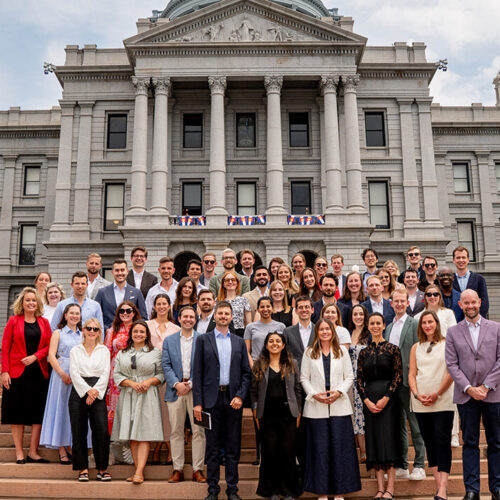
What Colorado’s Town Halls Reveal about the Transatlantic Bond
The FAZ journalist Kati Schneider brings one clear message back home from the Young Leaders Conference 2026 in Denver: Let's all look at the local level where the foundation of lasting relations between the US and Germany is actually built.
... more
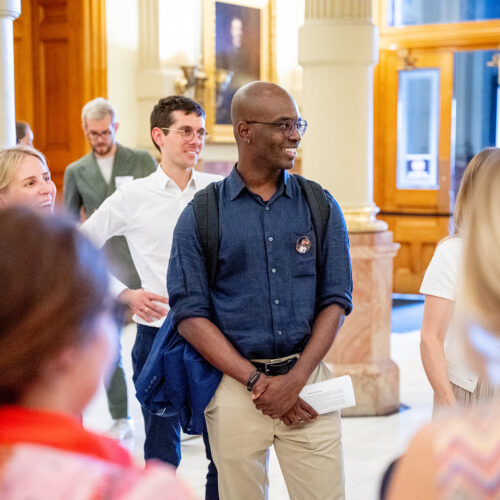
Crises, Compromise, and Karaoke: Inside the 2026 Young Leaders Conference
Fifty young Europeans and Americans gathered in Denver to tackle the toughest questions facing transatlantic relations — they didn't solve them, but they didn't shy away from naming them either, writes New York Times journalist Derek J. Arthur.
... more
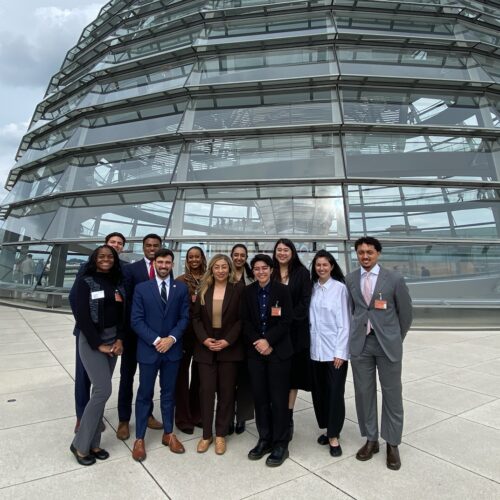
Beyond Burden-Sharing: The Urgency of Transatlantic Readiness
Our New Bridge to Germany alumnus Neal VanMarter reflects on European defense readiness.
... more
“Multicultural Germany is not a proposal”
Anas El Yousfi reflects on Germany as a multicultural society and the gap between this lived reality and political debates surrounding migration and integration.
... more

“How do we encourage students to think critically when answers are available in seconds?”
The History Teacher Kyle Youngblood reflects on how to implement AI in the education process.
... more
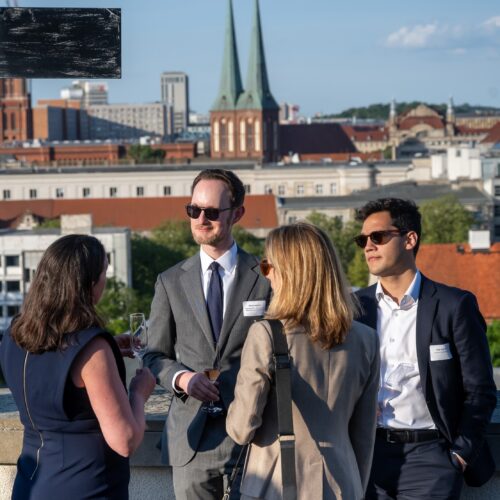
A look back at the Young Atlantiks Program 2026
How can Canada and Germany deepen their partnership and offer each other stability amid rapid and far-reaching change in the global community? was the central question guiding the Young Atlantiks Program 2026.
... more
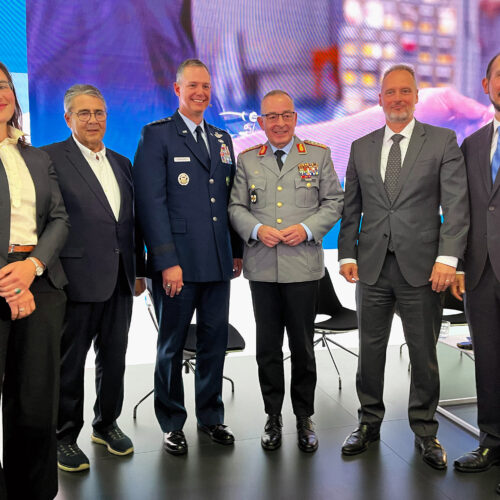
“2029 is the Red Line”: SACEUR-Talk on Europe’s Defense Buildup
At the Atlantik-Brücke's SACEUR-Talk during the ILA in Berlin, Breuer and Grynkewich called for pace and honesty – and set 2029 as a binding deadline for Europe's defense buildup.
... more
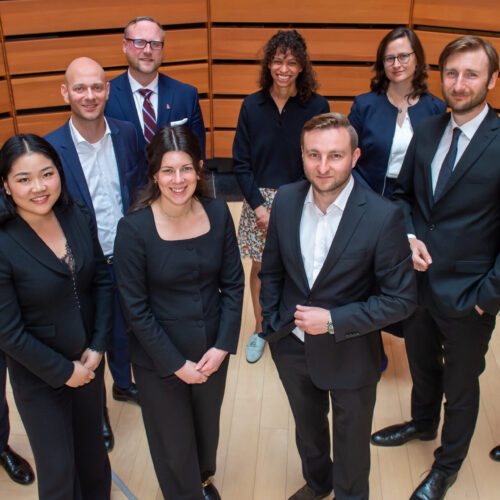
Building Bridges That Hold
How can two middle powers, facing a more contested and unpredictable world, strengthen each other's position rather than navigate it alone? Find out in this analysis by an alumnus of this year's Young Atlantiks cohort.
... more
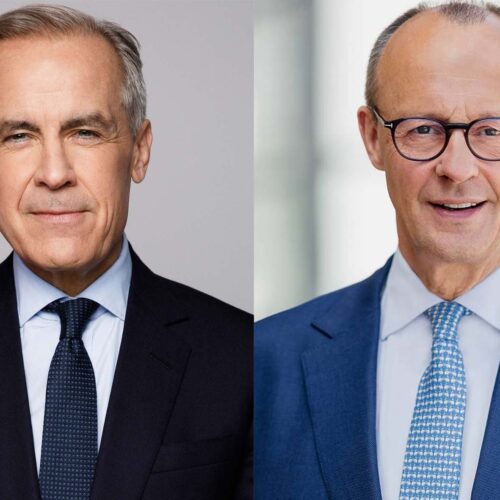
Lessons in Realism: Carney’s Rise, Merz’s Stumble
Young-Atlantiks-Alumnus Moritz Meissner analyzes Mark Carney's and Friedrich Merz's first years in office.
... more
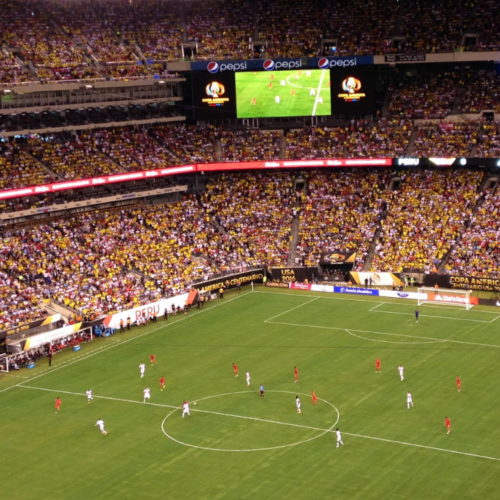
„This World Cup will take us to new heights“
Phil Murphy was instrumental in presenting the World Cup prominently in the greater region of New York. He is optimistic that the tournament will be a success story.
... more

Can Mexico and the United States host a World Cup together?
The NAFTA world cup is beginning soon, but the host countries' relationships are under significant strain. Antonio De Loera-Brust shares his thoughts on the matter.
... more
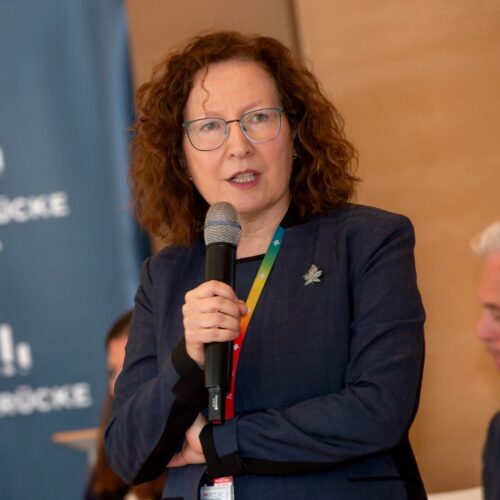
„There is already a Hype in Canada about the World Cup“
In an interview with the Canadian Ambassador, Vera Alexander, we spoke about sports diplomacy as well as the mood in Canada ahead of the World Cup.
... more
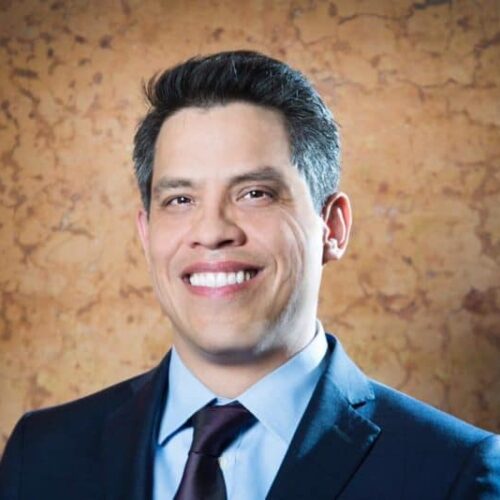
“The World Cup is an opportunity to showcase Méxiko”
In a short interview, Ambassador Francisco José Quiroga Fernández tells us what Mexico hopes to gain from the World Cup.
... more
Canada, Germany, and the Future of the Western Alliance
The briefing paper by David Bosold and David G. Haglund examines the "special relationship" between Canada and Germany through the lens of "strategic culture".
... more
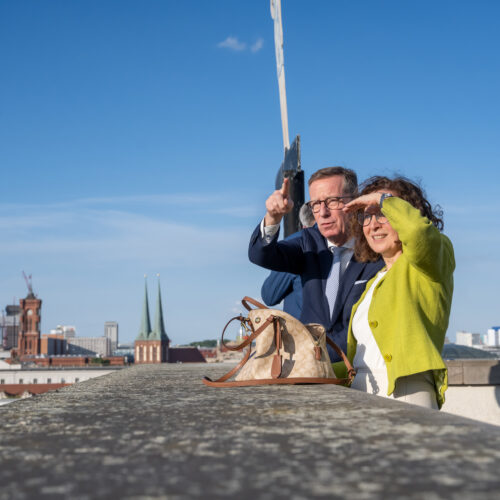
Emerging Middle Powers: Germany and Canada Seek a Common Path
The 39th German-Canadian Conference of the Atlantik-Brücke explored how two middle powers can jointly expand their room for maneuver in a world order shaped by great-power competition.
... more
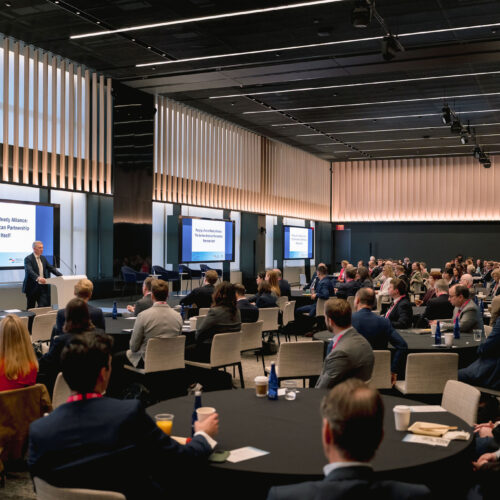
Semiconductors, High Tech, Trade Power: The German-American Partnership Seeks New Answers
Under the theme “Forging a Future-Ready Alliance,” representatives from politics, business, and research discussed the redefinition of German-American relations at the German-American Conference on May 11, 2026, in New York.
... more

“It’s the job of the state to secure society”
In the aftermath of the event “Artificial Intelligence and the Future of Espionage”, Dr Anthony Vinci discussed the limitations of AI within intelligence agencies.
... more

New Bridge to Germany: Class of 2026
We are happy to introduce our next New Bridge to Germany cohort.
... more
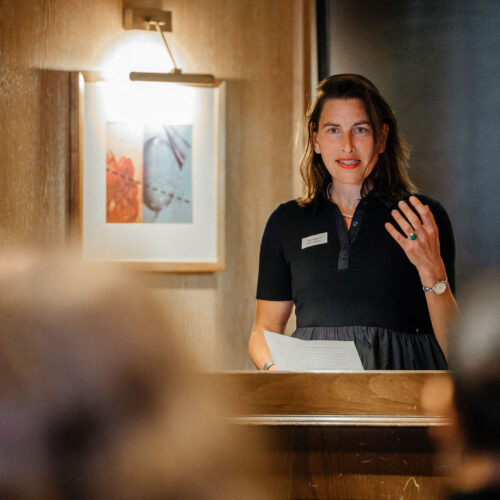
What the Iran war teaches about partnerships
The attack on Iran marks the end of unilateral U.S. action, according to our CEO Julia Friedlander. In a speech, she traces how sanctions turned into bombs, why Trump is a relic, and why this war is also Europe’s war.
... more
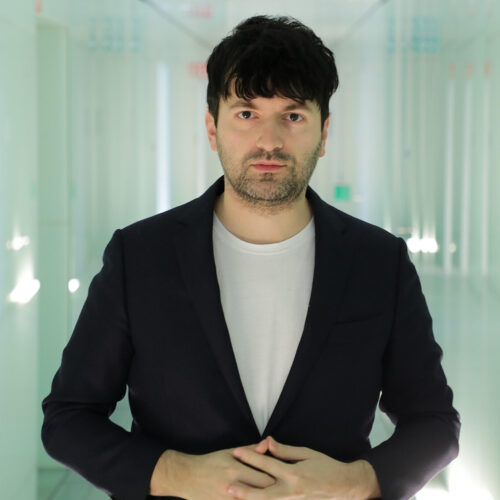
Why New Players Will Decide Europe’s Security
Cumbersome platforms, long procurement cycles, and bureaucratic institutions: Sven Weizenegger explains why Europe is losing the competition for talent and technology because of its own structures.
... more
“We are experiencing the largest disruption of oil and gas supplies”
In our latest edition of “Better Be Prepared,” we discussed the implications of the ongoing conflict involving the United States, Israel, and Iran for global energy markets.
... more
„The Effectiveness of the UN Security Council is more or less zero“
In our latest edition of "Better Be Prepared", we had the pleasure of discussing the relevance of international law with Monica Hakimi and Michael Kubiciel.
... more
Can Europe Learn from Its Mistakes?
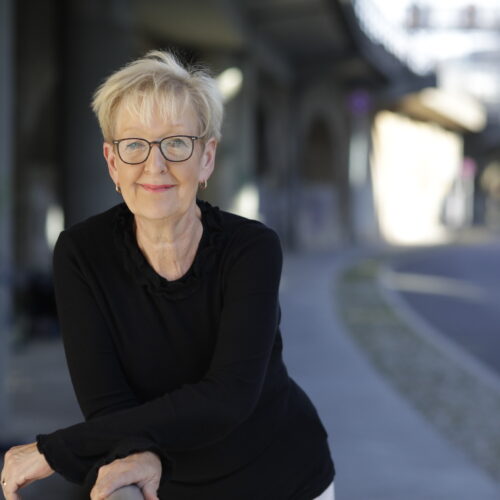
NATO veteran Dr. Stefanie Babst on a series of political missteps—and why Europe finally needs the courage to set things right.
... more
“I do not think that the death of Khamenei would change anything”
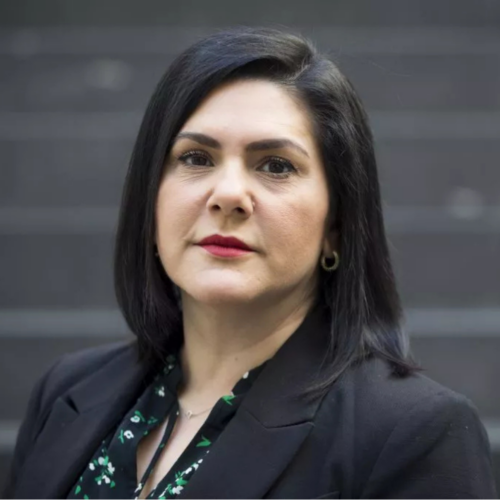
We had the pleasure of hosting a discussion between Mariam Claren and Kirsten Fontenrose on the possibility of regime change in Iran.
... more
“We firmly believe the DMA needs a complete overhaul”
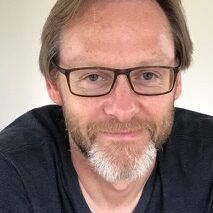
After three years in place, is the DMA a blueprint for competition law or an obstacle to innovation? Read a Q&A with Gary Davis, Apple's Senior Director of Regulatory Legal.
... more
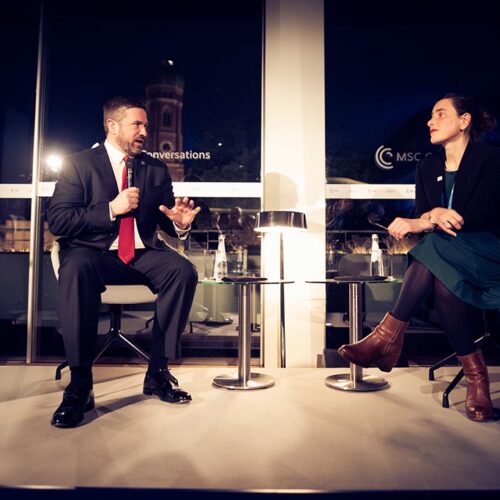
MSC 2026: Shared responsibility in uncertain times
Security issues, defense technology, and social trust: Atlantik-Brücke brought together experts from politics, academia, and business at the Munich Security Conference.
... more

German-Canadian Young Atlantiks Program 2026
Call for Applications: Emerging professionals from Germany and Canada are invited to apply for an intensive five-day exchange in Berlin.
... more
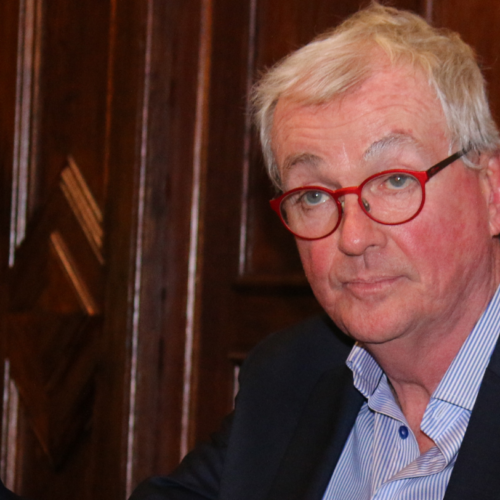
“I have enormous regard for Atlantik-Brücke”
Phil Murphy, former US Ambassador to Germany, on the importance of subnational actors, innovation on both sides of the pond and how to push back against ICE.
... more
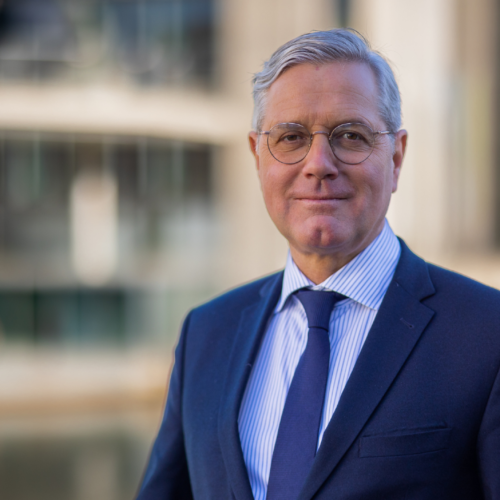
“The U.S. positions on Russia Are Not Compatible With Our Own Security Interests”
MP Norbert Röttgen calls for Europe to urge the United States to comply with international law.
... more
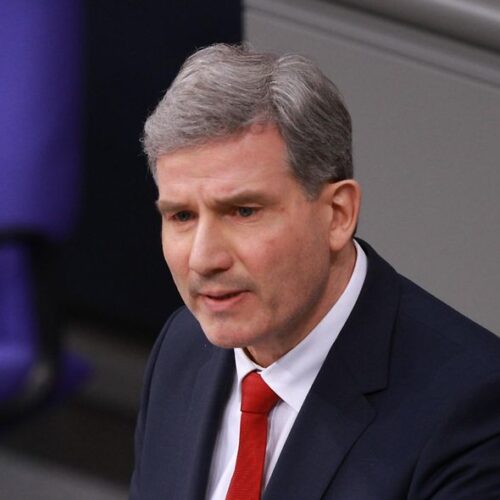
„Strategic decoupling would be damaging for Europe“
Transatlantic Coordinator Metin Hakverdi continues to see the United States as Europe’s partner – he sees it as in the continent's own interest.
... more
Call for Applications: New Bridge to Germany
The application period for New Bridge to Germany | Class of 2026 is now open.
... more
Shaken but Not Deterred: Why I Still Have Hope for International Development After 2025
USAID, the world's largest foreign aid agency, was abolished by the Trump administration in July 2025. Tessa Coggio reflects on this process as well as on its long-term implications.
... more
US tariffs: It’s time to find a path forward
The path to re-establishing a multilateral system of rules that includes the United States is to re-examine where the current rules have fallen short, writes trade expert Dan Mullaney.
... more

US intervention in Venezuela: power politics instead of international law
Venezuela reveals the crisis in the transatlantic partnership. With its military intervention, the US has made it clear that it will only support international institutions and procedures as long as they serve US power interests, comments IW Director Michael Hüther.
... more
“I strongly believe that FCAS has a future.”
Bertrand de Cordoue shares his assesment on German-French cooperation in driving European defense efforts in this video interview.
... more
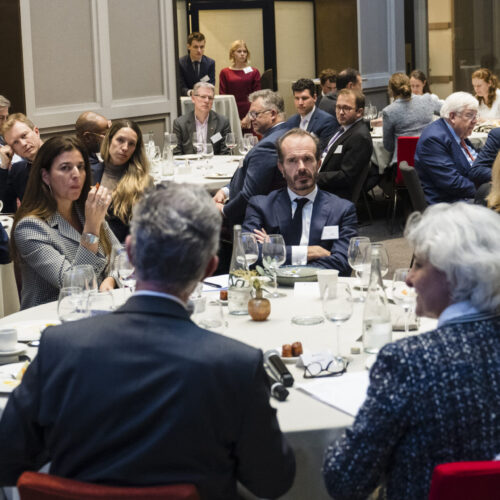
Defense, Debt, Draghi
The Atlantik-Brücke's first delegation trip to Paris made clear that Germany and France share at least one major challenge: to swiftly invest in defense and organize joint procurement amid fiscal constraints.
... more

“Achieving digital sovereignty faster”
When dealing with technologies, a dual strategy is needed: we must strengthen the European market and embed non-European products, write Claudia Plattner and Florian Seiller.
... more
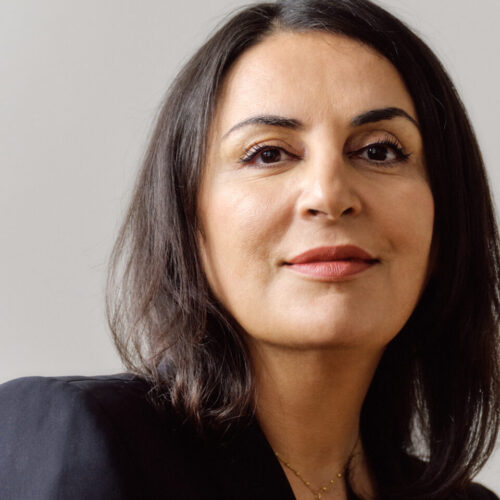
“Democracy is fighting for survival”
Our world order is facing profound upheaval. Democracy, peace, and the rule of law are under threat in many places, warns journalist and human rights activist Düzen Tekkal.
... more

“Reaching the next generation of transatlanticists”
We need the next generation of transatlanticists—for security, freedom, and prosperity, demands Florian Hahn.
... more
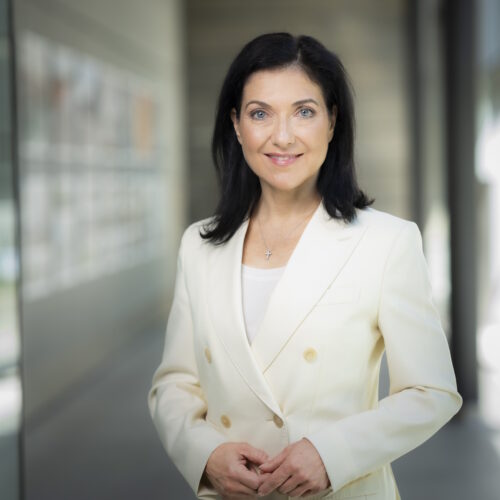
“Those who avoid risk miss opportunities”
Germany needs to be more willing to take risks, reduce bureaucracy, and strategically diversify its supply chains, writes Federal Minister of Economics Katherina Reiche in her essay.
... more

What’s next?
An “old liberal” Europe following in the wake of the US will no longer exist, according to Sigmar Gabriel and Julia Friedlander.
... more

“A whole-of-society effort”
We stand at the threshold of a new world order. If the West fails to defend our liberal values, we will become the plaything of autocrats, emphasizes Inspector General Carsten Breuer.
... more

„The New Bridge Program literally changed my life“
New Bridge Alumni share how the program has influenced their professional lives and personal development and what insights they gained from the alumni conference specifically.
... more
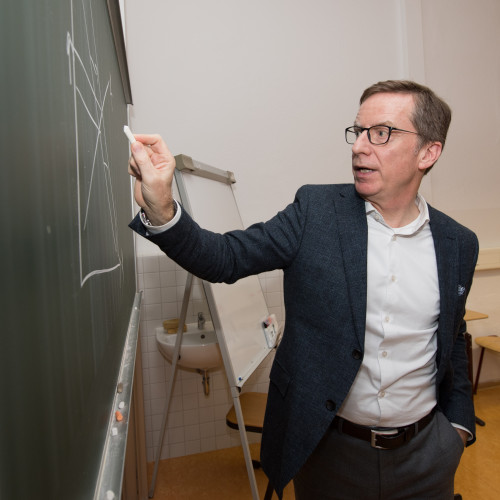
The costly search for defense capabilities
Europe is rearming — yet between geopolitical pressure, fragmented markets, and tightening budgets, a new distributional conflict is taking shape, analyzes IW-Director Michael Hüther.
... more
“The transatlantic relationship is already damaged”
Cathryn Clüver Ashbrook spoke at the Frankfurt Luncheon on the future of American democracy.
... more
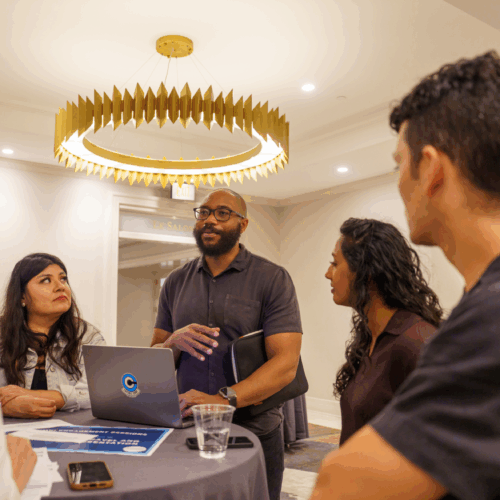
Reckoning With a Restless World: Populism, Power, and the U.S.–German Alliance
An analysis of the US–German relationship through the lens of the New Bridge Alumni conference's learnings.
... more
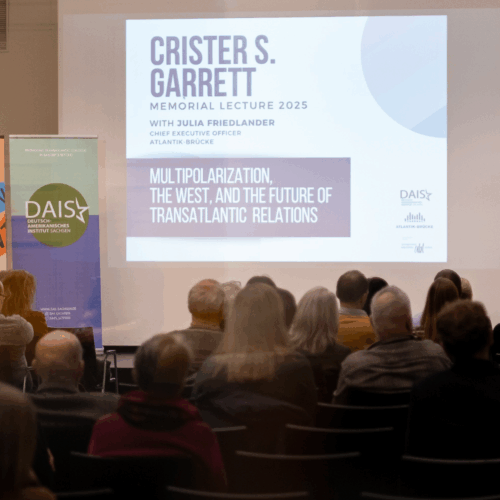
„Trump may be a charlatan, but the people who voted for him are not.“
At the Crister S. Garret memorial lecture, Julia Friedlander took a look back at the genesis of the Western world order - and shared her thoughts on how to make it future-proof.
... more
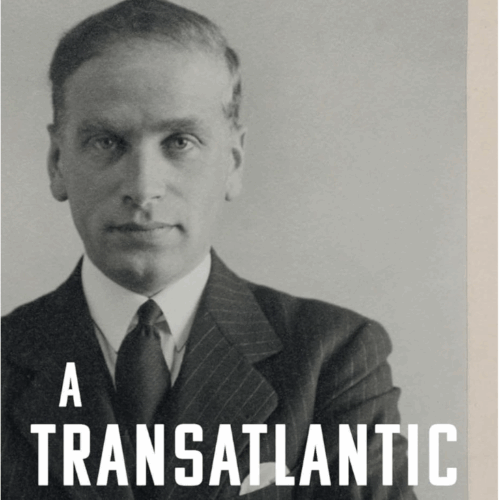
A Transatlantic Life
He was a Jew, a banker, an intelligence officer in the US Army and a transatlantic bridge-builder: The biography 'A Transatlantic Life' tells the story of the founder of the Atlantik-Brücke.
... more
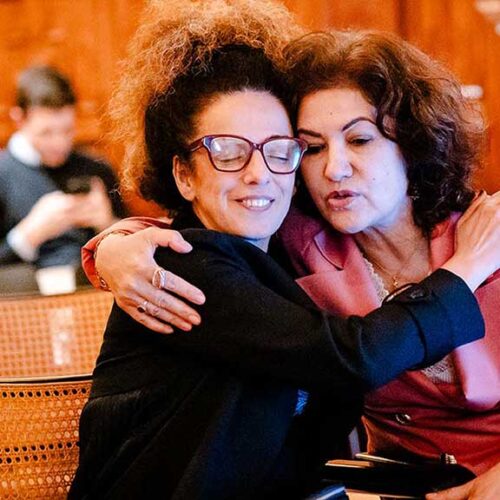
Move the world towards freedom
"Call evil by its name, support dissidents, and speak so the imprisoned can hear": Rushan Abbas, Masih Alinejad,
Leopoldo Lopez and Daniel Rothschild spoke at our event "Tear Down This Wall" about freedom.
... more
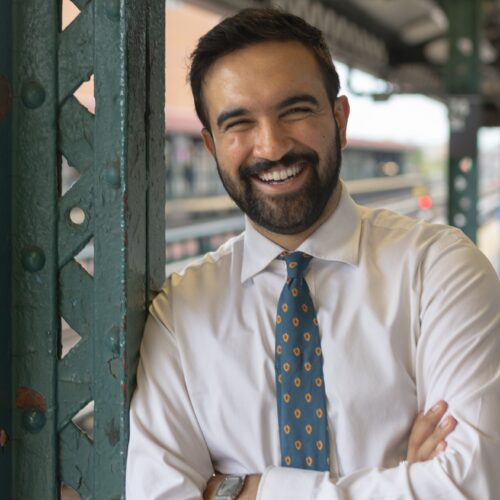
Democrats at a Crossroads: Left-Wing Populism or the Center Path?
Since Trump assumed office, the Democrats have struggled with an identity problem: whether to take a leftward turn or stay closer to the center.
... more
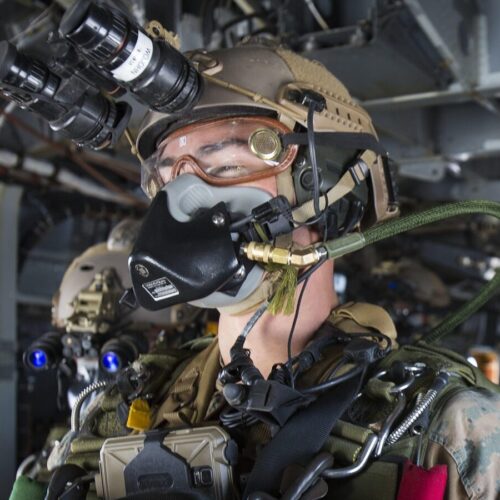
“Hard power, alone, is never going to be the path to peace”
Europe must redefine its global role, and navigate the limits of American leadership, emphasize Ben Hodges and David Ranan in an interview.
... more
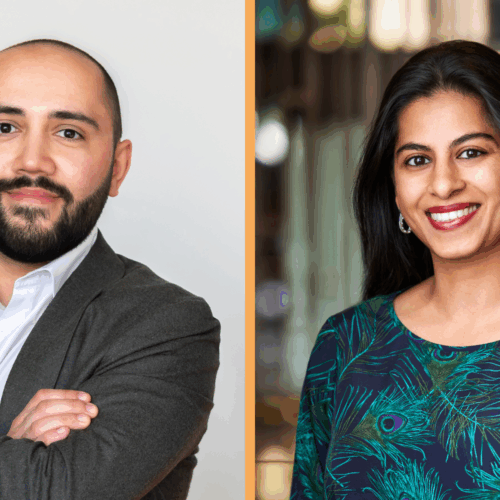
The AI skills gap is here — and bridging it is a social responsibility
Monoswita Saha and Enver Cetin discuss the differences between American and European approaches to AI, how to build a common transatlantic AI framework and the necessity of labour upskilling.
... more
“At least a third of all armed conflicts end without any settlement“
This edition of our web series "Better Be Prepared" took a look back at past conflict settlements.
... more
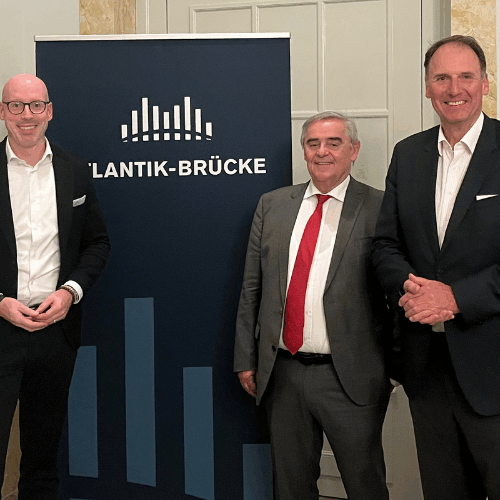
„Germany must strengthen its defense capabilities.“
As part of the Munich/Bavaria regional group event “Is Germany in Good Constitutional Shape?”, Peter Müller discussed the current state of the country and its highest court.
... more
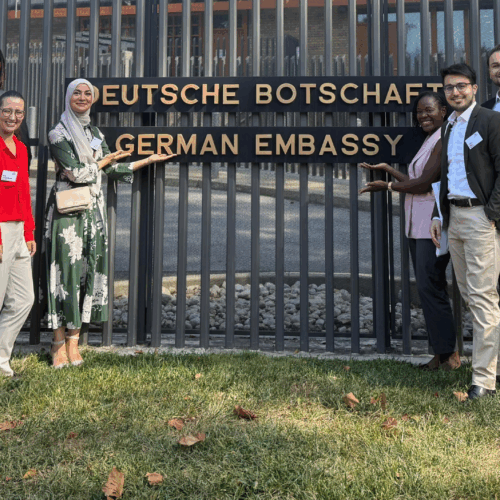
„A Reorientation of the Partnership on an Equal Footing“
Şirin Tiryaki und Mateo Blazevic share their impressions from this year's New Bridge to the US journey.
... more
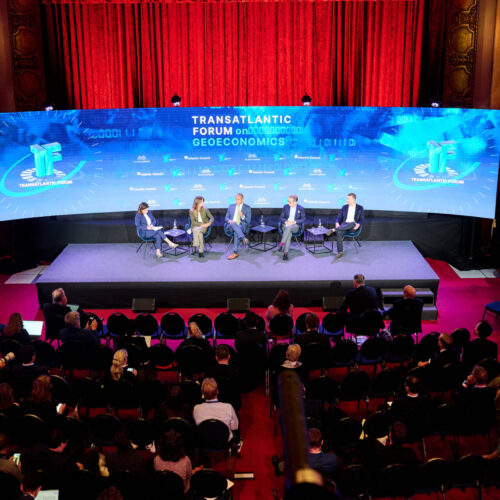
Responding to Global Shifts
The 4th Transatlantic Forum on Geoeconomics emphasised the urgent need for reinforced NATO commitments, increased European defence spending and a renewed US-EU partnership.
... more

The summer of AI Action Plans
As the US champions deregulation and private investment, the EU’s rule-bound approach and budget limits threaten to widen the transatlantic gap.
... more
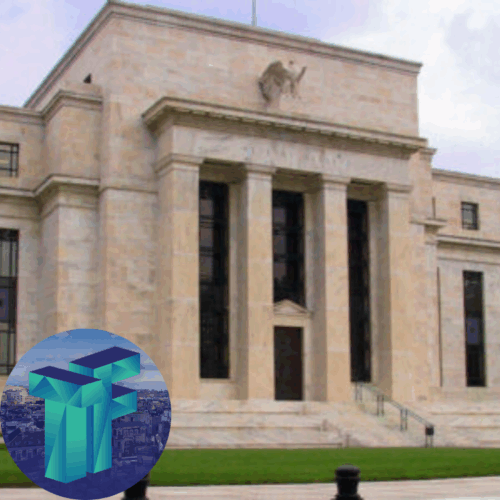
How to dismantle a reserve currency
As Washington questions its commitment to the dollar’s dominance, uncertainty rises—and the euro may finally be poised as a true challenger.
... more

The dollar in the fight for US primacy
Eight months into Trump’s second term, US trade, technology, and currency policy are being weaponized in ways that could reshape the global order.
... more
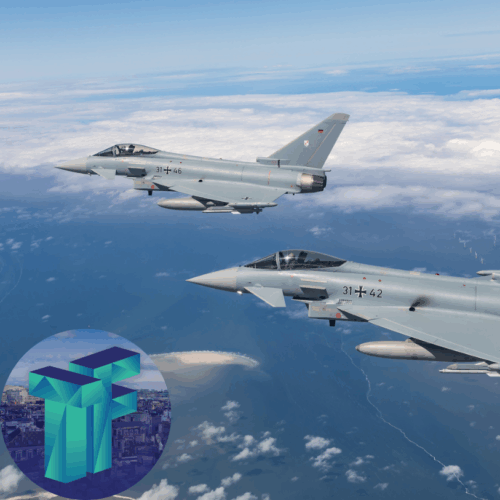
Waiting for the Big Bang: Executing the European Defense Build-Up in Germany
This policy brief analyzes the different funding mechanisms in the public and private sector for the German defense industry in the spirit of the Zeitenwende.
... more

Points of Vulnerability in the Battery Cell Industry
Read this exclusive policy brief by Kai Müller and Sören Pippart from PowerCo's on the key factors for successful battery cell production in Germany and Europe.
... more
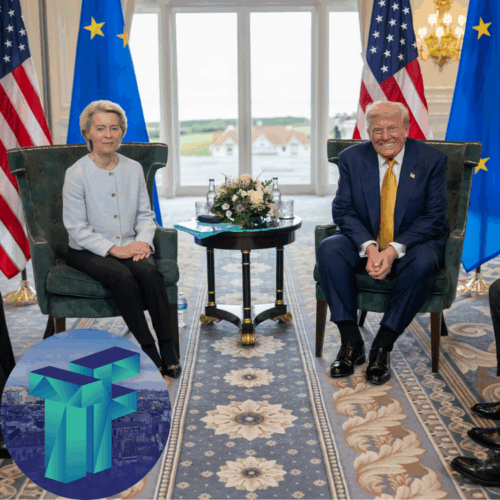
The road to Turnberry
The US-EU trade agreement struck in Turnberry in July reveals deep asymmetries rooted in post-war dependencies on US markets and security.
... more
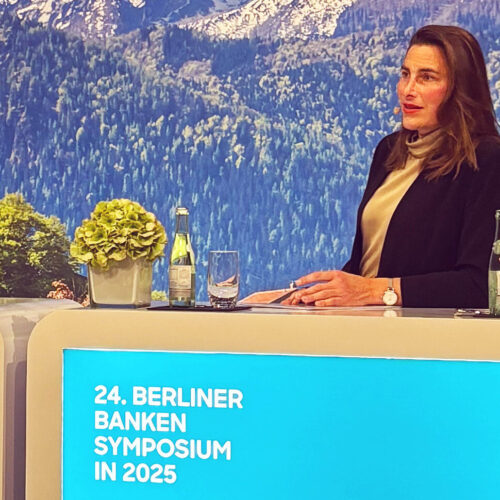
“The course has been set for a modern NATO alliance”
Our managing director Julia Friedlander spoke at the Berlin Banking Symposium about America's uncomfortable truths, new rules for global trade, and Germany's future role in NATO.
... more
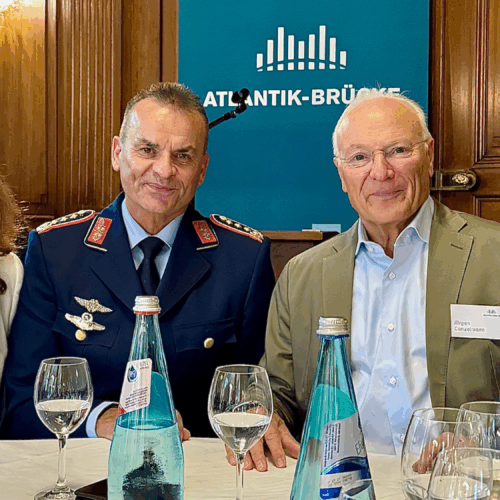
“You have to concentrate on cyber today”
General Christian Badia emphasizes the need for increased defense spending in order to meet the demands of modern warfare in his video interview.
... more
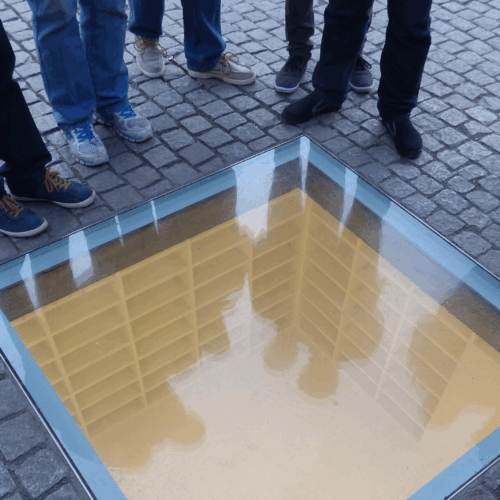
Book Burning and Freedom to Read: Transatlantic Connections
Amy Brownlee reflects on the importance of intellectual freedom and shares her insights from her engagement with Germany’s history.
... more
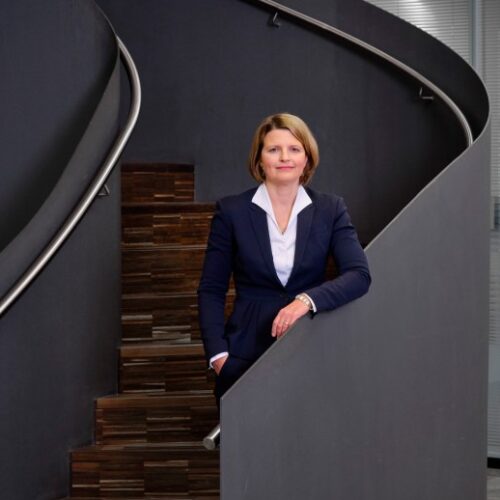
“Crypto assets are a niche phenomenon”
Crypto assets have not yet gained acceptance in the euro area due to their high volatility, explains Prof. Dr. Fritzi Köhler-Geib, member of the Executive Board of the Deutsche Bundesbank.
... more
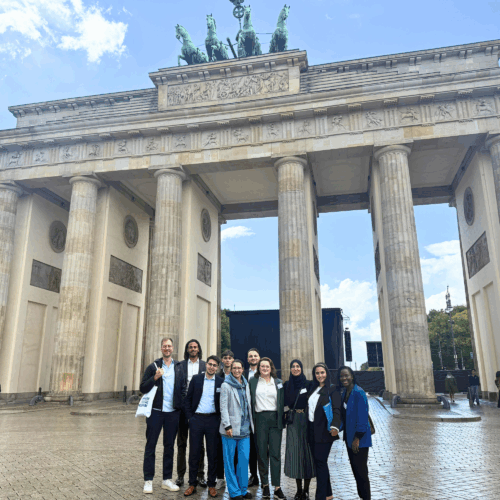
New Bridge to the US: Class of 2025
We are happy to introduce our next New Bridge to the US cohort.
... more
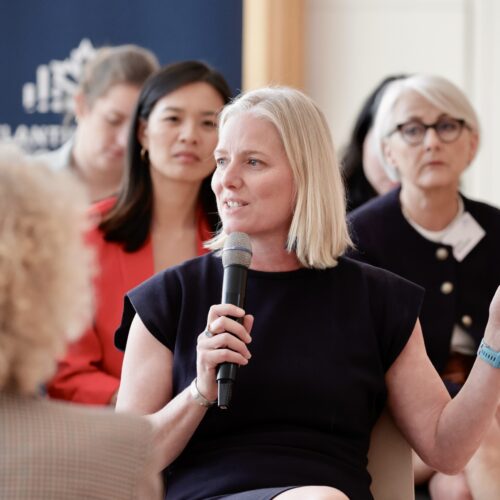
Our topics and formats
With more than 100 events a year, we connect people across the Atlantic, create a platform for the exchange of ideas and promote discussions on politics, business, and society.
... more

The Next Generation
Encouraging young talent and creating a transatlantic network for generations to come is very important to us.
... more
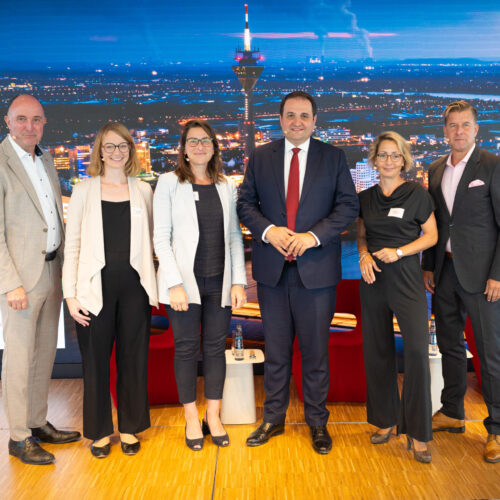
”We are heading into a period of state-driven capitalism”
A video analysis of our CEO Julia Friedlander about “Interest Rates, Tariffs, Recession”.
... more
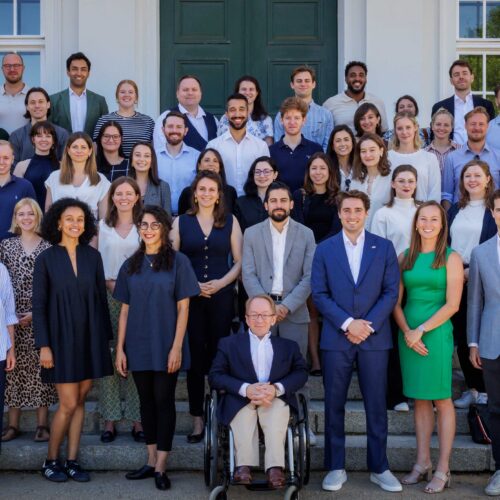
“Bridging Leadership Across Borders”
This year's German-American Young Leaders Conference took place from August 9 to 15, 2025, at Schloß Neuhardenberg in Brandenburg.
... more
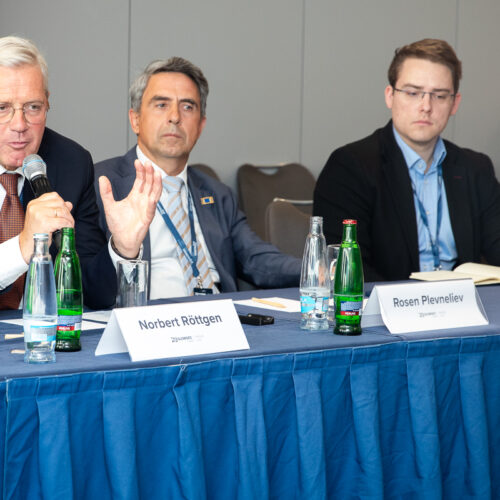
Europe’s unity is not an end in itself
The GLOBSEC Forum in Prague, themed “Commanding (in) Chaos: Time for Europe to Step Up,” featured Atlantik-Brücke’s first side session on Germany’s role in a capable Europe. Experts from four EU states and the US highlighted three key insights.
... more
A new colleague in the New Bridge Program
Chantal Klein is the new colleague in the New Bridge Program since August 2025.
... more

Canada and the great power rivalry: What options are left for the EU?
Paradoxically Canada’s resource sector remains dominated by China. Europe will remain geopolitically constrained unless it finally takes strategic action, analyze Michael Hüther and Simon Gerards Iglesias.
... more
“Engagement is a cornerstone of our democracy.”
Professor Dr. Ulrich Reinhardt discusses the challenges facing our society in times of geopolitical tensions, the climate crisis, digitalization, migration, and demographic change.
... more

Canada’s new perspective on the US
Our author traveled through Canada to find out how perceptions of the neighbor USA have changed since then.
... more
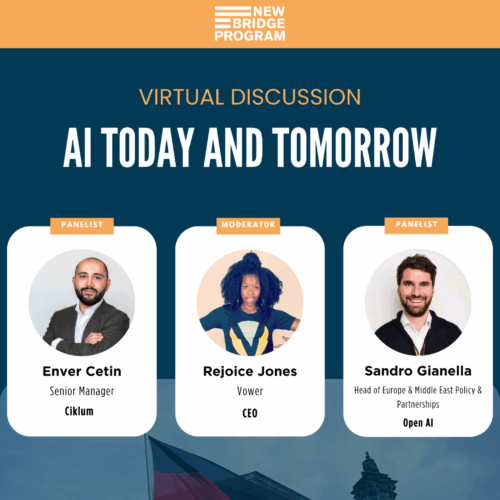
AI as a Democratizing Force?
Atlantik-Brücke Alumni hosted a webinar on the rapid growth of artificial intelligence, featuring Enver Cetin, Senior Manager of AI at Ciklum, and Sandro Gianella, Head of Europe and Middle East Policy at OpenAI.
... more
“As long as we remain fragmented, we will always rely on Washington”
Following a discussion hosted by our Regional Chapter Hamburg, Sigmar Gabriel gave an interview on the power of intelligence.
... more
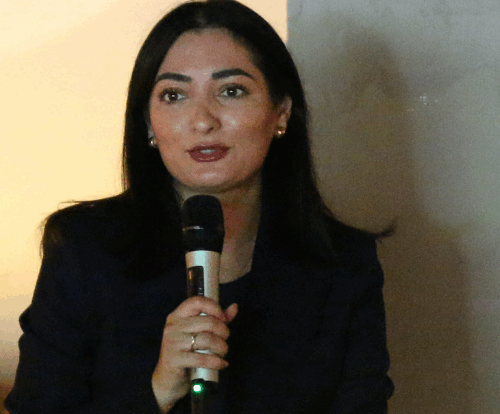
„We can’t compensate the gap left by USAID“
Reem Alabali Radovan, Federal Minister for Economic Cooperation and Development, gives insights into her work and how to compensate the gap left by USAID.
... more
Canada and Europe Deepen Defense Ties Amid Rising Global Instability
Kim Lioe provides insights into the growing cooperation between Canada and Europe in the defence sector.
... more
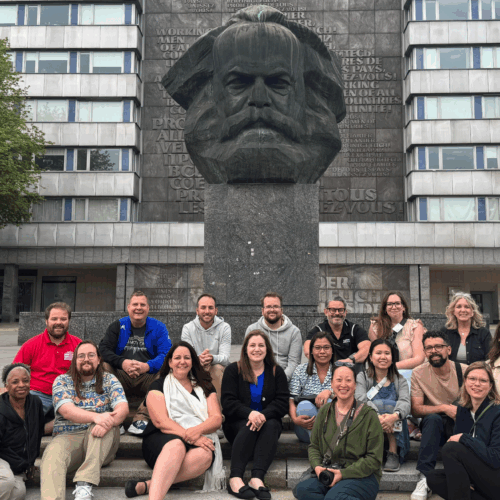
Resilience, reconciliation, and remembrance in modern Germany
A report of this year's Transatlantic Study Trip for Teachers by Amy Brownlee.
... more
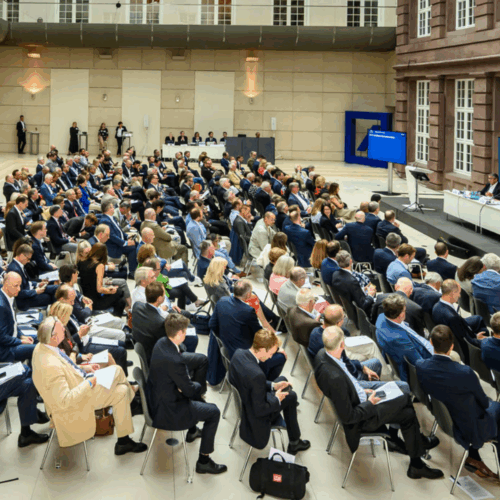
Changes in the Executive Board – Atlantik-Brücke Aligns for the Future
Insights into the election results of this year’s members’ meeting and into our first summer reception in the courtyard of our new office at Palais Eger.
... more
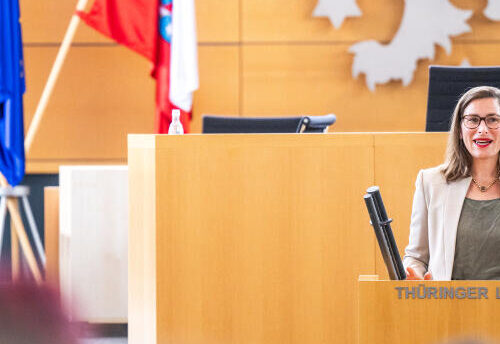
“I refuse to cede my patriotism”
Our CEO Julia Friedlander gave a lecture on the topic of “Renegotiating the World Order” at the Thuringian State Parliament.
... more
„Carney needs to keep this unity going“
Read Young Atlantiks' alumnus Benjamin Sauvé's assessment of the new US-Canada relationship.
... more
“Is the EU still important to Ukraine?”
In our webinar "The Ukraine Negotiations" the speakers tackled pressing questions such as what a peaceful settlement between Russia and Ukraine could look like.
... more
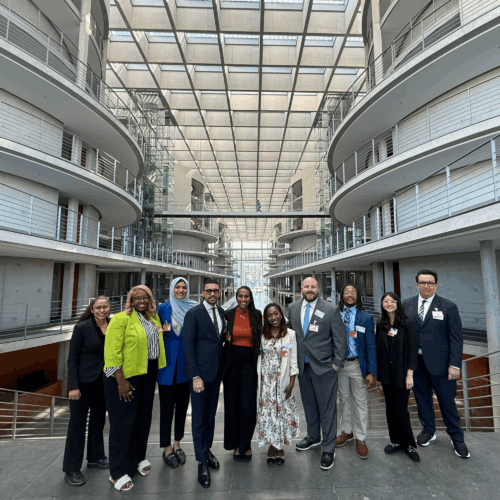
“I leave with a sharper lens on how transatlantic relations can evolve”
Read our fellows' reflections on the New Bridge Program.
... more
Strengthening the New Bridge Program
The Atlantik-Brücke's New Bridge Program has had a new colleague since June 2025.
... more
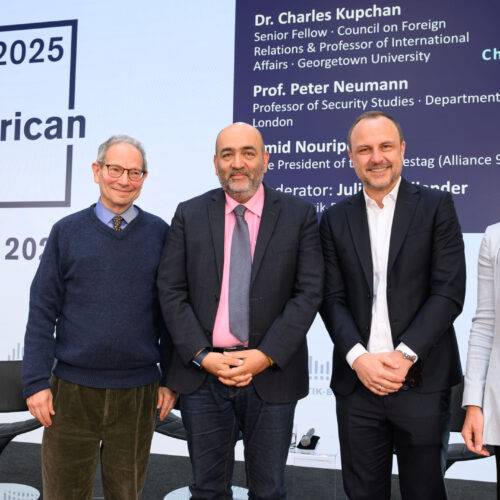
“We can leverage AI to save soldiers’ lives”
Insights from the German-American Conference 2025. Watch our interviews with experts Norbert Röttgen, Fritzi Köhler-Geib and more.
... more
AI: Consider not only the risks, but also the benefits
Young Leader alumnus Armand Zorn was a guest at the Netzwerkstatt. In the video interview, he talks about the regulation of artificial intelligence and the fight against disinformation.
... more
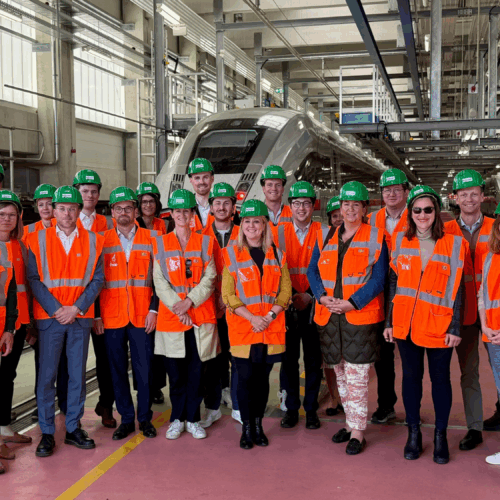
Young Leaders Alumni Day 2025
Following the traditional German-American Conference, the second edition of the Young Leaders Alumni Day took place.
... more
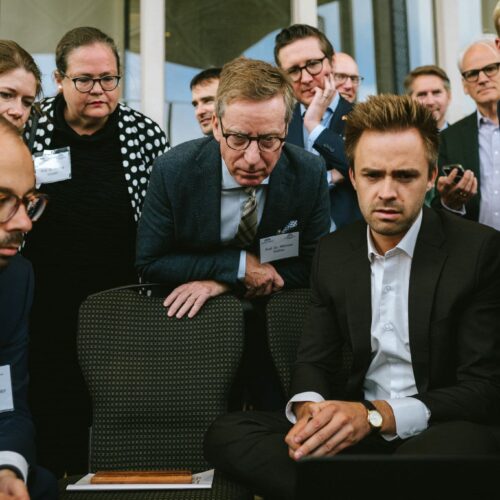
DKK 2025: “Canada and Germany need closer relations”
The German-Canadian Conference in Ottawa on May 5 and 6, 2025 came at just the right time.
... more
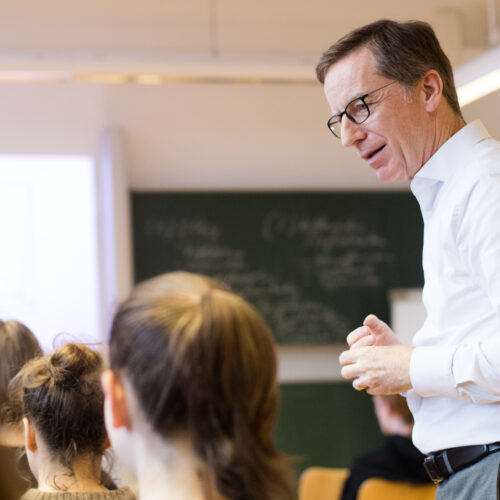
„Climate change requires a political response“
Read Michael Hüther's and Pierre-Gerlier's paper on climate neutrality and regional development, one of the key topics of the German-Canadian Conference 2025.
... more
Young Atlantiks: Meet the Class of 2025
Every year, ten young professionals from Canada and Germany meet at the German-Canadian Conference as part of the Young Atlantiks Program. Meet this years cohort.
... more
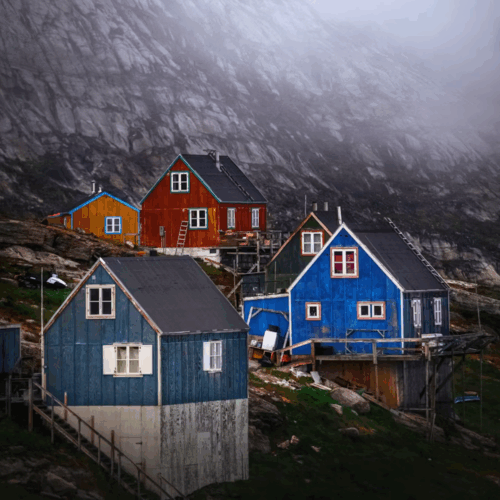
„An annexation is highly unlikely“
The last edition of Atlantik-Brücke’s virtual event series “Better Be Prepared” explored the strategic and economic significance of Greenland.
... more
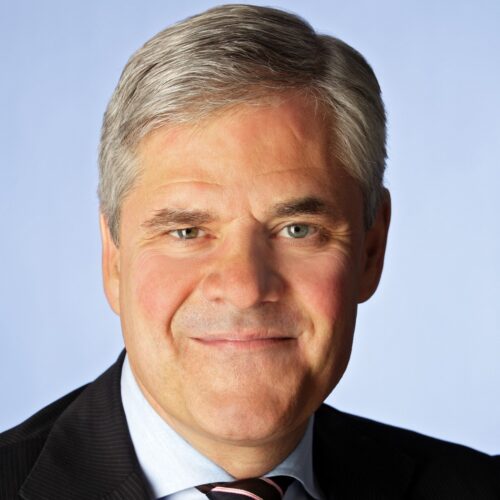
„There is no winner of the turmoil“
Andreas Dombret shares his key takeaways from the spring meetings of the IMF and the World Bank.
... more
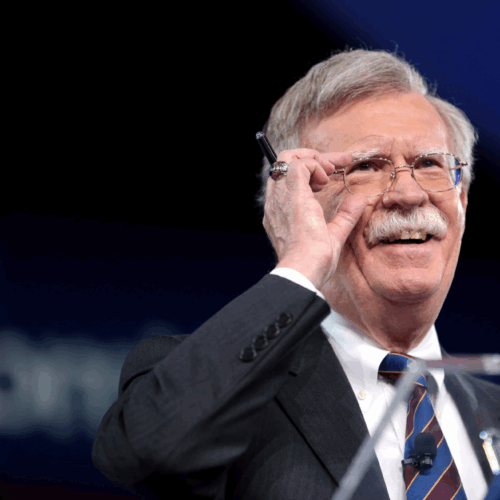
„Putin certainly sees Trump as an easy mark“
In his guest commentary for Atlantik-Brücke, John Bolton, former national security advisor to Donald Trump, talks about Trump's relationship with Putin and urges us not to give up on the transatlantic alliance just yet.
... more
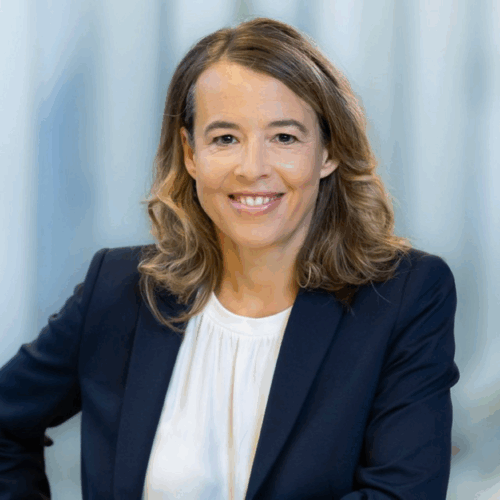
“We Europeans are prepared to take countermeasures”
The economist Ulrike Malmendier advises more European integration and supply chain diversification – and learning from Biden's Inflation Reduction Act.
... more

„My heart dropped“
President Trump's attack on diversity, equity and inclusion (DEI) policies has had far-reaching consequences for higher education. Read this insider account to learn how this is affecting researchers at US universities.
... more
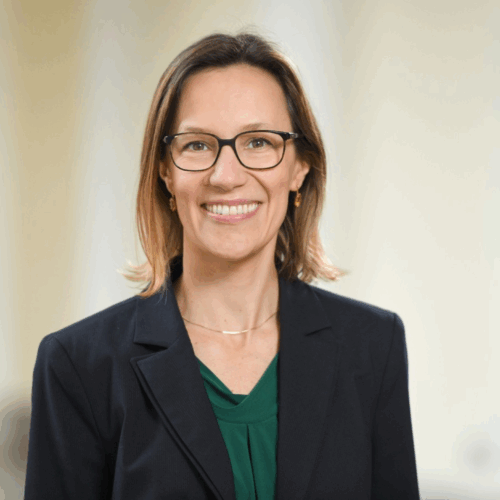
„The EU is in a strong position”
To find out how to deal with Trump's ever-changing stance on tariffs, read the interview with our panelist Lisandra Flach here.
... more

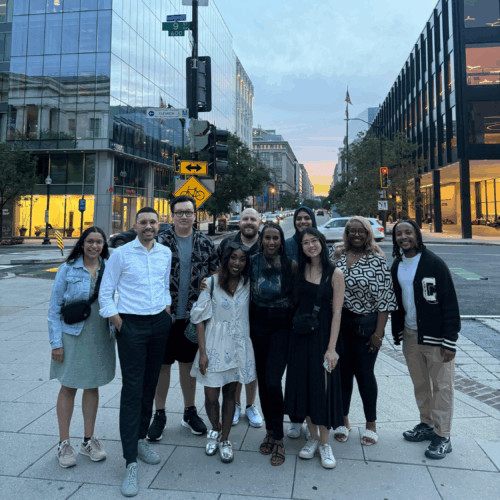
New Bridge to Germany: Class of 2025
We are happy to introduce our next cohort! These ten remarkable young professionals from the U.S. will embark on their journey in May to Germany.
... more
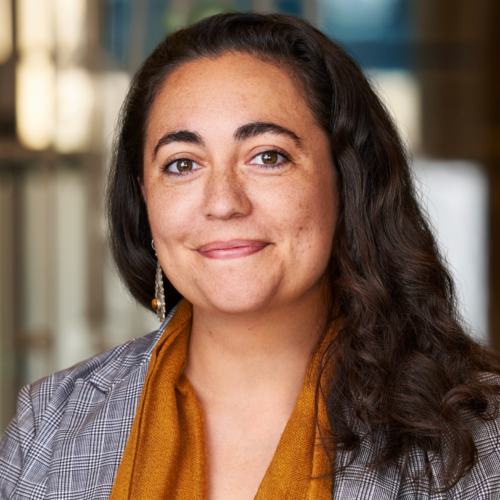
“The road ahead just got much more difficult”
New Bridge Fellow Alexandra McGee gives an insight into what President Trump's flood of executive orders to stop "woke" projects means for the renewable energy sector.
... more
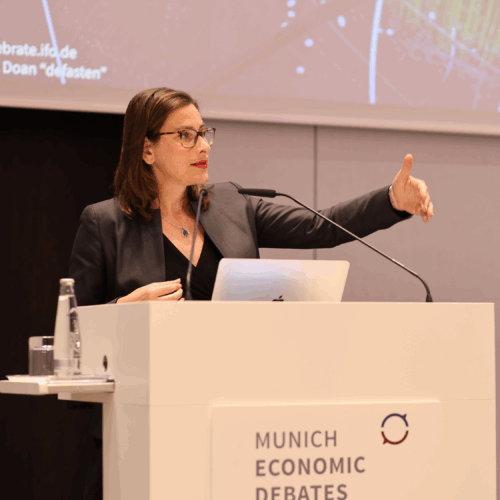
Economics of a Global Market Mudpit
Our CEO Julia Friedlander was a guest at the Munich Economic Debates of the ifo Institute for Economic Research in Munich on March 24th.
... more
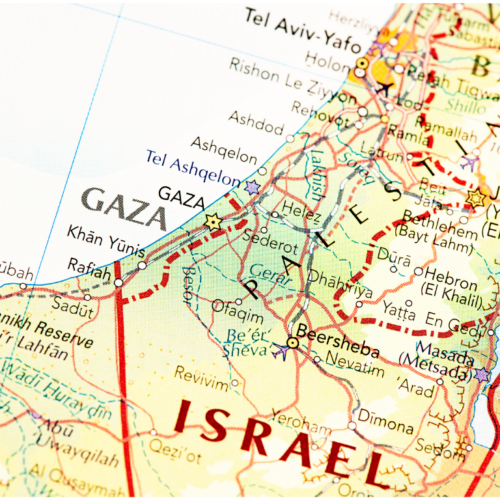
“The demolition of Hamas must be the first phase of Gaza’s future“
This edition of our web series "Better Be Prepared" explored the ongoing crisis in the Middle East.
... more
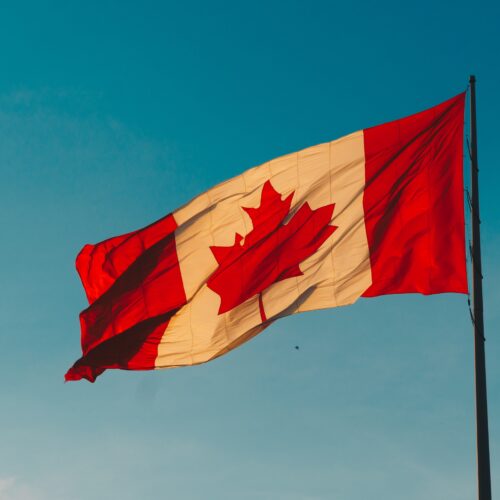
German-Canadian Young Atlantiks Program 2025
Call for Applications: The Young Atlantiks Program promotes the “next generation” of German-Canadian transatlantic partnership.
... more
German-Canadian Young Atlantiks Program 2025
Call for Applications: The Young Atlantiks Program promotes the “next generation” of German-Canadian transatlantic partnership.
... more
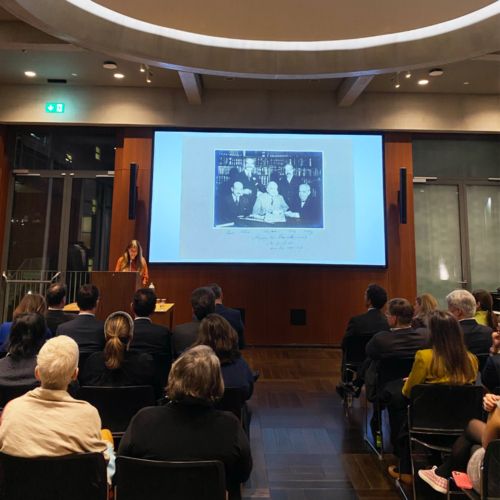
„Dialogue over division and cooperation over conflict“
On the occasion of the London Regional Chapter's visit to the Warburg Institute, Dr. Nagila Warburg discussed the legacy of Aby and Eric Warburg.
... more
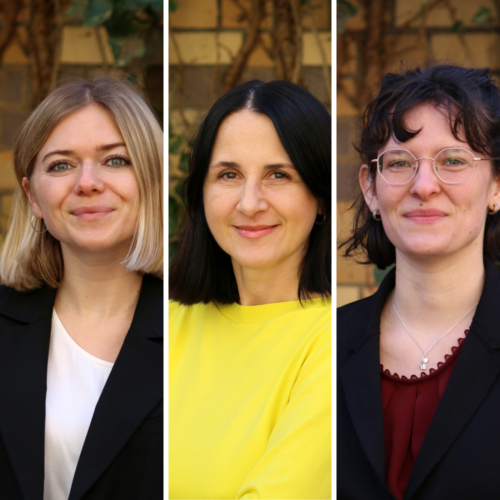
Three new faces join our team
Three new colleagues are now supporting our transatlantic work.
... more

Our Community Guidelines
We are delighted that our posts and topics stimulate discussion among our users. You can find our comment guidelines here.
... more

Palais Eger: A new place for exchange and debate
On our own behalf: We have left the premises on Kupfergraben and moved our office to Tempelhofer Ufer in March.
... more
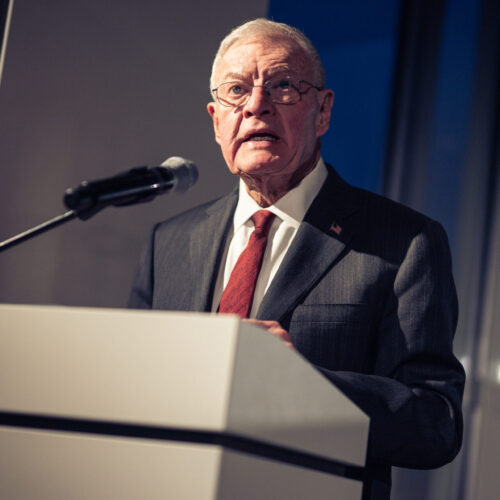
„Wake up Europe and get your act together!“
Insights from our traditional annual reception at Bayerischer Hof on the sidelines of the Munich Security Conference.
... more
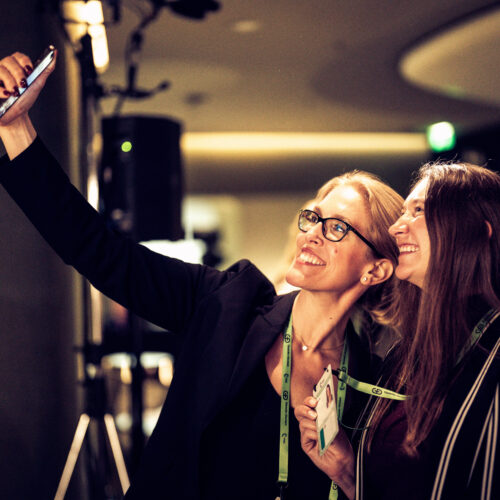
Beyond Victims: Women as Architects of Lasting Peace
Atlantik-Brücke’s Female Network convened a high-level discussion on the eve of the Munich Security Conference.
... more
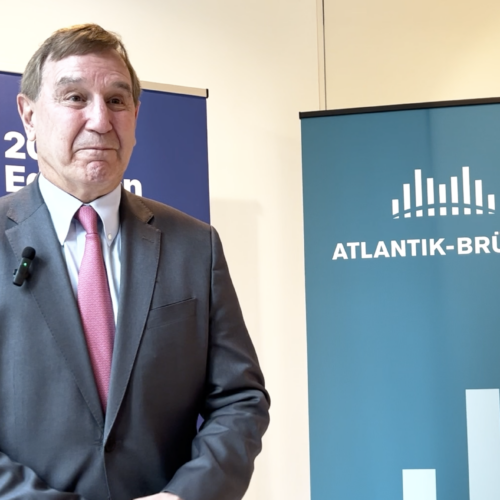
„We need to give people back a sense of optimism“
After the exclusive presentation of the Edelman Trust Barometer, Richard Edelman was available to answer further questions how politics and business can restore the much-needed trust in society.
... more
Why the US deficit matters
Until recently, financial markets have shown precious little concern about the soaring US debt load. Now, they're starting to worry, states Andreas Dombret.
... more
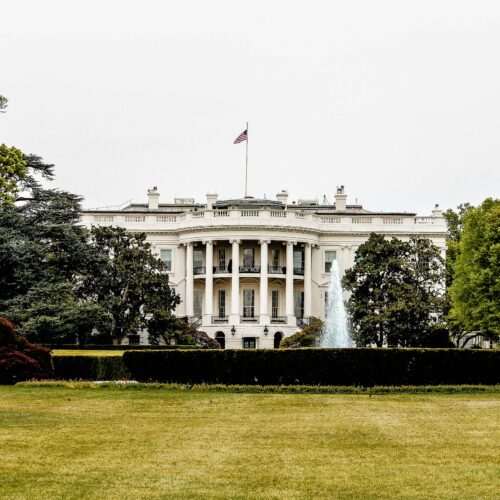
Statement on the second presidency of Donald J. Trump
Statement of the Atlantik-Brücke on the inauguration of Donald J. Trump and on his second term as President.
... more
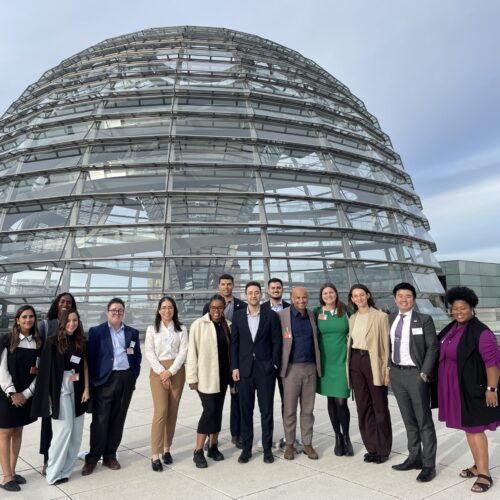
A Glimpse into the New Bridge to Germany Program
Watch the New Bridge to Germany program as 10 American fellows explore shared history, address global challenges, and amplify voices.
... more
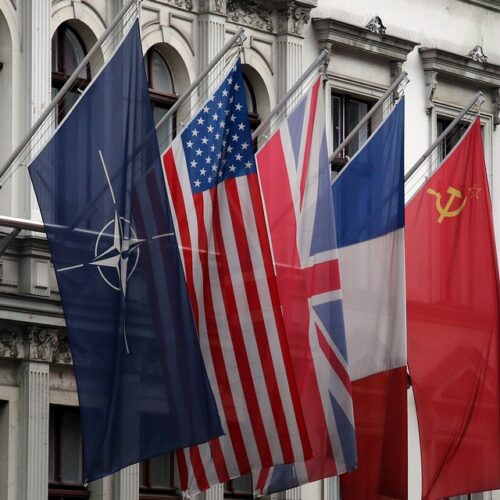
“A successful deterrence of China requires collaboration“
Ben Hodges, Lieutenant General (ret.), U.S. Army, and Senior Advisor at FBH Geostrat Consulting GmbH, shares his insights on how Trump and the new administration might address current geopolitical challenges and their potential impact on the transatlantic relationship.
... more
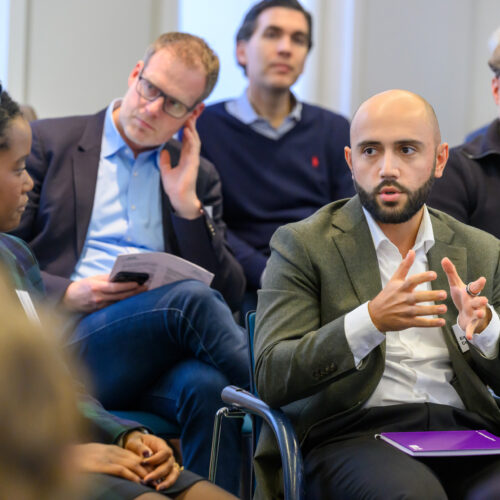
The Future of Work: Challenges and the Way Forward
In November, four New Bridge alumni traveled to Berlin to discuss the future of work as part of a strategy session. Here, the alumni share their impressions of the event.
... more
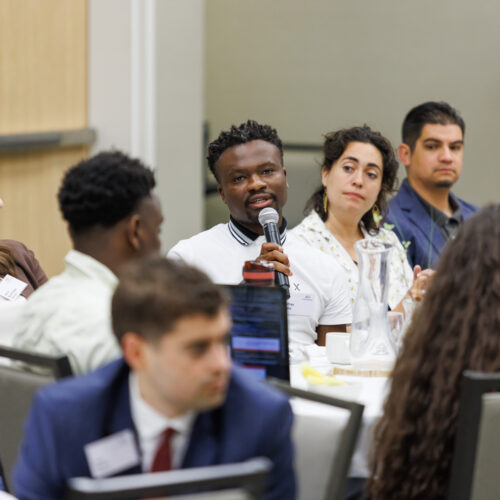
New Bridge Program: Alumni Unite in Miami!
At the end of October, the New Bridge alumni met in Miami for the annual alumni meeting of the New Bridge Program. In this report, the alumni talk about the eventful days and their shared experiences.
... more
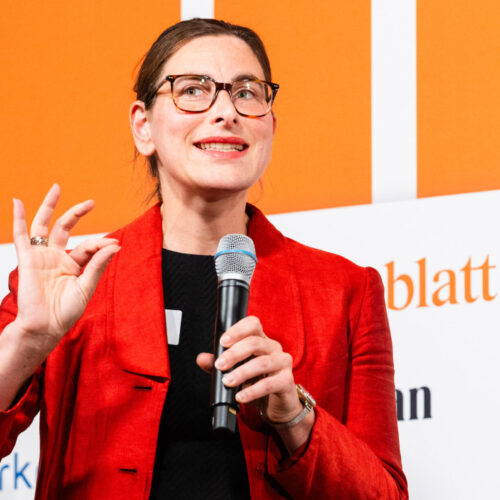
„The world has become much more multilateral“
In her keynote speech at the Frankfurt Book Fair Economic Prize Ceremony, Julia Friedlander discussed the role of the U.S. economy in the upcoming U.S. elections.
... more
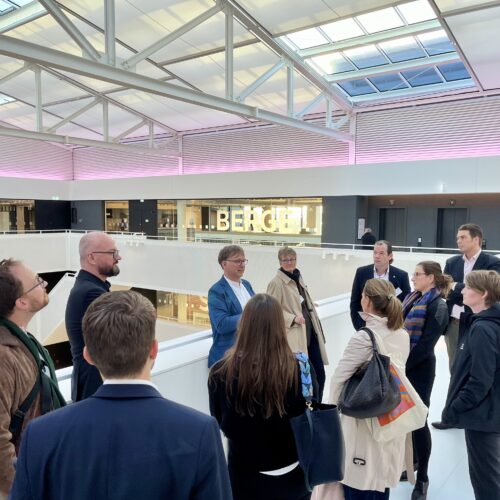
Deep-Dive into Hamburg’s Innovative Work with Young Leaders Alumni
Impressions from the insightful Young Leaders Alumni Day designed to strengthen the sense of community.
... more
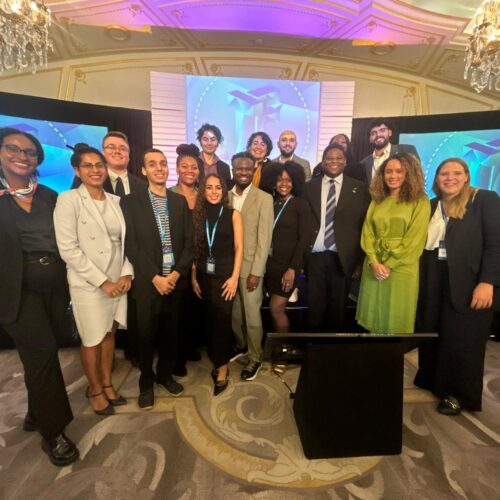
A New Bridge Perspective on the Transatlantic Forum on GeoEconomics
A select group of German and American New Bridge Alumni attended the Transatlantic Forum on GeoEconomics and are sharing their key observations and highlights.
... more
New Bridge to Germany: Collaborative solutions in need
Washington, Brussels, Berlin and Leipzig: This year's New Bridge cohort reports on their experiences during their study trip to Europe.
... more
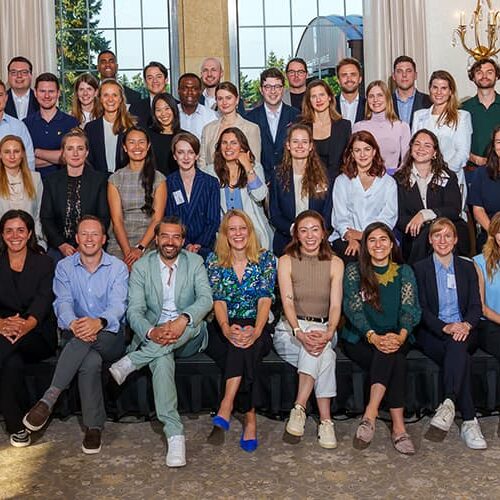
Young Leaders Conference 2024: “Why follow when you can lead?”
Transatlantic partnership in the 21st century and the transformation of industrial and societal ecosystems were some of the topics discussed at the
German-American Young Leaders Conference in Detroit, Michigan,
2024. Report by Felix Bauch, Linn Bieske and Bastian Schneider.
... more
What the Young Leaders have to say!
Discover a selection of the most memorable quotes from our current cohort of Young Leaders at the conclusion of the conference in Detroit, Michigan.
... more
New Bridge to Germany: Class of 2024
These ten remarkable young professionals from the U.S. will embark on their journey in September of 2024, traveling from Washington, D.C., to Brussels, Berlin, and Leipzig.
... more
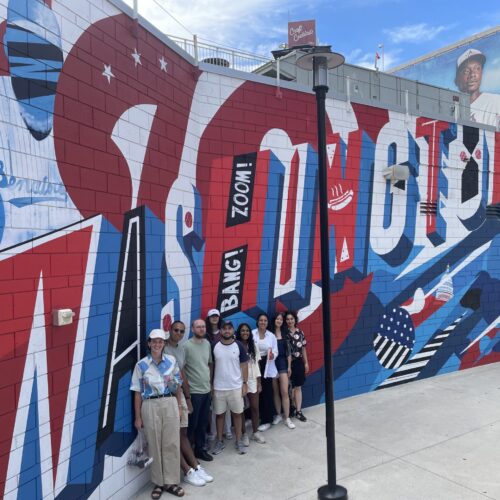
Continuing to Build Bridges
This year's cohort of the program New Bridge to the U.S. reports on their experiences during their study trip to the USA.
... more
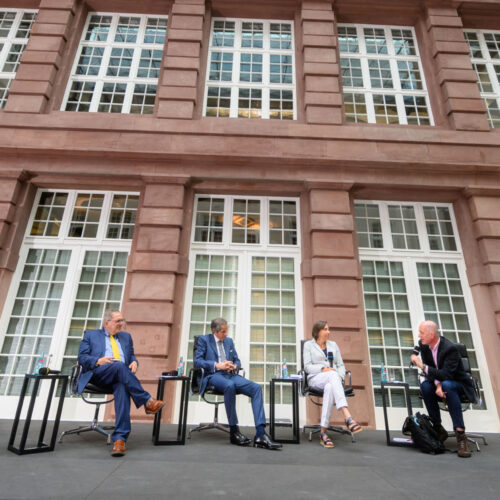
The challenges of our global security
At this year's Members Meeting's panel discussion "China, Russia, the Tech Race, and Western Resilience," several experts shared their insights on the critical geopolitical landscape and its impact on global security. The panel included David Sanger, Rafael Mariano Grossi and Beth Sanner. It was moderated by Christian Mölling.
... more
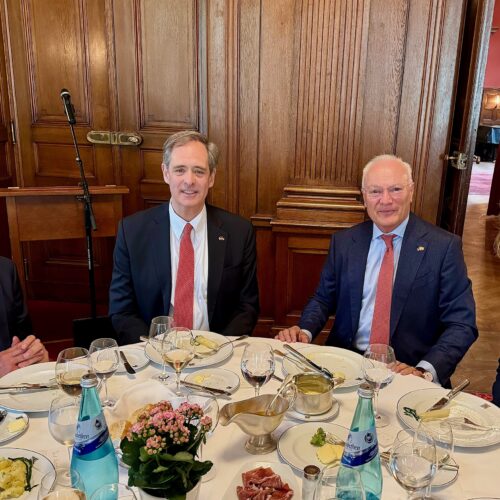
“Democracy comes with responsibilities”
Outgoing Consul General Norman Thatcher Scharpf talks about the development of transatlantic relations.
... more
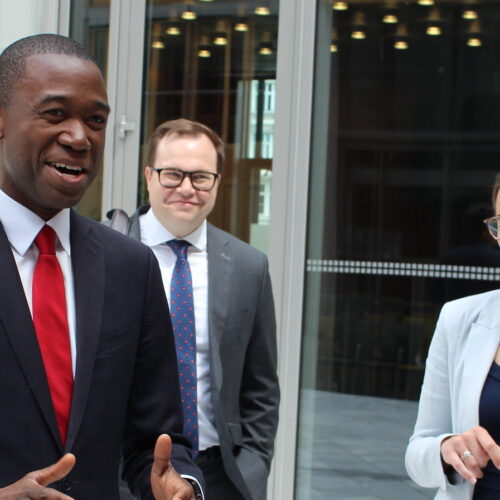
The US and Europe have to further increase pressure on Russia – and China
Russia's war of aggression against Ukraine would not be possible without China's supply of dual-use goods, said US Deputy Treasury Secretary Wally Adeyemo in a speech at Atlantik-Brücke. His entire speech is documented below.
... more
New Bridge to the U.S.: Class of 2024
Our second New Bridge cohort from Germany will travel this June from Berlin, to Washington, D.C. to Montgomery and Atlanta. We are honoured to introduce our Class of 2024.
... more
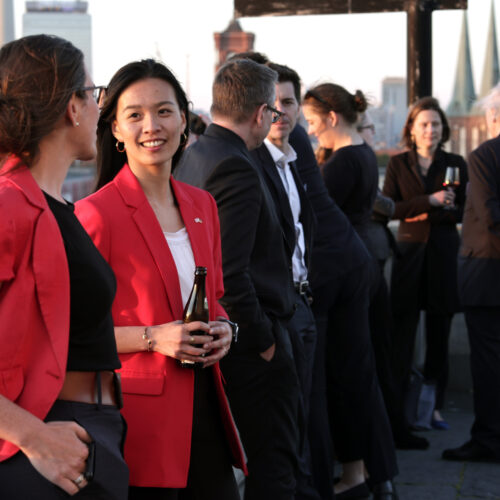
2024 Young Atlantiks Program Report
From May 11-15, 2024, ten young Canadian and German professionals, with diverse backgrounds and expertise, met to discuss current and future transatlantic challenges and to attend the 37th German-Canadian Conference in Berlin.
... more
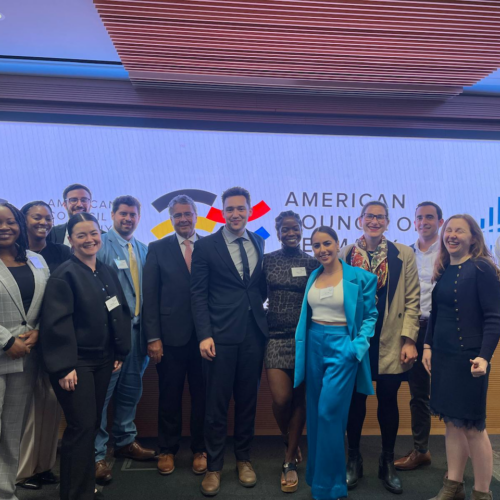
The German-American Conference in Washington, D.C.: An In-Depth Analysis from a New Bridge Perspective
With generous support from the German Federal Foreign Office, Atlantik-Brücke was able to fund the participation of eight New Bridge alumni in this year’s German-American Conference.
... more
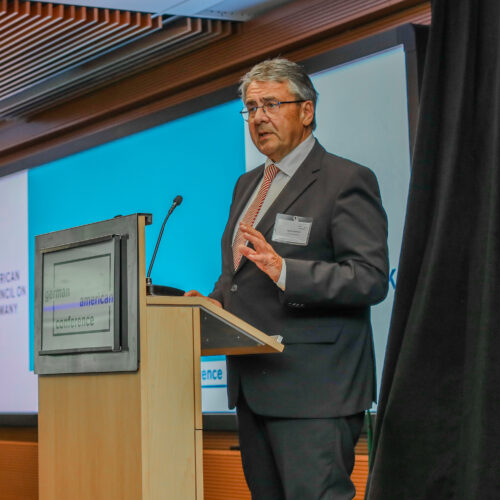
The New Realities of Democracy
The German-American Conference of Atlantik-Brücke and the American Council on Germany took place in April 2024. Especially in the year of the US elections, there were heated discussions and valuable contributions to the debate.
... more
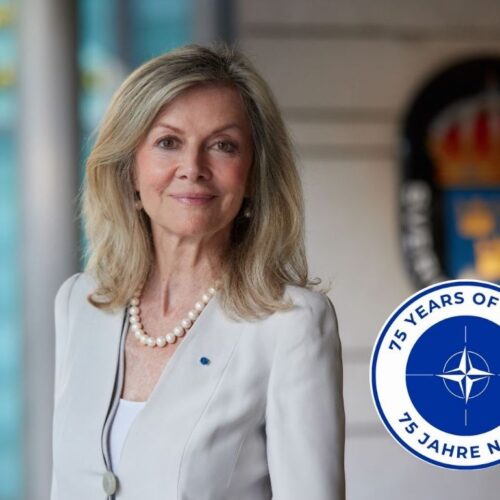
Sweden has finally come home
Sweden's ambassador to Germany, Veronika Wand-Danielsson, sees her country's accession to NATO as a Swedish "Zeitenwende".
... more
The bedrock of European security has British DNA
Jill Gallard, Ambassador of the United Kingdom to Germany, pays tribute to the special British contribution to NATO.
... more
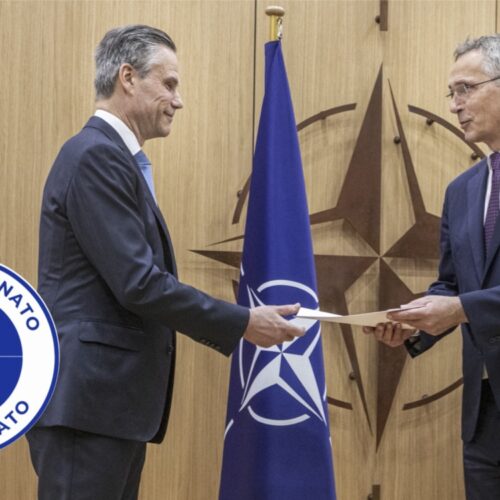
Finland in NATO is a Security Provider
In this guest article, the former Finnish Ambassador to NATO writes about Finland's accession to the Transatlantic Alliance
... more
Not only interest rates, but above all political decisions determine the risks on the real estate market
To avoid risks on the real estate markets, real estate policy should aim to match supply to demand and counteract market distortions, argue Andreas Dombret and Oliver Wünsch.
... more
Investing in European Resilience: Navigating the New Geopolitical and Technological Landscape
Uwe Horstmann, General Partner of Project A, emphasizes the increasing importance of European technological resilience and provides an outlook on the tasks ahead.
... more
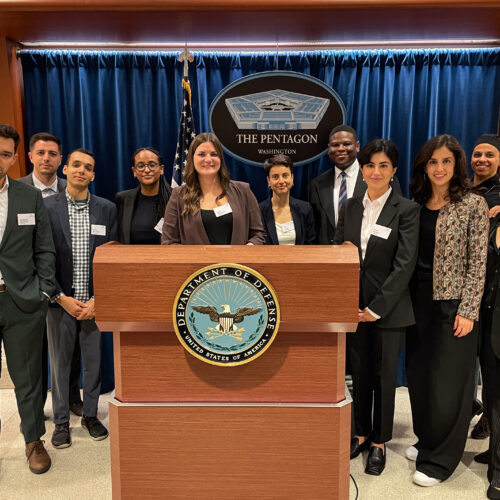
What’s Your Theory of Change?
The first cohort of the New Bridge to the U.S. program reports on their experiences during the study trip to the USA. After the kick-off in Berlin, the fellows traveled to Washington, D.C., and El Paso, TX.
... more
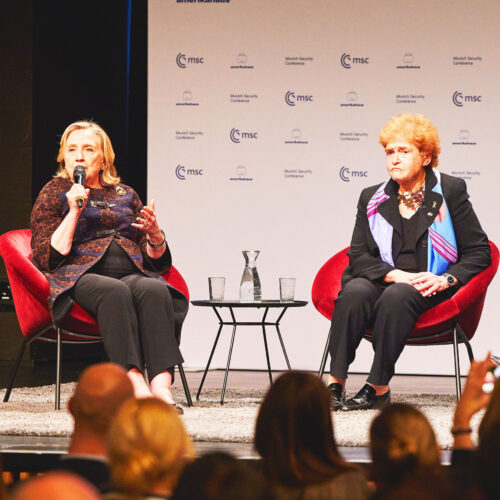
Clinton and Lipstadt: Combating Antisemitism
Secretary Hillary Clinton and Special Envoy Deborah Lipstadt sat down with Atlantik-Brücke CEO Julia Friedlander on the sidelines of the Munich Security Conference 2024 to discuss the sources of contemporary antisemitism.
... more

How to Trump-proof Europe
If the former US President gets elected one more time, the European Union needs to be prepared in several key policy fields to sustain the transatlantic partnership, writes the author Steven Hill in his analysis.
... more
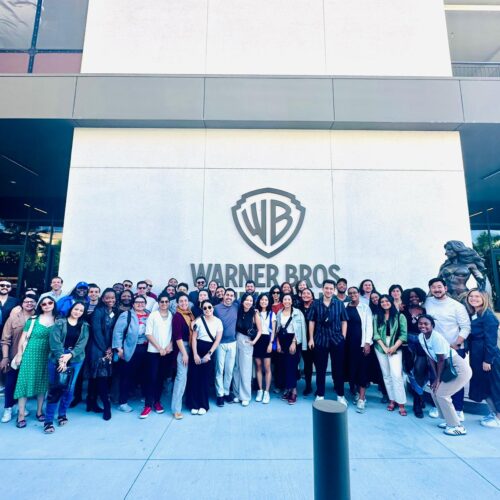
Meet-Up in Los Angeles: New Bridge Alumni Reunion 2023
This fall Atlantik-Brücke’s New Bridge Alumni had the chance to come together for the second annual New Bridge Alumni Reunion in sunny Los Angeles. Almost 60 people from seven American as well as one German cohort joined in discussions on “Global Challenges and Local Solutions”.
... more
German-Canadian Young Atlantiks Program
Call for Applications: The Young Atlantiks Program promotes the “next generation” of German-Canadian transatlantic partnership.
... more

Germany and the EU can’t copycat Silicon Valley’s AI strategy
The author Steven Hill argues in his op-ed that Europe should not sacrifice its role as the “conscience of the Internet” on the altar of commercial and military priorities.
... more
New Publication: Current Study on the State of Transatlantic Relations
The results of our current study show that socio-demographic characteristics are decisive for participation in the transatlantic dialog in the USA and Germany.
... more

Statement by the Board of Directors on the attack on Israel
Statement by the Board of Directors of Atlantik-Brücke on the Attack of the Terrorist Group Hamas on the State of Israel.
... more
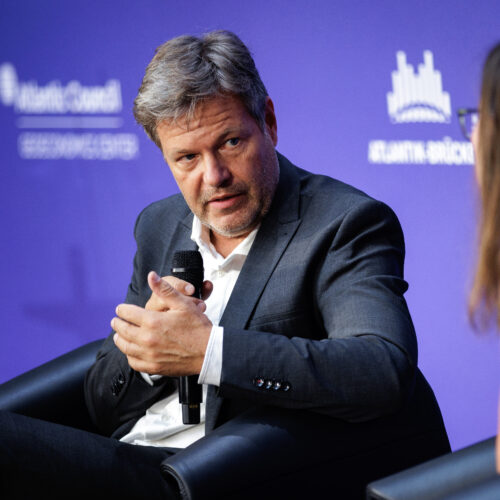
Transatlantic Forum on GeoEconomics 2023
At the Transatlantic Forum on GeoEconomics, our second co-hosted conference with the Atlantic Council, high-level stakeholders spoke about current issues at the nexus of economics and foreign policy.
... more
Transatlantic Forum on GeoEconomics 2023
Auf dem Transatlantic Forum on GeoEconomics, unserer zum zweiten Mal gemeinsam mit dem Atlantic Council ausgerichteten Konferenz, sprachen hochrangige Akteure über aktuelle Fragen an der Schnittstelle von Wirtschaft und Außenpolitik.
... more
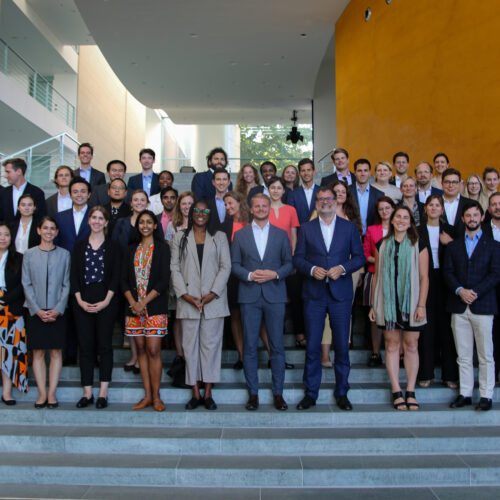
Engaging in conversations, exploring solutions, forming friendships
This year’s German-American Young Leaders Conference of Atlantik-Brücke was held at Schloss Neuhardenberg in Brandenburg from August 12-18, as the program celebrated its 50th anniversary.
... more
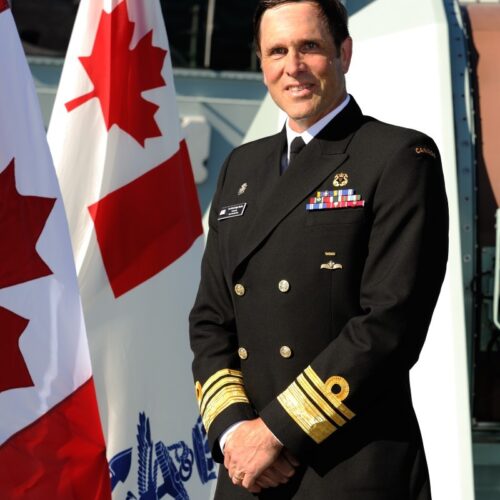
“Canada’s commitment to the Indo-Pacific is year-round”
Angus Topshee, Commander of the Royal Canadian Navy, explains Canada's Indo-Pacific Strategy.
... more

A hot summer of wildfires underscores the global urgency of governmental action
This wildfire season in North America and Europe is characterized by extremes. Steven Hill points out how the political systems have an effect on the dealing with the crisis.
... more
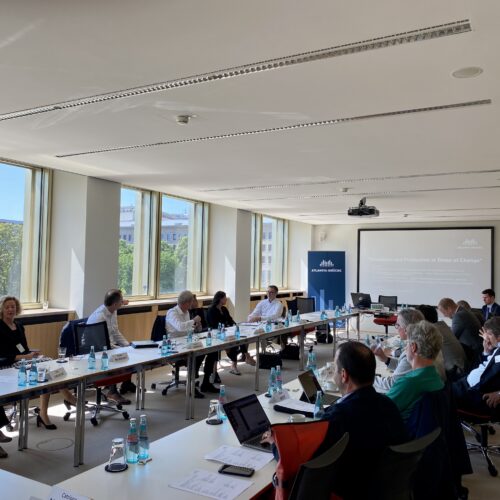
The Importance of Innovation for Transatlantic Partners
During their recent Strategy Session, Members and Young Leaders Alumni of Atlantik-Brücke engaged in discussions regarding the significance of innovation and production as fundamental pillars of the transatlantic economies.
... more
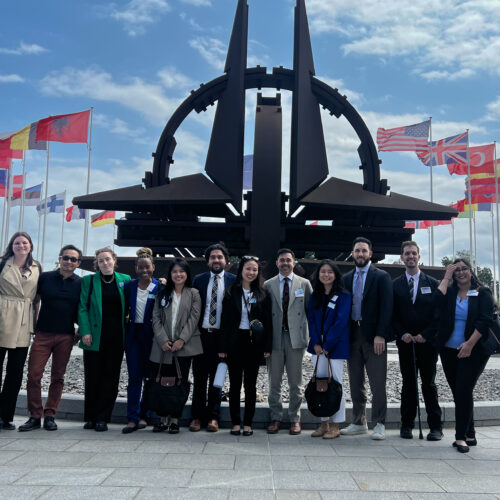
Building Bridges through Transatlantic Dialogue
The seventh cohort of Atlantik-Brücke's New Bridge Program has gained a deeper understandting of the transatlantic relationship. Its journey to Washington, Brussels, Berlin and Hamburg is supposed to have several repercussions.
... more
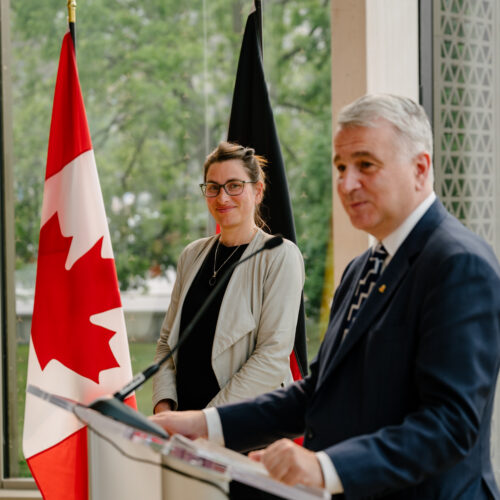
An Abundance of Shared Challenges and Goals
Energy and the environment; innovation and AI, industrial policy and supply chains as well as defense, security and procurement: these were the topics of the German-Canadian Conference 2023.
... more
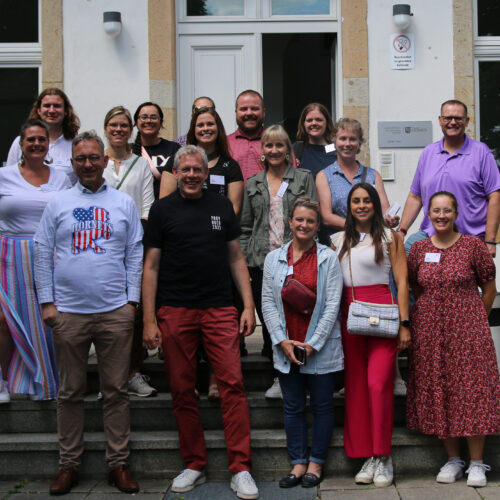
Insightful, Inspirational, Interconnected
On this study trip, 13 US Social-Studies teachers from different states learned about German politics, history and culture. Through school visits, the teachers connected with their German counterparts and experienced the German education system.
... more

Russian Propaganda in the Southern Hemisphere: A Simplistic Scapegoat
Gavin Wilde, Senior Fellow at the Carnegie Endowment for International Peace, analyzes the effects of Russian disinformation campaigns in the global south.
... more
The Ukraine war as a signal test of democracies’ commitment of confronting the authoritarian tide
Steven Feldstein from the Carnegie Endowment for International Peace describes the current threat situation for human rights on a global scale.
... more
De-risking as an economic strategy
Ursula von der Leyen, President of the EU Commission, has proposed a "De-risking" strategy for Europe vis-à-vis China in contrast to a "De-coupling" approach. Bruegel's Senior Fellow Maria Demertzis analyzes the prospects of success.
... more
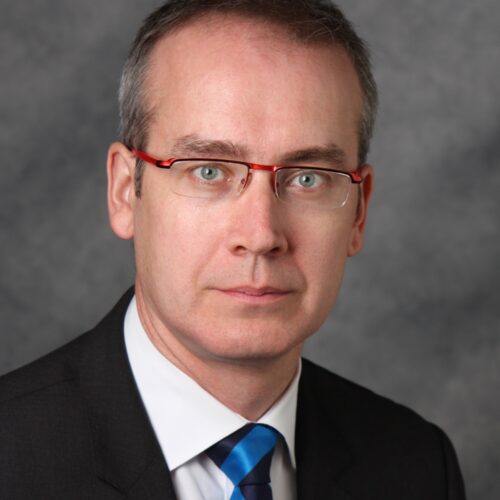
“There are many opportunities for German-Canadian cooperation”
An interview with Simon Kennedy, Canada's Deputy Minister of Innovation, Science and Economic Development, about current challenges and areas of cooperation for Canada and Germany.
... more
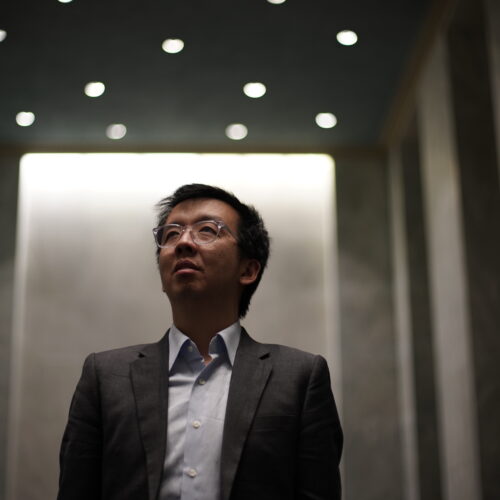
“No one is safe from repression by the Chinese Communist Party”
Hong Kong is a symbol of how autocratic regimes can stifle freedom and democracy. In this interview, activist and organizer Samuel Chu speaks about why this concerns the transatlantic partners, too.
... more
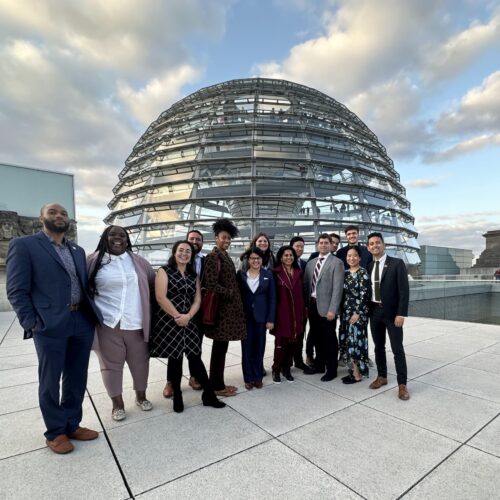
Building Bridges and Bonds to Make Cross-Cultural Impact
The New Bridge Fellows give a report on their study trip to Europe and reflect on what they have learned about transatlantic relations during an eventful week.
... more
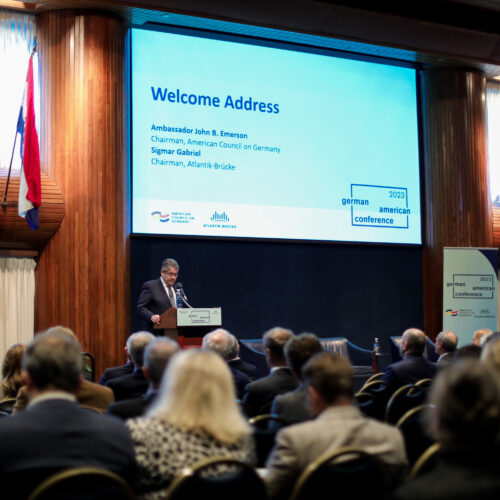
Global Economic Disruptions and Transatlantic Alliances
The COVID-19 pandemic, the war in Ukraine, and climate change have created huge disruptions – with lasting implications at the global, national, and local levels. At this critical juncture, the American Council on Germany and Atlantik-Brücke convened their annual transatlantic conference in Washington, D.C. to explore the recent economic impacts to the transatlantic partnership – and worldwide.
... more
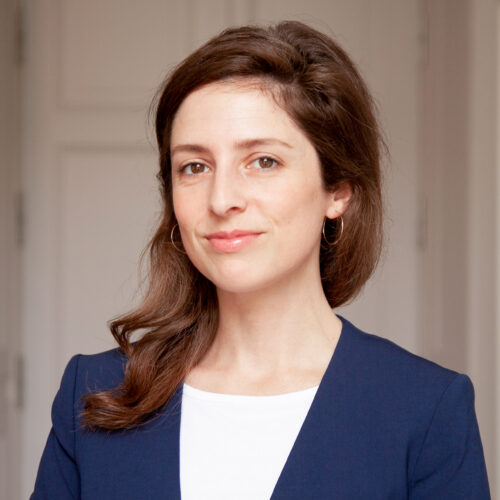
A vicious politicization of everything
In her column, Elisabeth Zerofsky writes about the political polarization in the US, which also affects foreign policy issues - not least in the case of the Ukraine war.
... more
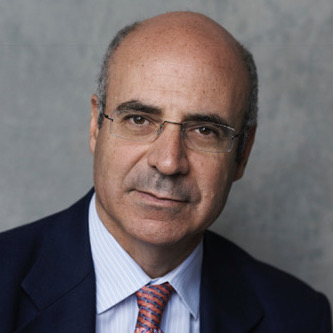
“China should be afraid of us”
In this Atlantik-Bruecke-Interview, Bill Browder, CEO of Hermitage Capital LLP and Putin's former "enemy No. 1," explains his assessments of the Russian president and options for further sanctions against Russia.
... more
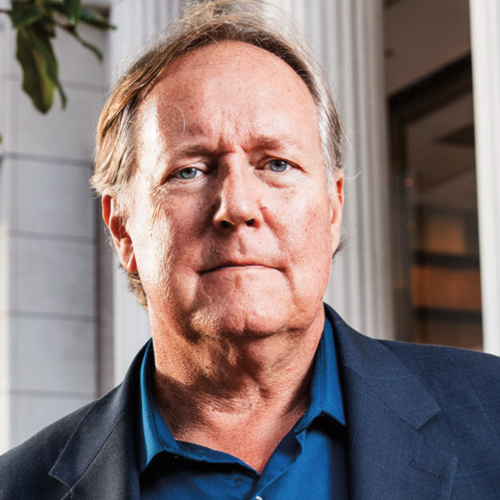
The Great American Con
Political scientist Carl Luna describes how the demise of the Great American Dream has been exploited by populist politicians.
... more

A Taiwan Crisis Looms on the Transatlantic Horizon
The status of Taiwan is increasingly preoccupying the states of the democratic West. What are the current risks of escalation by China? And what could possible sanctions look like in response?
... more
Six reasons Silicon Valley Bank isn’t another 2008 crisis
Former German central banker Andreas Dombret sees the failure of the Silicon Valley Bank as a warning signal, but not necessarily as a harbinger of another financial crisis.
... more
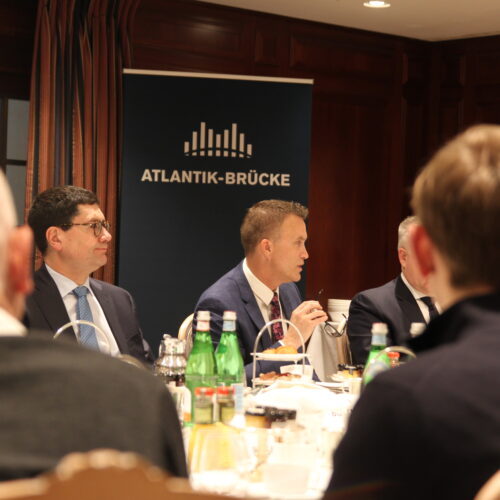
The Potential of a German-Canadian Partnership in Energy Security and Energy Transition
Pete Guthrie, Energy Minister of Alberta, spoke about the challenges for global energy supply and the deepening of a German-Canadian energy partnership.
... more

Disruption in the US Tech Sector: Layoffs, Stock Buybacks, and Business Plan Pivots
In a column for Atlantik-Brücke, publisher and author Steven Hill examines the recent upheaval of the US tech sector and the complex reasons for mass layoffs.
... more

Atlantik-Brücke for Ukraine
To contribute to the urgently needed emergency humanitarian aid for Ukrainians, Atlantik-Brücke is appealing for donations to CARE's projects on the occasion of the bitter anniversary of February 24.
... more
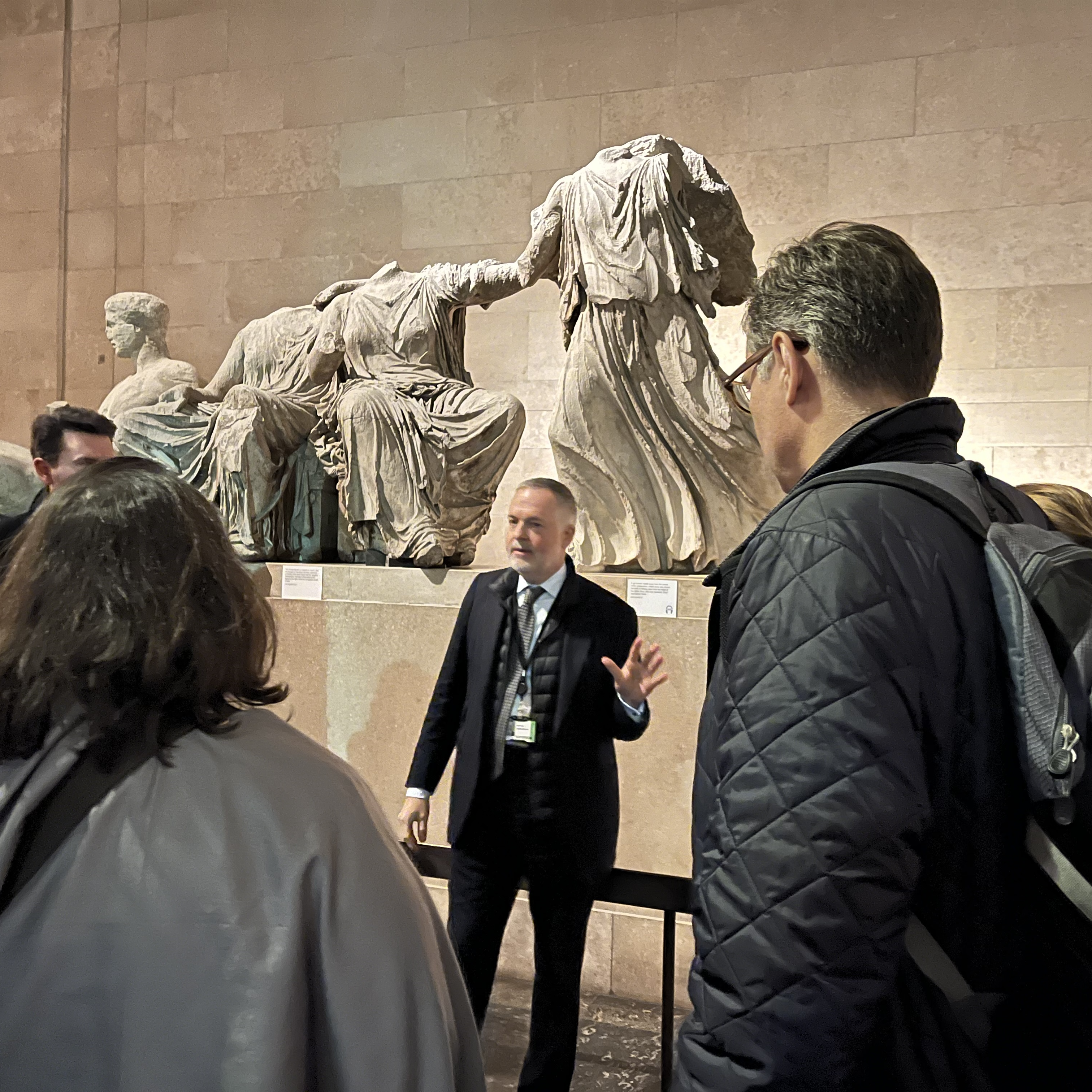
An Evening at the British Museum
The members of Atlantik-Brücke's London chapter had a chance to take an exclusive tour of the British museum, led by its director, Hartwig Fischer.
... more
„We are focused on diplomatic outcomes that have a real effect for middle-class America“
Under Secretary Jose W. Fernandez, U.S. Department of State, details the Biden administration's approach to economic diplomacy and the need for transatlantic cooperation on issues from the supply chain to China.
... more
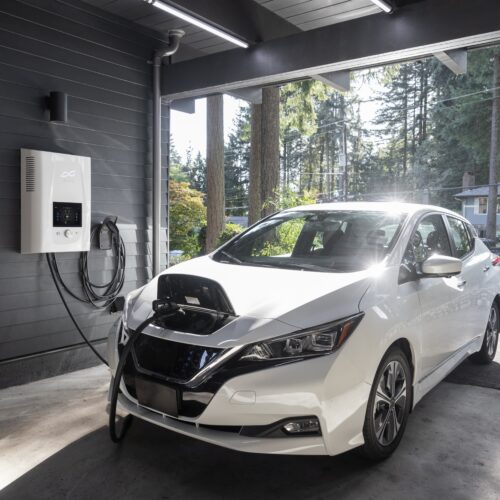
Is the U.S. Inflation Reduction Act Hurting the German Economy?
Michael Hüther, Director and Member of the Executive Board of the German Economic Institute (IW), and Jürgen Matthes, Head of IW's Global and Regional Markets Cluster, assess the implications of the U.S. Inflation Reduction Act for Germany and Europe.
... more
Towards a more sustainable energy economy
Dirk Nowak analyzes the energy markets in Texas and Louisiana and draws possible conclusions for Germany and Europe.
... more
The ECB should further tighten its course
In an op-ed first published in the Frankfurter Allgemeine Zeitung, Andreas Dombret, member of Atlantik-Brücke's board and Global Senior Advisor at Oliver Wyman, makes the case that ECB President Lagarde should not leave her path of interest rates.
... more
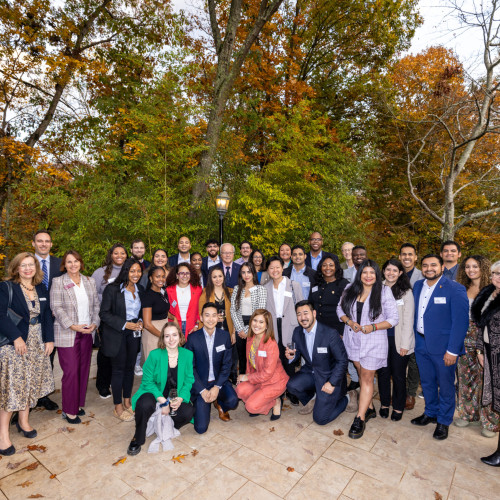
New Bridge Alumni Convene in Atlanta
The New Bridge Alumni Conference marked the one-year anniversary of the New Bridge Program. It brought together fellows from all cohorts of the program for networking, discussions and a good time in Georgia's capital.
... more
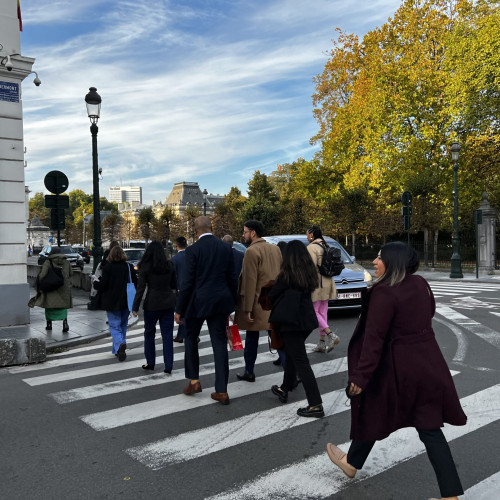
“A live example of the value of diverse perspectives”
A visit to the European Parliament, a chat about organized labor at Volkswagen, and a meeting with the German President were just a few of the items on the most recent New Bridge cohort's agenda.
... more
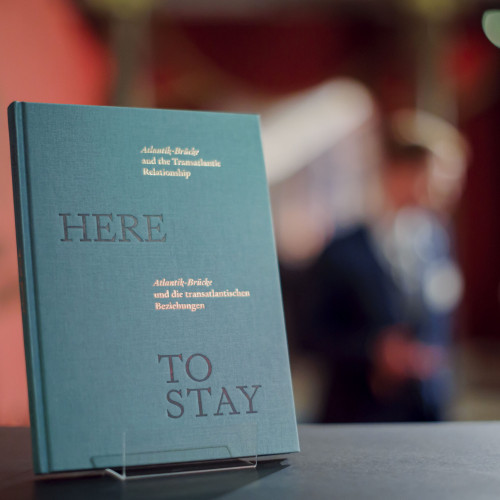
“Here to Stay”
On the occasion of its 70th anniversary, Atlantik-Brücke is presenting a publication that features essays and reflections on the past and the future of the transatlantic relationship.
... more
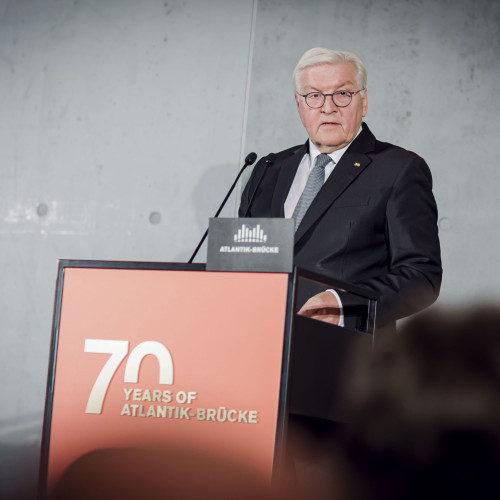
„A Place Where One Can Sense the Appeal of the Transatlantic Project“
On the occasion of Atlantik-Brücke's 70th anniversary, German Federal President Frank-Walter Steinmeier emphasized the importance of transatlantic relations and encouraged a willingness to engage in dialogue.
... more
70 Years of Atlantik-Brücke
70 years of Atlantik-Brücke are cause for celebration, but also for reflection. How can we strengthen transatlantic relations in the face of multiple crises? What are the greatest challenges we must face together?
... more
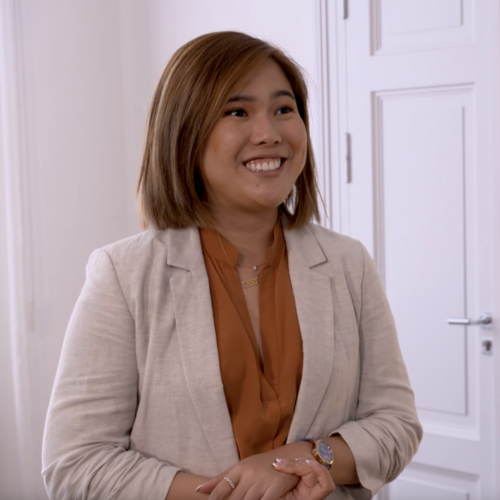
“In Europe, I’m automatically the American. That switch has been really enlightening.”
The fellows of Atlantik-Brücke's New Bridge Program add new viewpoints to the transatlantic debate. Catt Phan shares her experience as a Vietnamese immigrant and elaborates on how traveling abroad has changed her perspective.
... more
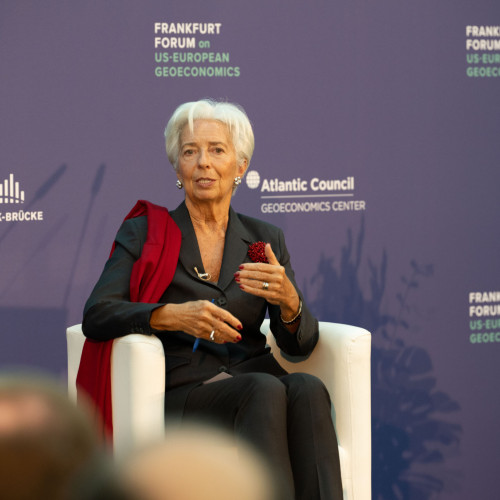
Frankfurt Forum
The Frankfurt Forum, a groundbreaking conference on geoeconomics in cooperation with the Atlantic Council, featured high-level stakeholders on questions of trade, currency governance, digital assets and state craft. Among the speakers were Christine Lagarde, President of the ECB, and Paolo Gentiloni, EU Commissioner for Economic and Monetary Affairs and Commissioner for Taxation and Customs Union.
... more
Frankfurt Forum
You can watch the recording of the Frankfurt Forum, a high-level conference on geoeconomics in cooperation with the Atlantic Council, here. Among the speakers: Christine Lagarde, President of the ECB, and Paolo Gentiloni, EU Commissioner for Economic and Monetary Affairs and Commissioner for Taxation and Customs Union.
... more
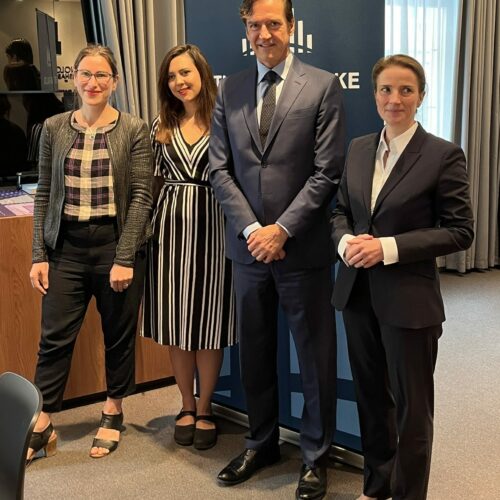
On Board! Finland and the New NATO
Ambassador Kai Sauer, Under-Secretary of State for Foreign and Security Policy, Ministry for Foreign Affairs of Finland, gives insight into Finland's perspective on Russia's war against Ukraine and Finland's application to join NATO.
... more
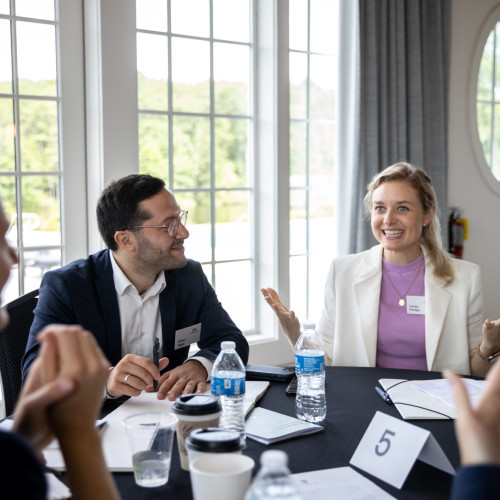
“A lot to be hopeful for”
The 2022 Young Leaders convened in Atlanta, Georgia. In their conference report, they reflect on the hard questions they discussed, the solutions they developed, and the hope they have - despite the crises that the world is facing.
... more
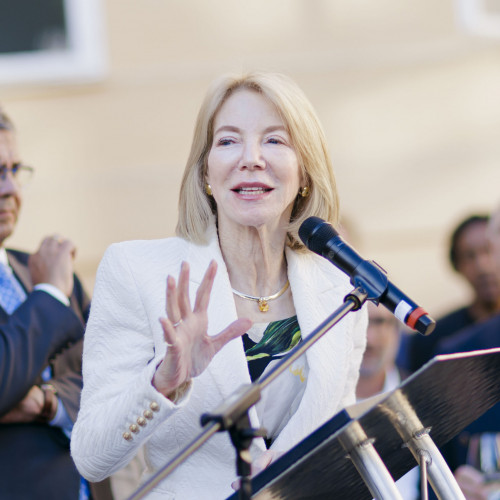
„The defense of democracy is the defining challenge of our time.“
U.S. Ambassador Gutmann, in a moving speech against the backdrop of the Ukraine war, stressed the need to protect democracy against attacks by its enemies.
... more
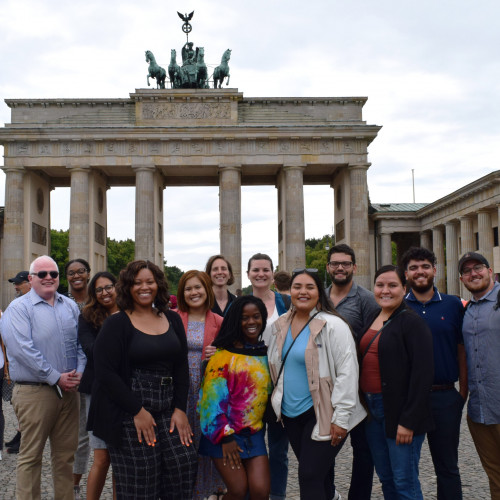
“Our Strength Comes from our Diversity”
A cohort of New Bridge Fellows shares insights into why they applied to the program, how their views on Europe have changed, and what the experience taught them.
... more
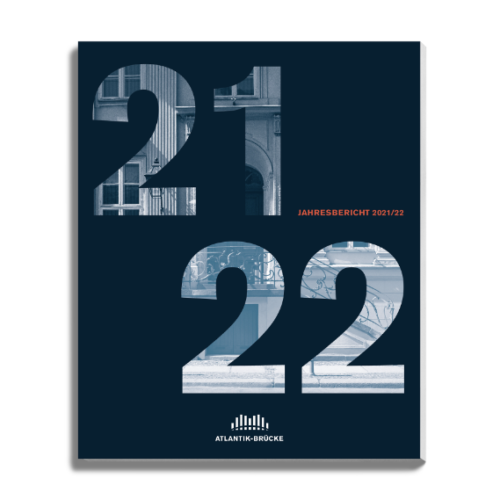
Current annual report
Atlantik-Brücke's 2021/2022 Annual Report with guest essays by Anthony Gardner, former U.S. Ambassador to the EU, Alexander Karp, CEO of Palantir, and voices of the New Bridge Program Fellows, among others.
... more
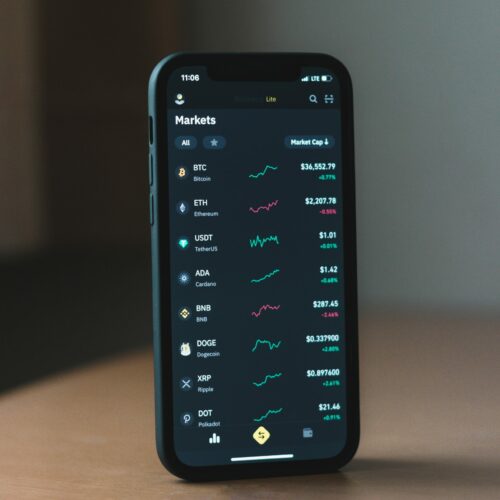
The Case for Central Bank Digital Currencies
Andreas Dombret and Oliver Wünsch see an important opportunity in digital currencies issued by central banks.
... more
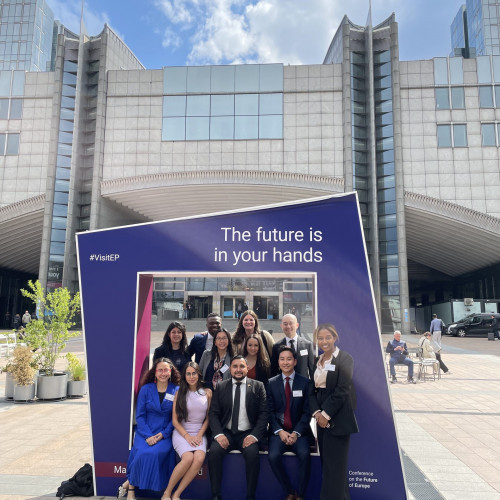
„A semester’s worth of transatlantic relations in one week“
Two fellows of the New Bridge Program recount their trip to Washington, DC, Berlin, Brussels and Hamburg, and reflect on the topics they discussed.
... more
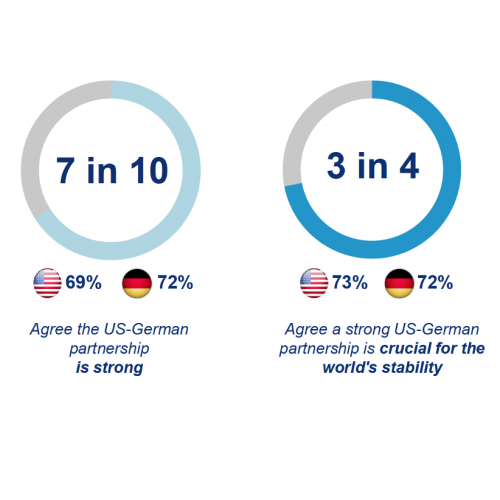
“The State of Trust and the US-German Partnership: A Transatlantic Survey”
A new study conducted on occasion of the German-American Conference shows that the majority of Germans and Americans see the transatlantic partnership as crucial for global stability.
... more
In Search of a New World Order
Russia's war against Ukraine dramatically demonstrates that the world is fundamentally changing, write Sigmar Gabriel and Michael Hüther. How can Europe help shape this change?
... more
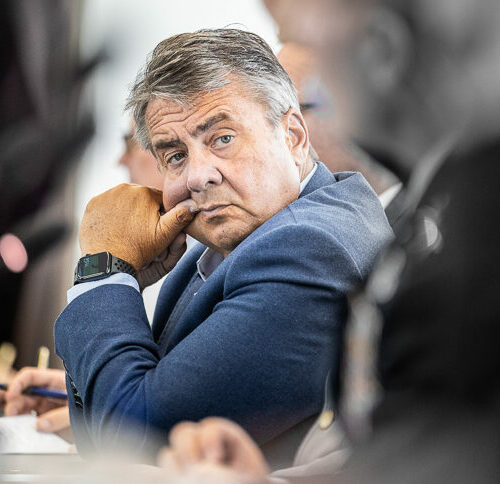
“Nord Stream 2 was a mistake. We simply didn’t listen to the Eastern Europeans.”
An exclusive interview with Atlantik-Brücke Chairman Sigmar Gabriel on Putin's war against Ukraine, the flaws of Germany's Russia policy, and the unwavering importance of the transatlantic alliance.
... more
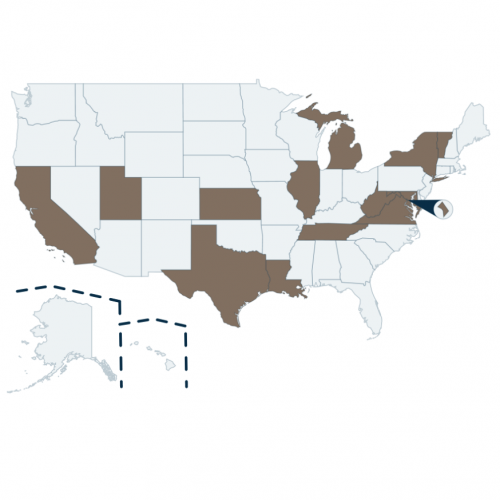
The New Bridge Fellows
The New Bridge fellows reflect the diversity of American society. An interactive map shows where program participants are from and provides information on their professional background.
... more

Julia Friedlander named as Atlantik-Brücke’s new CEO
Julia Friedlander, 37, will take over as CEO of Atlantik-Brücke on June 1, 2022.
... more
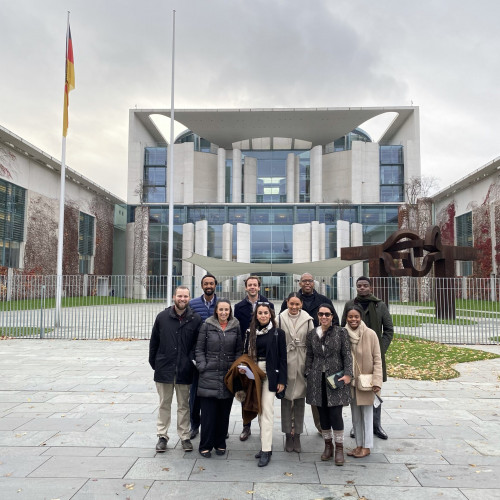
Reflections on the New Bridge Program
A group of New Bridge Fellows travelled to Washington, DC, Berlin, Wolfsburg and Brussels. Here, they recount their trip and reflect on what the experiences meant to them.
... more
Germany needs to protect Europe
As the most prosperous and powerful country in Europe, Germany needs to relieve the United States by defending Europe against Russian aggression, writes Peter Rough of the Hudson Institute.
... more
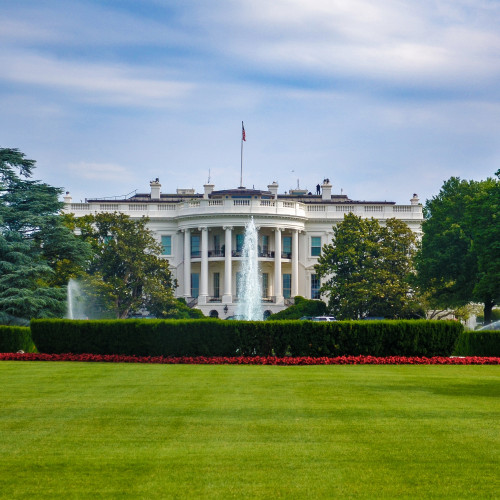
Rebuilding Trust: How Germany Can be a Reliable Partner
His meeting with President Biden presents a chance for Chancellor Scholz to underline Germany's reliability and leadership, write Sigmar Gabriel and John B. Emerson.
... more
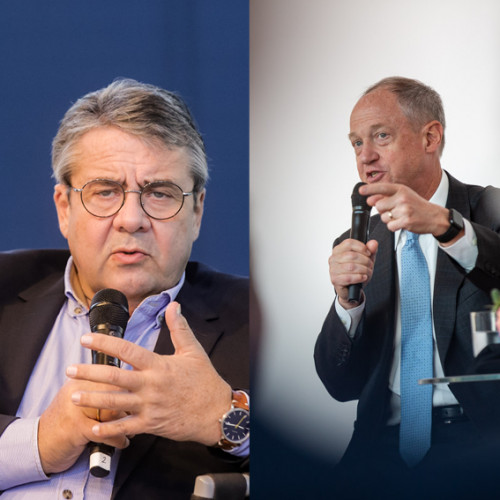
The priorities of Germany’s new government
John B. Emerson and Sigmar Gabriel analyze the domestic and foreign policy priorities of Germany's new federal government, the so-called traffic light coalition.
... more
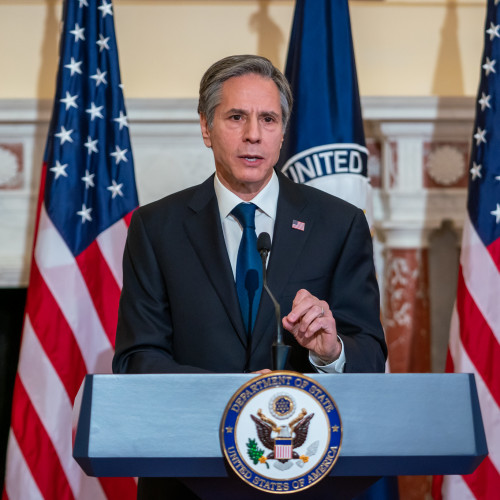
Keynote by U.S. Secretary of State Anthony J. Blinken
Atlantik-Brücke, the American Council on Germany, Aspen Institute Germany and the German Marshall Fund of the United States were honored to host the U.S. Secretary of State Antony J. Blinken for a keynote on the transatlantic partnership.
... more
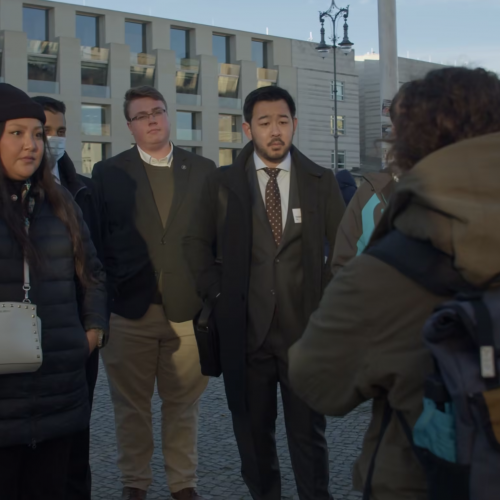
Inside the New Bridge Program
In this short film, participants of the New Bridge Program give an insight into their motivation to come to Europe and share their experiences on the trip.
... more
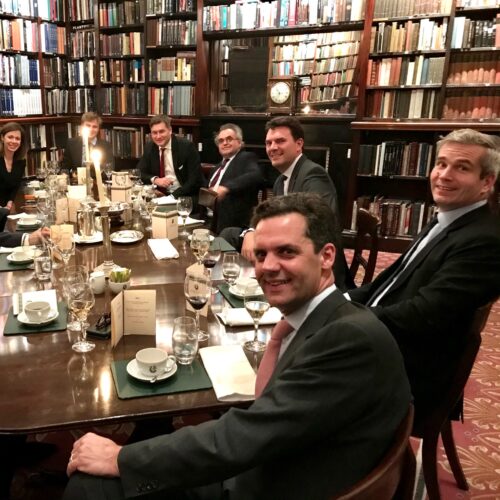
“Britain has to be careful not to be sidelined by the US on the world stage”
Columnist Philip Collins and UK Correspondent Ulrich Oppold on the transatlantic relationship and Britain's role.
... more
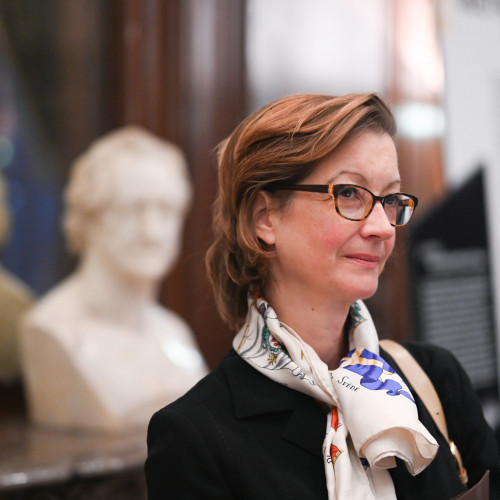
“China is front of mind in the US”
Heidi Crebo-Rediker, former first chief economist at the State Department, speaks about transatlantic relations and China at an Atlantik-Brücke event in New York City.
... more
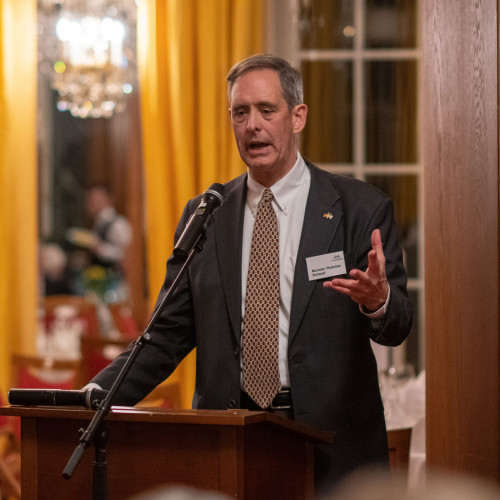
“We need alliances – now even more than ever”
Atlantik-Brücke was honored to welcome U.S. Consul General Thatcher Scharpf to Frankfurt. The Consul General shared a positive outlook on transatlantic relations.
... more

Love Hate Sculpture unveiled in Washington, D.C.
The LOVE HATE sculpture by German artist Mia Florentine Weiss was officially unveiled in Washington.
... more
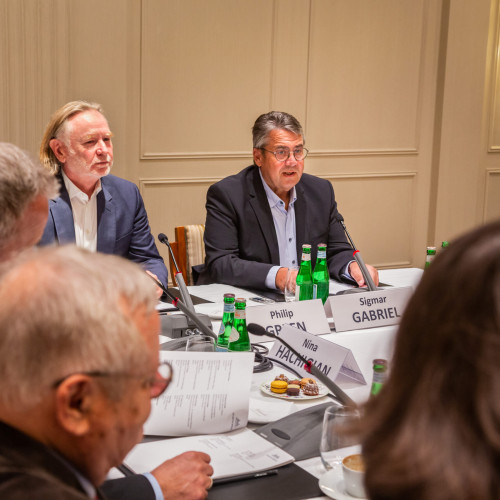
AUKUS – an Australian Perspective
Australia's Ambassador in Germany, H.E. Philip Green, gives insight into Australia's perspective on the Indo-Pacific.
... more
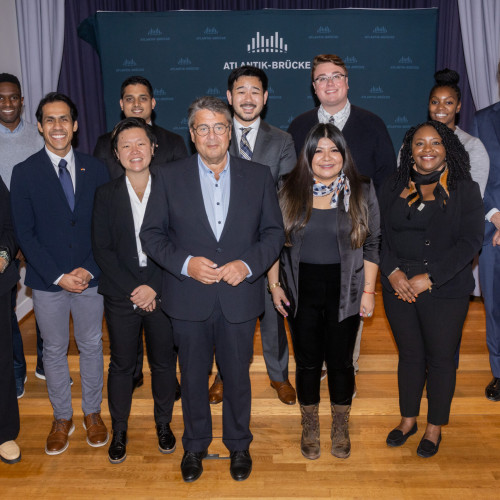
More Diversity: Rethinking Transatlantic Relations
A new Atlantik-Brücke program is bringing Americans of diverse backgrounds to Europe to enrich the European-American dialogue and spark interest in Europe among those who previously had no professional or personal ties to the continent.
... more
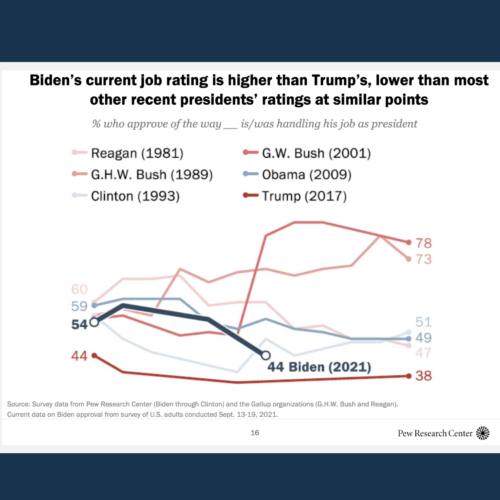
Changing Views of and in the United States
Jacob Poushter, Pew Research Center, explains the latest polling data on the U.S. image abroad, troop withdrawal in Afghanistan, and President Biden's approval ratings at home.
... more
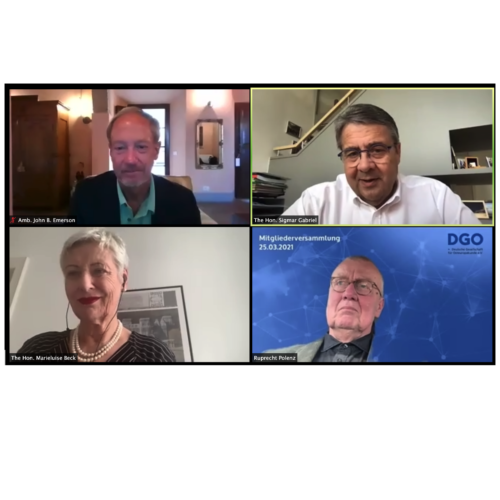
Election Readout 2021
Journalists, Scholars and Politicians comment on the implications of the outcome of the German elections.
... more

Transatlantic Climate Change Policy
Where is the greatest potential in terms of energy efficiency, reusability and recycling, and how can the climate-damaging effects of digital technologies be reduced?
... more

Female Founders on Challenges and Opportunities in the Startup World
Startup entrepreneurs Hannah Helmke and Laura Behrens Wu speak about their experience as founders in Germany and the US.
... more

“The more stable our democracies are, the less terrorists can harm us”
In an interview, Sigmar Gabriel talks about 9/11 and its consequences.
... more
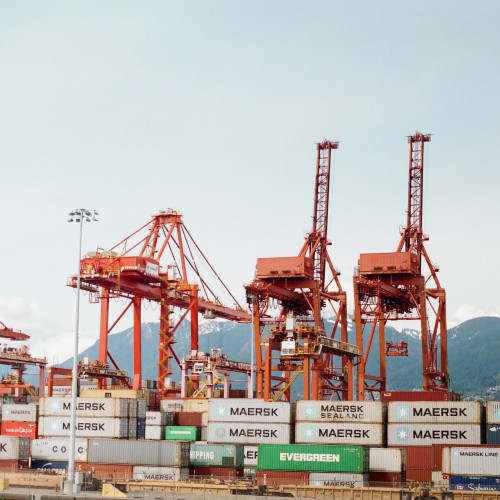
USA and EU remain each other’s most important economic partners
Despite numerous challenges in recent years, the EU and the US remain each other's most important economic partners. That is the result of a study conducted by the German Economic Institute for Atlantik-Brücke.
... more
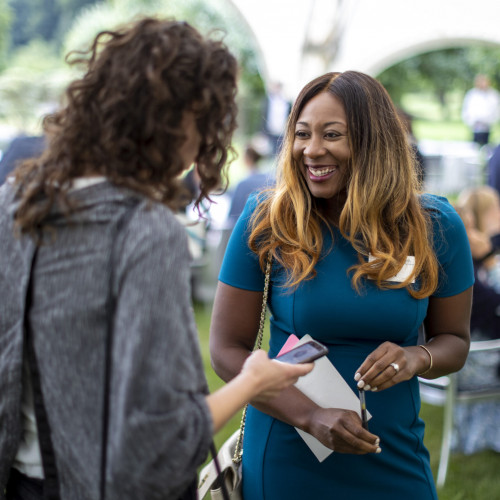
German-American Young Leaders Conference 2020-2021
Up and coming leaders from Germany and the United States came together for a week at Schloss Neuhardenberg in Brandenburg, Germany. After a year and a half of social distancing, this Young Leaders conference felt truly special.
... more
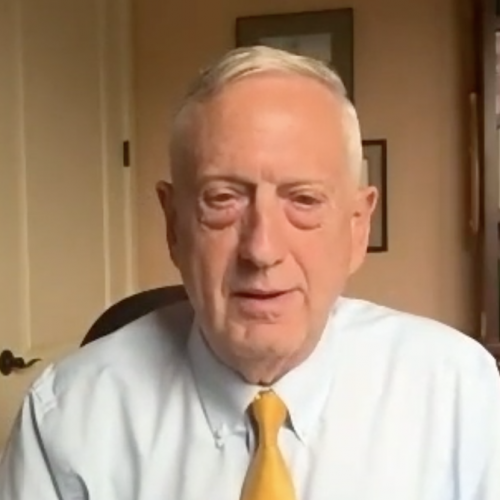
“Allies, allies, allies”
General James Mattis, United States Marine Corps (Ret); 26th U.S. Secretary of Defense, spoke at Atlantik-Brücke’s Young Leaders Conference 2021 about what matters most in foreign policy.
... more
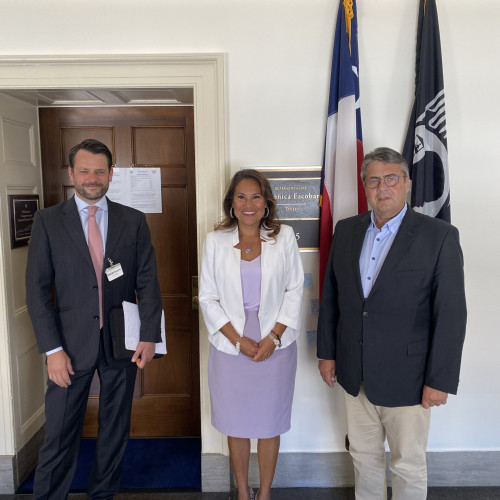
Strengthening Old Ties and Creating New Ones
Atlantik-Brücke Chairman Sigmar Gabriel and Executive Director David Deißner travelled to Washington, DC, to meet with Atlantik-Brücke's partners and lay the groundwork for a new program.
... more
Building the New Bridge Program
Atlantik-Brücke's new transatlantic initiative promotes diversity. Meetings with experts and partners in Washington, DC, kicked off the program.
... more

Germany, the US, and the Future of Democracy
In this series, Anne Applebaum, Daniel Ziblatt and Jan-Werner Müller discuss current challenges to democracy.
... more
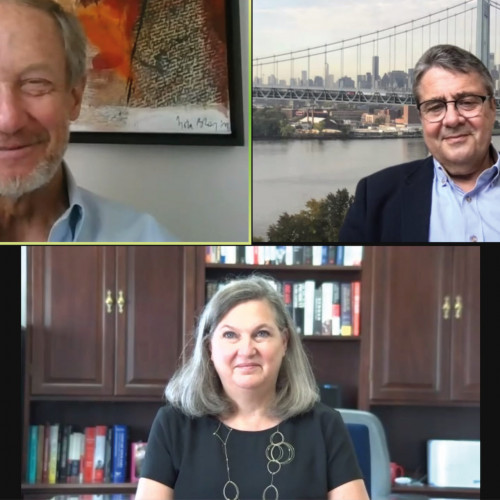
“A 1949 Moment”
Ambassador Victoria Nuland, Under Secretary for Political Affairs at the U.S. Department of State, spoke with John B. Emerson, Chairman of the ACG, and Sigmar Gabriel, Chairman of Atlantik-Brücke, about President Biden's recent trip to Europe, the common challenges ahead and the priorities for U.S. foreign policy.
... more
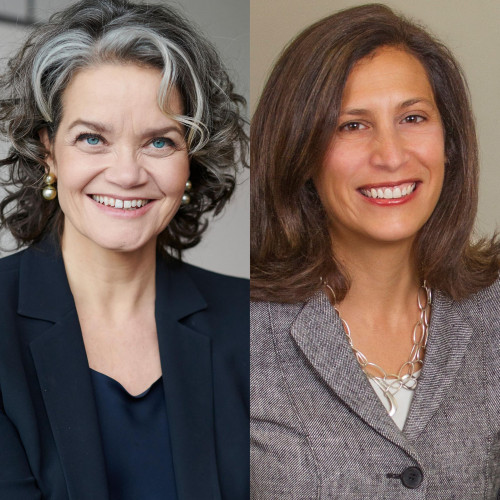
Smart Cities: Introducing the Public Sector to the 21st Century
Claudia Nemat, Deutsche Telekom, and Victoria Espinel, BSA, talk about Smart Cities and digitalization of the public sector.
... more
“A good starting point”
In an interview, Phil Mattingly, CNN, speaks about the outcome of President Biden's first trip to Europe in June 2021.
... more
Can President Biden Unify America?
Isabel Sawhill takes a closer look at President Biden's promise to unify the country, to help middle and working class Americans and to address racial gaps.
... more
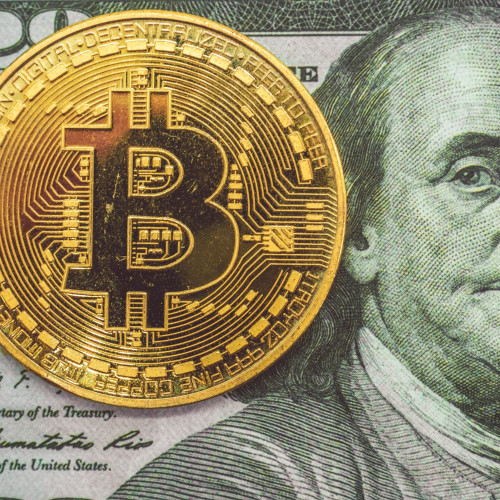
What Does the Future of Money Hold?
Michael Miebach, Mastercard, and Burkhard Balz, Deutsche Bundesbank, discuss the impact of digitalisation on money with Julia Friedlander, Atlantic Council.
... more
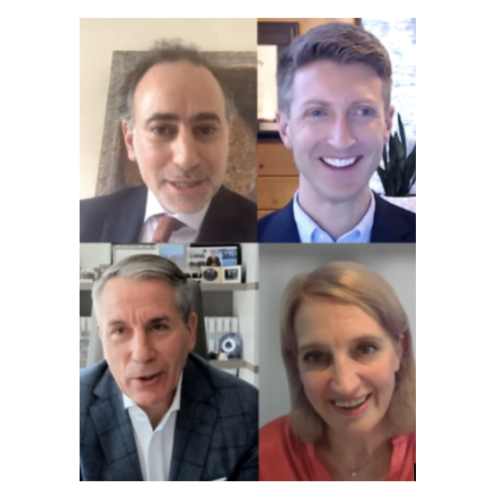
Transatlantic Technology Cooperation: Where Are We Headed?
Bruno Gencarelli, Christopher Hoff, Martin Jetter, and Iris Plöger on the opportunities and challenges of transatlantic technology cooperation.
... more
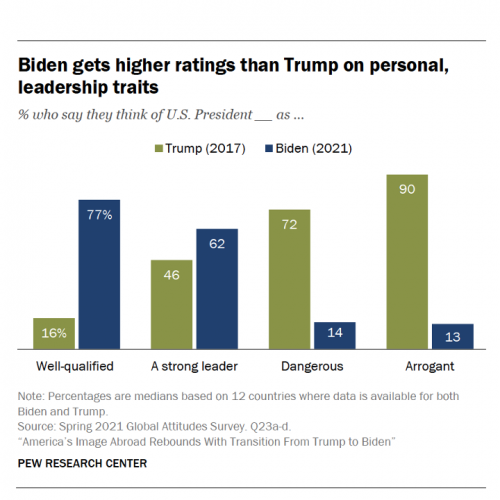
America’s Image Abroad
For the release of Pew Research's new survey on America's image abroad, we spoke to Richard Wike, Director of Global Attitudes Research.
... more
The Challenges of Future War
Lieutenant General (ret.) Ben Hodges talks about the character - both technological and geopolitical - of future war, as outlined in his latest book.
... more
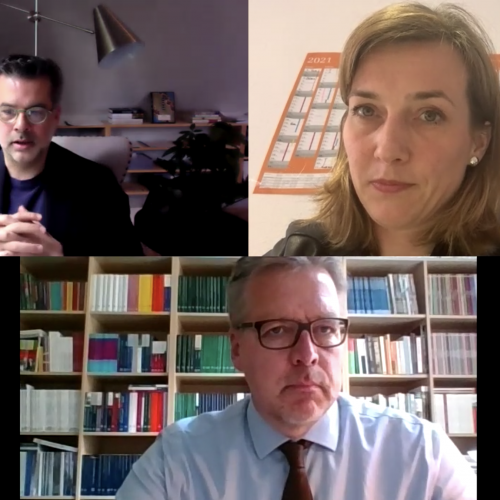
The Transatlantic Alliance after Afghanistan
Bruce Jones, Brookings Institution, and Markus Kaim, SWP, discuss NATO's withdrawal from Afghanistan with Siemtje Möller, MdB (SPD).
... more
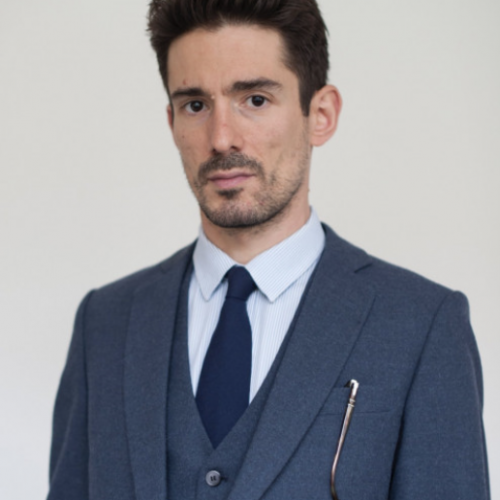
“Little Time for Major Foreign Policy Projects”
Bojan Pancevski, the WSJ's Germany correspondent, on the new U.S. administration and transatlantic relations.
... more
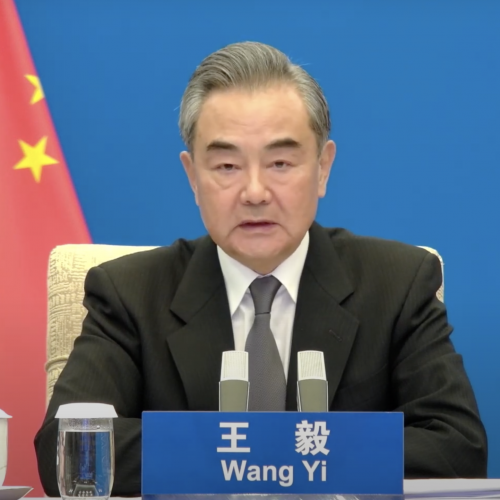
A Conversation on Relations between China and the West: A Perspective from Beijing
Wang Yi, Sigmar Gabriel, Federica Mogherini, and Wolfgang Ischinger discuss the future of the EU's and the West's relationship with China.
... more
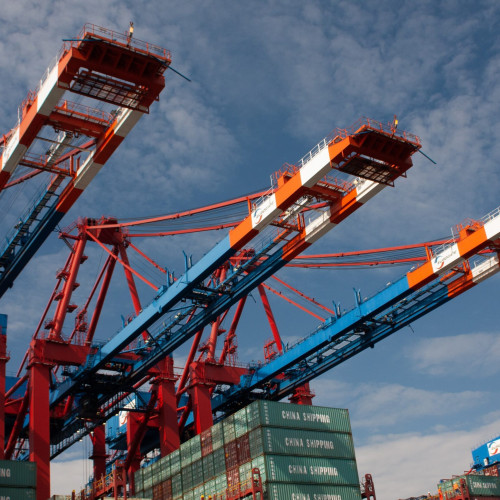
“To move forward on modernizing the WTO rules, we must first address China”
The Word Trade Organization’s need for reform is often closely linked with challenging policies by China, says trade expert Daniel S. Hamilton.
... more
Reaffirming and Reimagining the Transatlantic Alliance: Facing Shared Challenges Together
Philip T. Reeker, Acting Assistant Secretary of State for European and Eurasian Affairs, on the challenges for the transatlantic partnership.
... more
President Biden and the 117th Congress
A.B. Stoddard, RealClearPolitics, and Bob Cusack, The Hill, share their expectations for the Biden-Harris administration.
... more
President Biden and the 117th Congress: Journalists’ Perspectives on What to Expect
In the first event of the series “Voices on the first six months of the new U.S. Administration” Bob Cusack, The Hill, and A.B. Stoddard, RealClear Politics, debated opportunities and challenges shaping the current political landscape.
... more
“Maybe We’ll See a Realignment”
Former Senator Barbara Boxer spoke with journalist Marie-Astrid Langer, NZZ, about the high levels of polarization in the US, the future of the two-party-system and the question of whether President Biden will succeed at unifying the nation. Boxer, who looks back at a decades-long political career, gives deep insights into what is happening in Washington.
... more
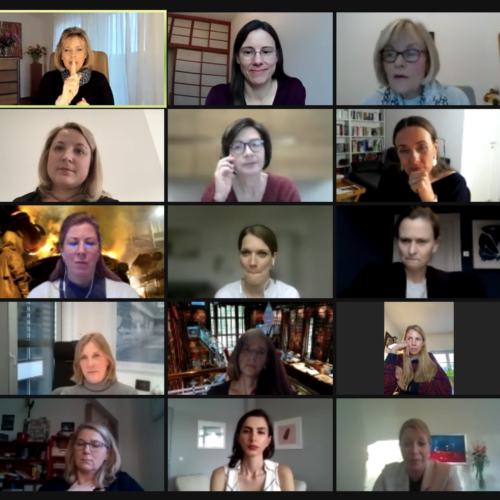
Female Leadership Workshop on Digitilization
As part of our new Female Leadership Workshop Series, speakers Angelika Gifford and Dr. Katrin Suder discussed, together with participants, digitalization during a global crisis.
... more

Reforging the Transatlantic Energy Alliance: From Sanctions towards Cooperation
Former Ambassadors Richard Burt, Daniel Fried, and Janusz Reiter, together with Mario Mehren and Dr. Kirsten Westphal discuss Nord Stream 2 and transatlantic cooperation on energy issues.
... more
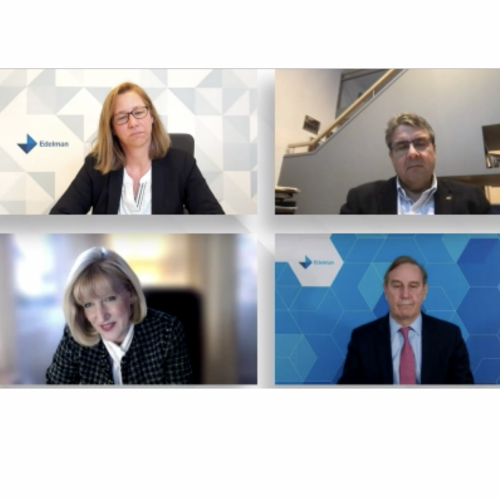
A Trust Crisis? The Edelman Trust Barometer 2021
Together with Edelman Germany, Atlantik-Brücke presented the results of the Edelman Trust Barometer 2021 for Germany.
... more

“Being the opposition party will help unify Republicans”
The pollster Kristen Soltis Anderson on a changed Republican Party after four years of Trump.
... more
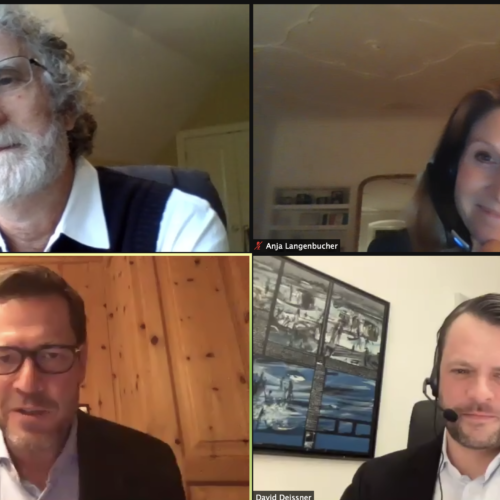
Research Strategies against Pandemics
The global COVID-pandemic demonstrates the critical importance of better understanding the human immune system. Wayne Koff, CEO of the Human Vaccines Project and Anja Langenbucher, Director Europe of the Gates Foundation, discuss this and other questions.
... more
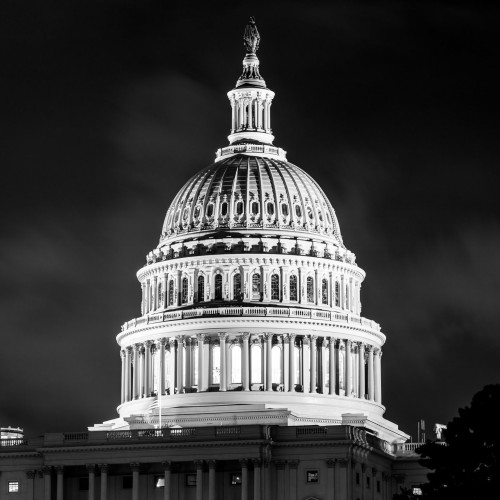
A Wake-Up Call
A statement from Atlantik-Brücke’s board of directors:
The violence in Washington on January 6 has shocked the world. Atlantik-Brücke stands alongside the overwhelming majority of Americans, both Democrats and Republicans, in distancing ourselves from the attackers and condemning this incident in the strongest possible terms. This incident should be a wake-up call for all who avow themselves to freedom and democracy, in the US and here in Germany.
... more

More Ambition, Please!
With President Biden, there is an opportunity to overcome the crisis in transatlantic relations. To this end, Germany should reach a New Agreement with the U.S. government, writes a group of transatlantic experts intheir appeal.
... more
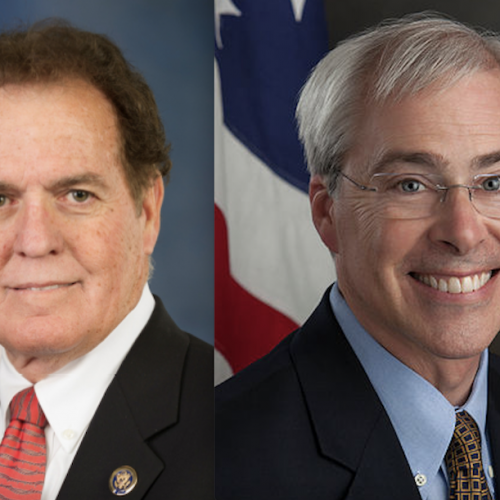
All Eyes on the US – Implications of the Georgia Election
John Barrow and Phil Gingrey, both former Members of Congress from Georgia, discuss the outcome of the elections in their home state.
... more
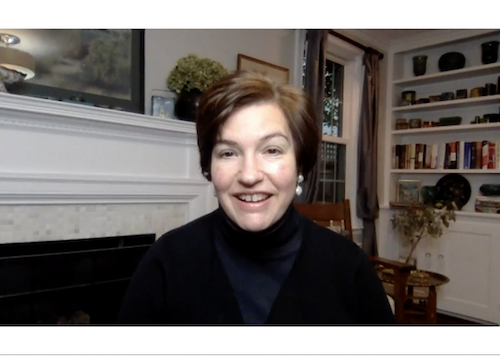
Transition: Review & Outlook on 2021
Susan Glasser, Elmar Theveßen, and Sigmar Gabriel review 2020 and give an outlook on foreign relations in 2021.
... more
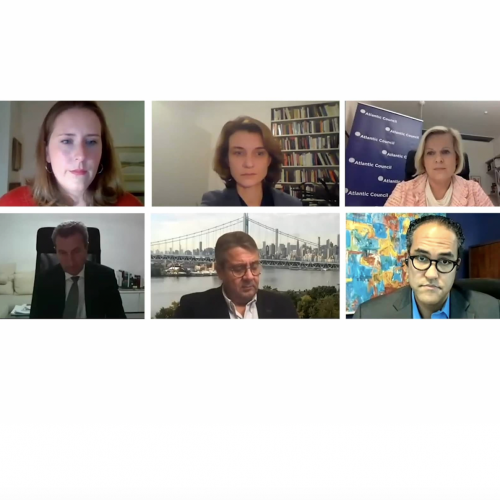
After the U.S. Election – What to Expect from the New Presidency?
Discussion between Will Hurd, Sigmar Gabriel, Günther Oettinger, Daniela Schwarzer, and Anna Wieslander on the Future of the European-American Partnership.
... more
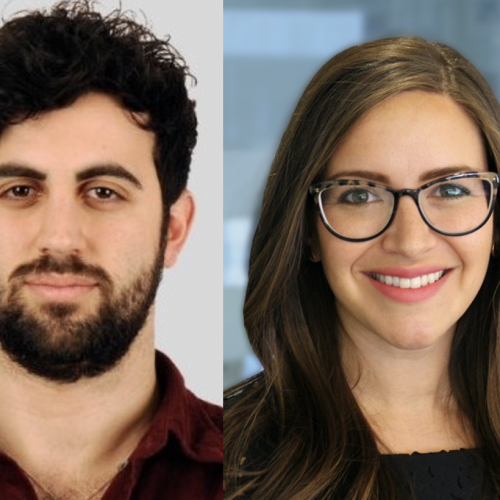
After Trump: Rebuilding Anglo-European Relations in Challenging Times
Josh Glancy, The Sunday Times, and Rachel Rizzo, Center for a New American Security, on the future of Anglo-European and transatlantic relations after Trump.
... more
Delegation Trip 2020
Due to the COVID-19 pandemic, this year, we took our members along for a virtual delegation trip to the contested battleground states. Experts and decision makers gave insights into the 2020 election and the role of battleground states such as Michigan and Wisconsin.
... more
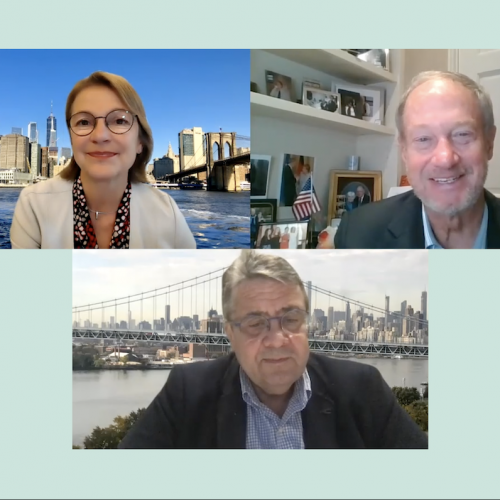
Reinventing the German-American Agenda in 2021
Sigmar Gabriel and John Emerson discuss the future of German-American relations.
... more
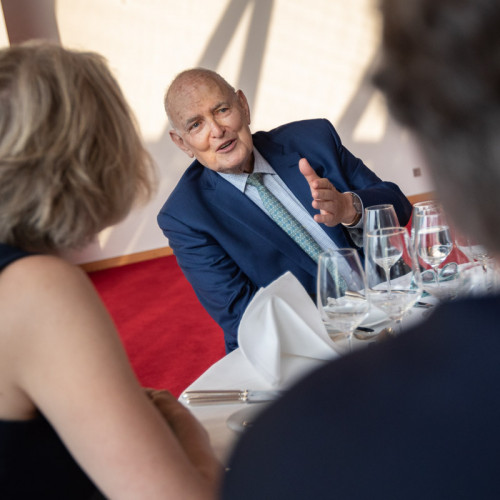
Mourning Guido Goldman
Atlantik-Brücke mourns the loss of Guido Goldman, a great transatlanticist.
... more
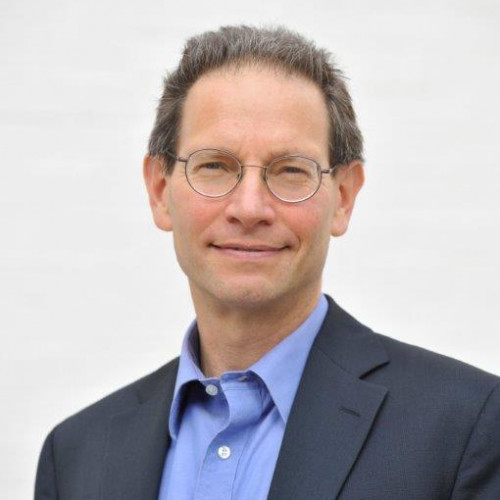
What Can We Expect from a Biden Administration?
Charles Kupchan, former national security advisor for the Obama Administration, talks about the impacts of Joe Biden's election on domestic and foreign policy with Michael Werz.
... more
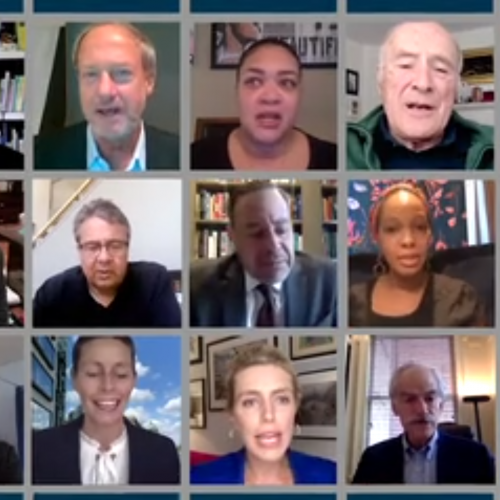
Atlantik-Brücke Highlights 2020
In 2020, Atlantik-Brücke was able to bring together absolutely outstanding speakers. They included Francis Fukuyama, Emily Haber, Nicholas Burns, Clarissa Ward, John Allen, Tom Friedman, Victoria Nuland, Robert Zoellick, John Emerson, Heidi Heitkamp, Joseph Nye, Garlin Gilchrist, Cathryn Clüver, John Lipski, Imani Perry and many more.
... more
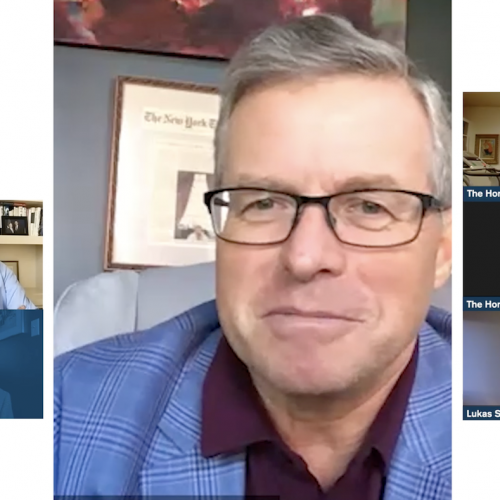
U.S. Election Debrief
Former members of Congress Jim Blanchard (D-Michigan), Carlos Curbelo (R-Florida), Charlie Dent (R-Pennsylvania) and Karan English (D-Arizona) discuss the election results.
... more
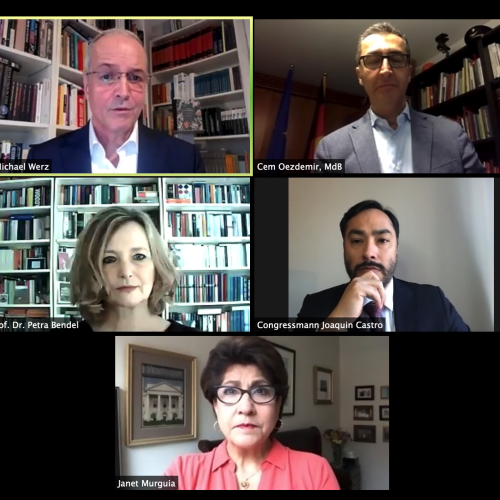
“Changing Demographics: Diversity in the United States and Germany”
Our panel on changing demographics discussed the challenges and opportunities a changing society presents for transatlantic relations.
... more
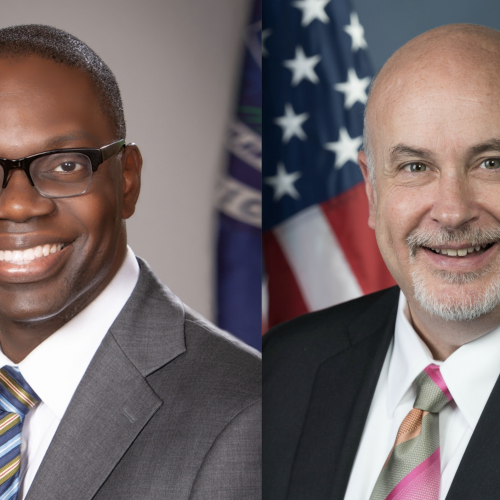
Michigan, Wisconsin, and the Presidential Election
The second and third stops of our Battleground Tour were Michigan and Wisconsin. Our guests: Garlin Gilchrist, Lt. Governor of Michigan, and Rep. Mark Pocan, (D-Wisconsin).
... more
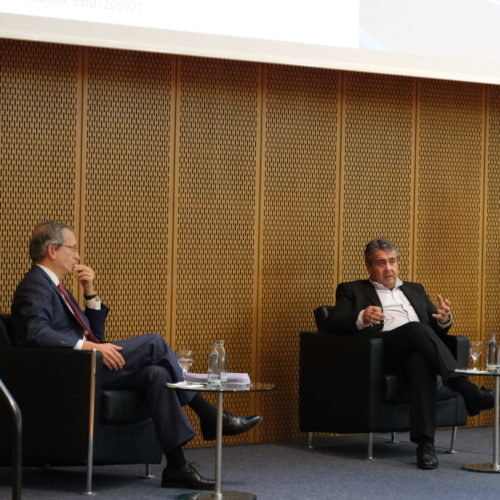
Will transatlantic relations improve after the US election?
Former US-Ambassador to the EU, Anthony Luzzato Gardner, discussed transatlantic relations with Atlantik-Bruecke-Chairman Sigmar Gabriel.
... more
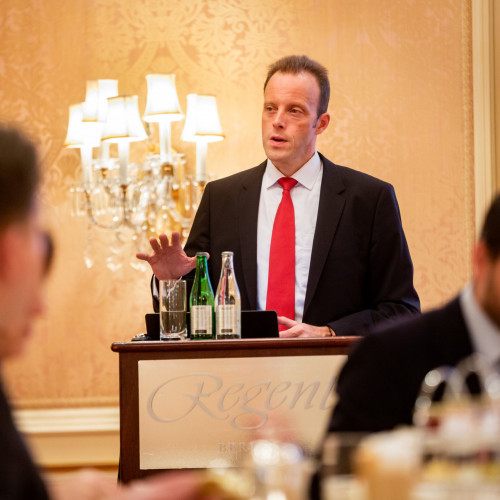
A Transatlantic Hydrogen Strategy
Dirk Nowak and Dr. Emre Gencer discuss recent developments in hydrogen technology and how to make the energy sector more sustainable.
... more
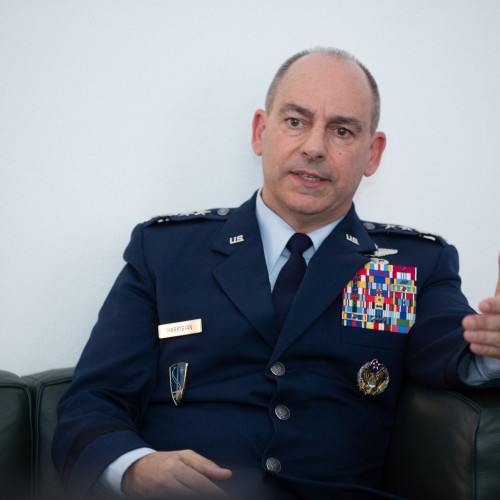
“As a leader, you have to take the time to make a personal connection”
General Jeffrey Harrigian, Commander of the United States Air Forces in Europe and Air Forces Africa, speaks about the crucial aspects of "connected leadership" within foreign and security policy.
... more
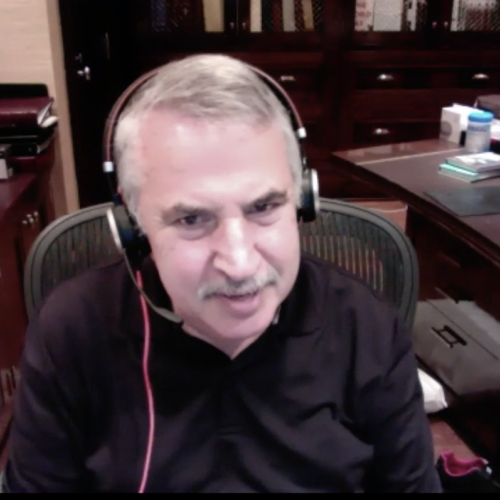
The Need for a Transatlantic China Strategy
A 4-minute-assessment by New York Times Op-Ed Columnist and Pulitzer Prize winner Thomas L. Friedman on the US’s and Europe's relationship with China, Trump's unilateral approach and the need for multilateral cohesion.
... more
American Democracy in Crisis?
Daniel Ziblatt and Donald Wise discuss the state of American democracy and the impact of polarization.
... more
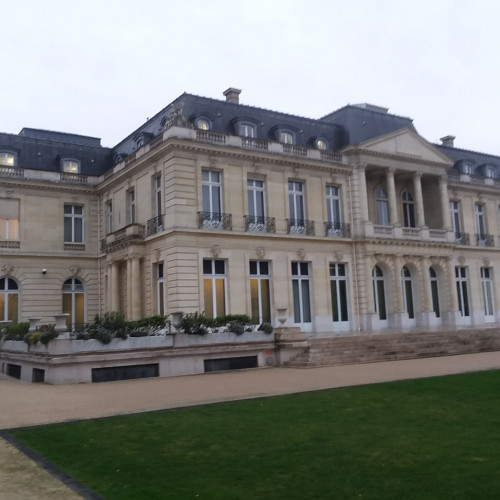
OECD Moves Deadline for Global Tax Decision to 2021
Rick Minor gives insights into the efforts of the OECD for a global tax reform that would secure $100 billion in tax revenue.
... more
A Pollster’s Analysis on the U.S. Election
Four leading American pollsters give us their take on the upcoming election, moderated by former Congresswoman Elizabeth Esty.
... more
Foreign Interference in the Upcoming U.S. Election?
Award-winning journalist Clarissa Ward speaks about the possibilty of renewed Russian interference in the US elections.
... more
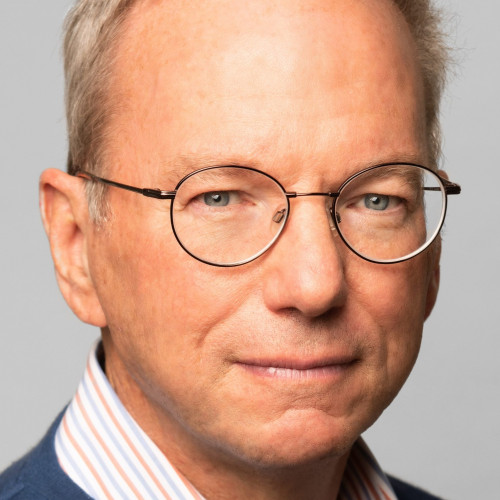
Technology and Revitalization of the Transatlantic Community
Faced with global disruption by the COVID-19 pandemic, the US and Europe must reinvigorate the the transatlantic community’s sense of purpose, writes Eric Schmidt.
... more
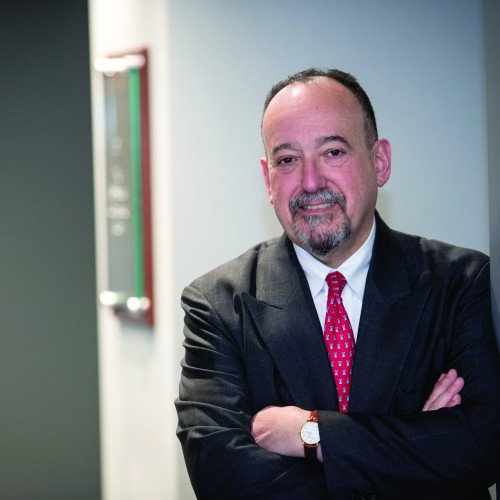
The Republican Strategy for November
This fall's elections will determine whether US politics will be about socio-economic issues or identity politics, writes Mike Gonzalez of the Heritage Foundation.
... more
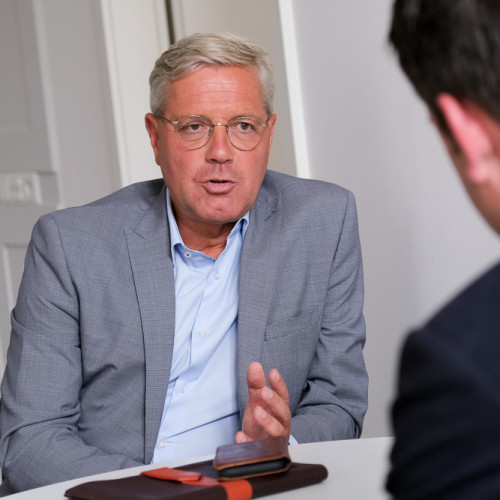
Röttgen: “Sanctions must never be used against partners”
Norbert Röttgen, Chairman of the Foreign Affairs Committee of the German Bundestag, criticizes the recent escalation of the U.S. Senate against Nord Stream 2.
... more

The ball is in Europe’s court
President Trump's announcement to withdraw 9,500 US soldiers from Germany marks a historic low in relations with America. Atlantik-Brücke's Managing Board calls for measures to overcome the crisis. Europe has to start playing a more active role in transatlantic relations, having sailed in the USA's wake for too long.
... more
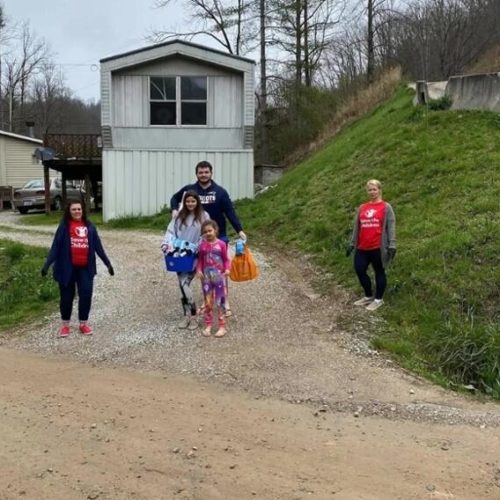
U.S. Corona Relief: Donate Now!
The US and Germany are friends and partners, regardless of any political tensions. That's why we have teamed up with Save the Children to help those in need.
... more
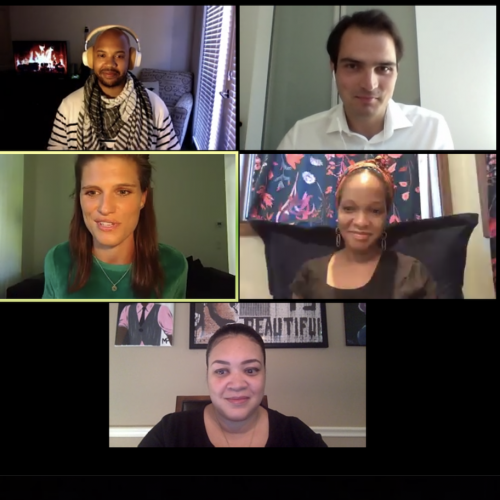
A Conversation on Racism and Police Brutality in the U.S.
What does the death of George Floyd reveal about the structures of the American police force? Will the protests change American society? Imani Perry, Kirsten West Savali, LaSean Knox-Brown and Jan-Philipp Burgard discuss these questions.
... more

Beyond Location: Germany’s Debate on NATO’s Nuclear Sharing Agreement
Ben Hodges and Götz Neuneck discuss Germany's role in NATO's nuclear sharing.
... more
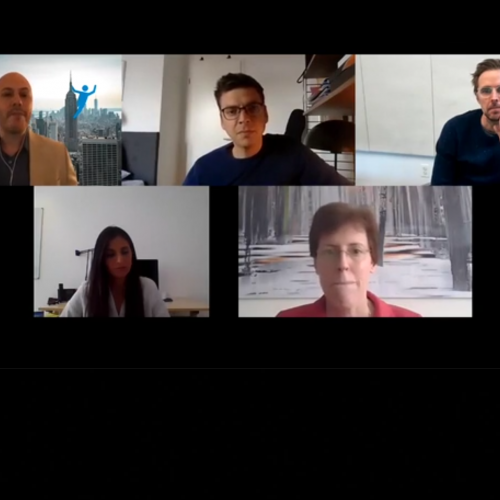
Tech to the Rescue?
The world is in the midst of a crisis that will almost certainly prove to have long-term social, economic and political ramifications. However, the private sector, including the technology and innovation ecosystem, seems to be voluntarily mobilizing in order to mitigate the crisis.
... more
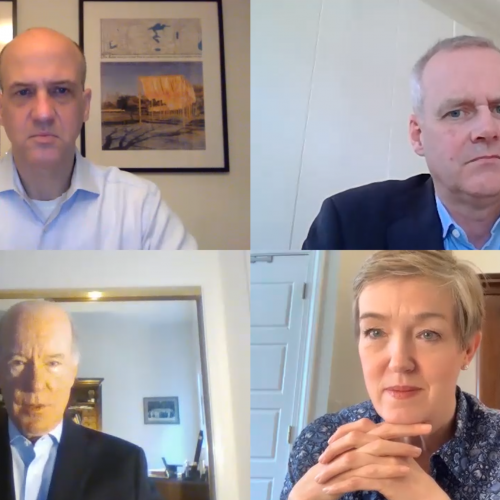
“Did We Miss the Warning Signals?“
Ambassador Boris Ruge and Professor Gregory F. Treverton discuss with Dr. Constanze Stelzenmüller whether we could have anticipated this pandemic.
... more
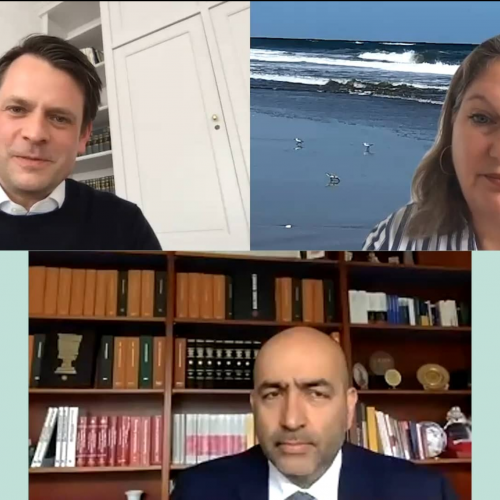
Global Order in Crisis Mode – Coping Strategies of the West
Ambassador Victoria Nuland and Omid Nouripour, Member of the German Bundestag, discuss the crisis management of the West.
... more
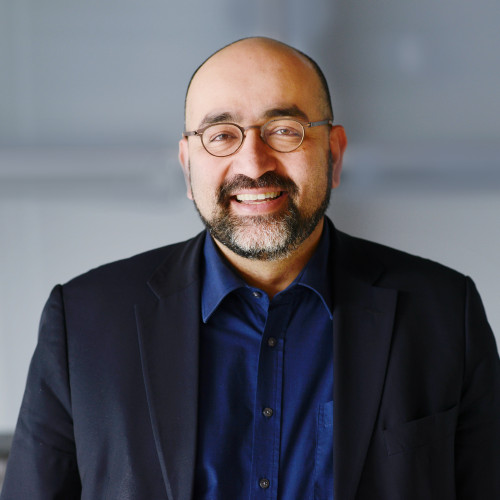
COVID-19 in Russia and Belarus
The pandemic makes the leaderships in Moscow and Minsk nervous, observes Omid Nouripour. Will it unleash forces that they cannot control?
... more
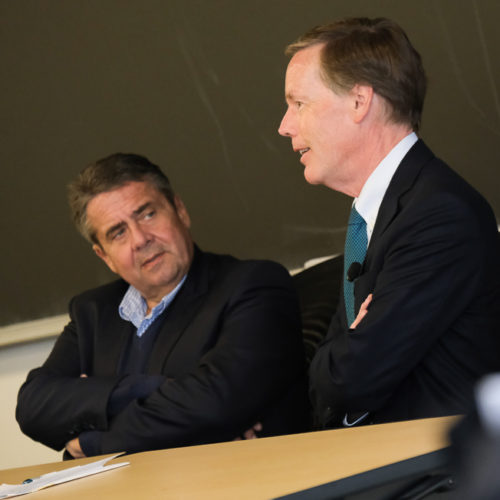
Covid-19 and its implications for transatlantic relations
Ambassador Nicholas Burns and Atlantik-Brücke-Chairman Sigmar Gabriel discuss how the pandemic is and should be addressed by the transatlantic partners. While they agree it is natural for governments to prioritise caring for their own citizens, they underline that the global health crisis, which will be followed by a global economic crisis, needs to be addressed in a cooperative effort.
... more
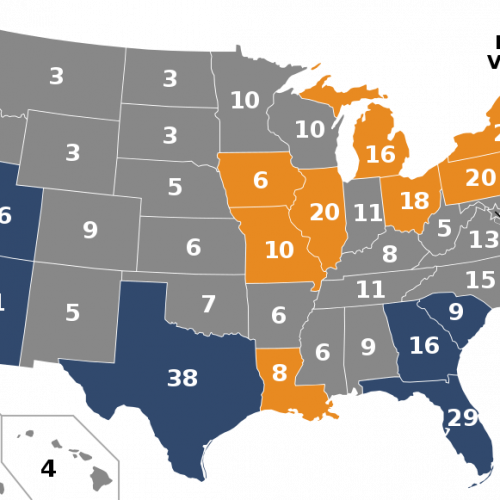
Demographics and the U.S. Presidential Election of 2020
Which groups of voters will the successful candidate have to win over this November? An analysis by John Halpin and Ruy Teixeira of the Center for American Progress provides insight into the demographic factors that will determine the election.
... more
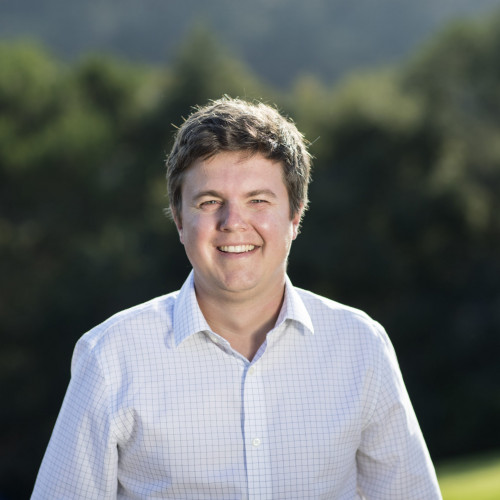
“The coronavirus will test the president like no other crisis to date“
Peter Rough of the conservative Hudson Institute talks about the Democratic primaries, the chances of the candidates in the November election and the biggest challenge for President Trump.
... more
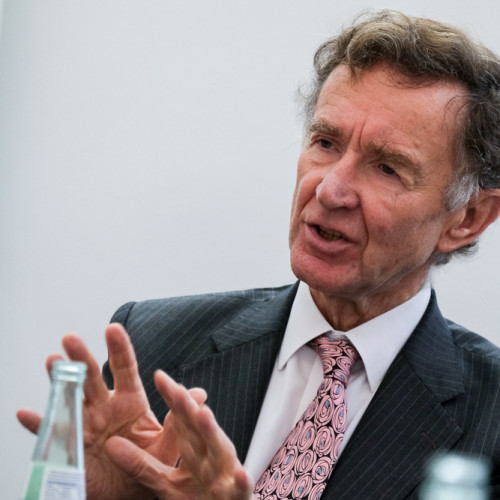
“The Confucian and the libertarian world view need to learn from each other”
In this interview, Lord Green looks at the impact of modernization and urbanization on our societies - East and West. He stresses the importance of looking at the human experience across cultures, and the necessity of learning from each other.
... more
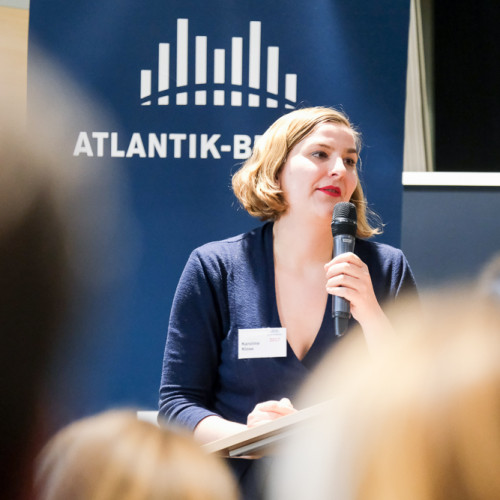
The Untold Story
Young Leaders Alumna Karoline Klose talks about why, after ten years in international development work, she was suddenly no longer able to continue - and why there needs to be a change in the way trauma is addressed.
... more
Finding Europe’s Way in the World
Sigmar Gabriel and Michael Hüther argue that the global balance of power is shifting rapidly. Europe must now find its own way to promote cooperation among Western partners.
... more
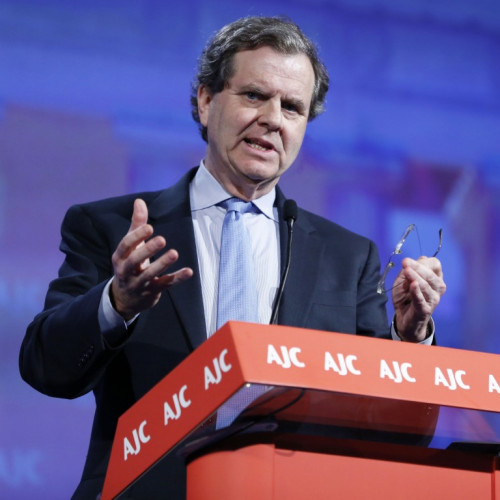
“To this day, many of us still wrestle with excruciating pain“
David Harris, CEO of the AJC, on anti-Semitism today, Europe's role in the Middle East, and the enduring anger about the Holocaust.
... more
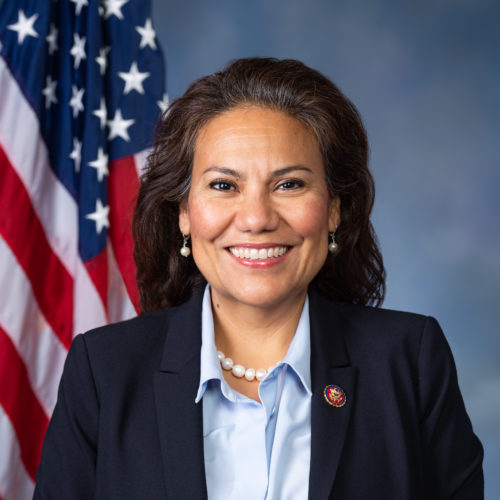
“El Paso is a shining example of the goodness that comes with choosing to care”
In 2019 El Paso, Texas became the site of the deadliest anti-Latino massacre in recent U.S. history. In Atlantik-Brücke’s Transatlantic Call Congresswoman Veronica Escobar speaks about the difficulties in dealing with the attack.
... more
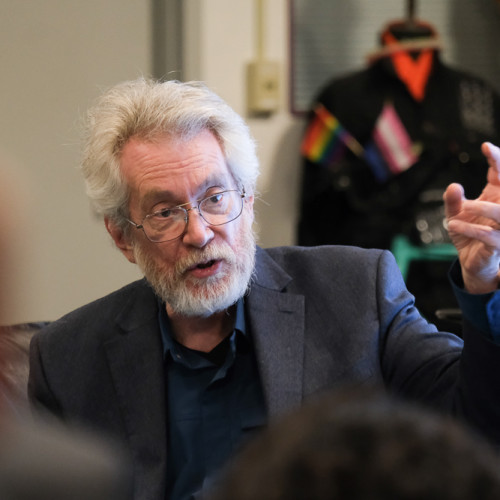
“Journalism today is fundamentally clickbait”
In our interview with MIT professor Alex Pentland, we spoke about his ideas for data ownership, but also about fake news and disinformation campaigns.
... more

“The government should not declare what is hate speech”
James Kirchick, policy expert, author and columnist, calls for the precedence of freedom of speech over state interventions in public discourse.
... more
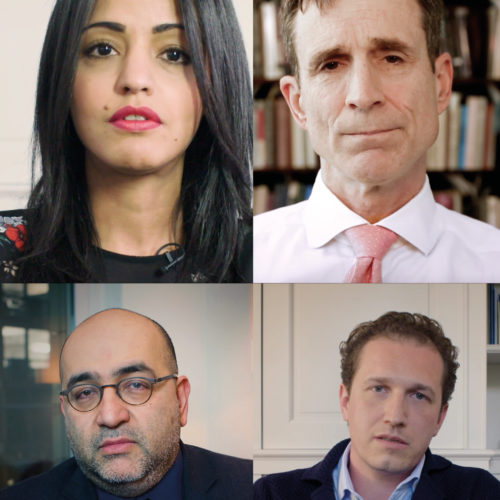
“We want to defend our way of life”
What are Western vlaues, and do they still connect Germany and the United States today? We spoke to a diverse group of Germans and Americans. Among them: Richard Haass, President of the CFR, Omid Nouripour, Foreign Policy Spokesperson for the Green Party, German Ambassador to the US Emily Haber and State Secretary Sawsan Chebli.
... more
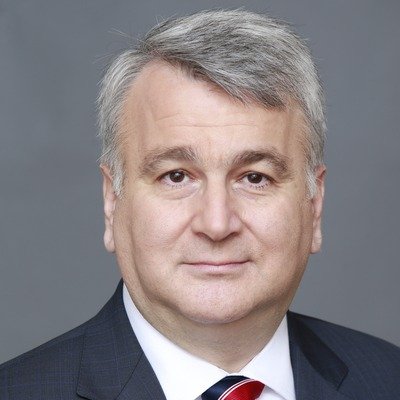
Domestic instability and uncertainty with the U.S. may propel Canada closer to Europe
Renowned pollster Nik Nanos states that Canada stands at a historic milestone after the federal elections.
... more
“The U.S. has sold out the Kurds numerous times”
Joshua Walker, Global Head of Strategic Initiatives at Eurasia Group, views the Turkish military offensive in northern Syria as tragic, but in its emergence, as inevitable.
... more
“Emphasis should be on real equality of opportunity”
In our video interview series, we talked to politicians, entrepreneurs, artists, thinkers and activists about the importance of equality for the Western world.
... more
Two perspectives on impeachment and northern Syria
Peter Rough of the Hudson Institute and Michael Werz of the Center for American Progress share their views on a potential impeachment against President Donald Trump.
... more
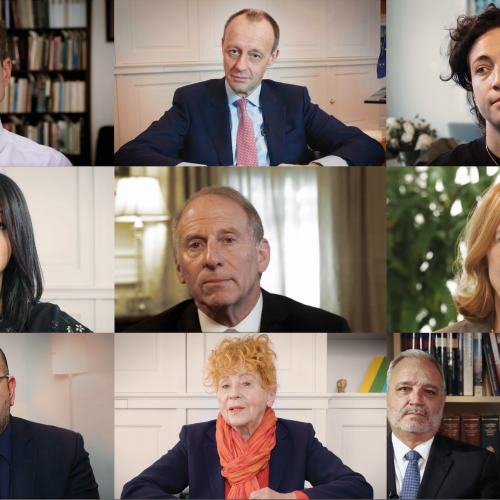
“Our freedoms have not come out of nowhere”
What do people from both sides of the Atlantic associate with the term freedom? How important is freedom for each and every individual, what does it mean for our societies? Are we ready to stand up for our own freedom and that of others? We have asked politicians, artists and entrepreneurs from both sides of the Atlantic to talk to us about their views.
... more
“We are seeing history in the making in this country”
In our interview, former Minister of State for Trade and Investment Lord Stephen Green talks about the current situation in the UK, Brexit, the political mood in Britain and transatlantic relations.
... more
“The government hasn’t constructed new stretches of fencing”
Blas Nuñez-Neto regards the humanitarian crisis on the U.S.-Mexican border as the most pressing challenge of the current American immigration policy. The Senior Policy Researcher at RAND Corporation discusses in an Atlantik-Brücke Transatlantic Call President Trump's plans of building a wall, his debate with Congress, and the value of migration.
... more
“Terrorists are adapting to cryptocurrencies”
Yaya Fanusie scrutinizes the cyber security risks which originate from cryptocurrencies. The former analyst in the CIA speaks about the lack of expertise within governments.
... more
Two Takes on the Presidential Race
Peter Rough of the conservative Hudson Institute and Michael Werz of the Democratic Center for American Progress share their views on the most important issues of the upcoming elections.
... more
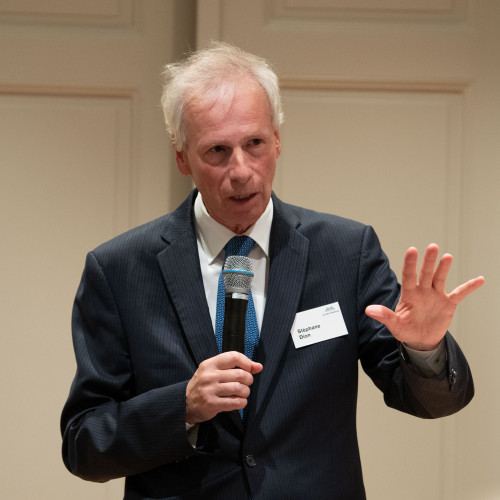
“An Inspiration for the World“
At Atlantik-Brücke's summer reception in Frankfurt, Stéphane Dion, Canadian Ambassador to Germany and Special Envoy to the EU and Europe, shared his views on German-Canadian relations.
... more
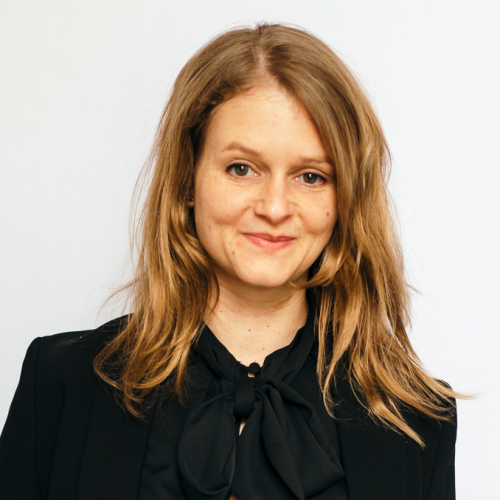
Anna Maciejowski is Atlantik-Brücke’s new Head of Programs
Anna Maciejowski has been Atlantik-Brücke’s Head of Programs and Transatlantic Partnerships since August 1, 2019. She leads the programm team, and coordinates the organization’s events, conferences and trips. As Head of Transatlantic Partnerships, she also strengthens Atlantik-Brücke’s presence in the USA and Canada. The aim is to broaden the range of events on the other […]
... more
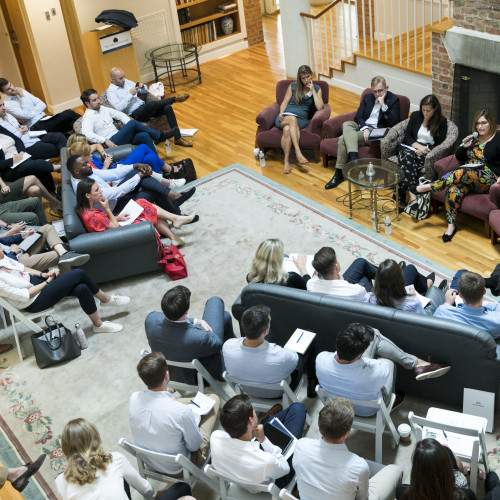
Passing storm or tectonic shift?
Forty-five Young Leaders from the United States and Germany came together for a week of deep engagement on transatlantic issues in Queenstown, MD. On a political level, this year’s cross-sectoral group of young decision-makers observed a more volatile transatlantic relationship. In times of rising nationalism and populism in both countries, the issues at stake were emotional, debates heated. Nonetheless, the bonds forged show just how strong our transatlantic connection remains.
... more
Hodges: “Germany’s reluctance surprises me”
Ben Hodges, former Commanding General of the U.S. Army Europe, criticizes the position of Germany's Federal Government regarding the crisis in the Strait of Hormuz.
... more
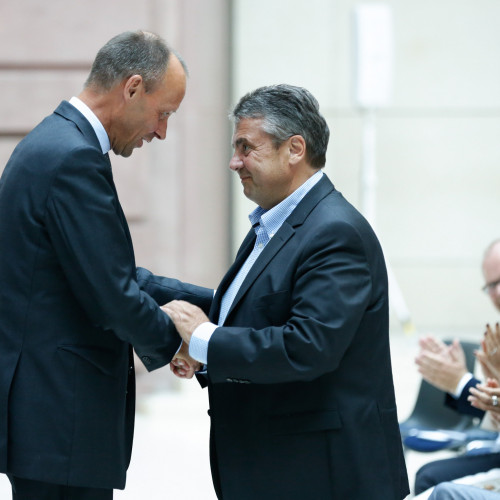
Sigmar Gabriel new chairman of Atlantik-Brücke
On June 26, Atlantik-Brücke members elected a new board of directors. The new chairman of the organization is former Federal Minister and MdB (SPD) Sigmar Gabriel. Vice chairmen are former Federal Minister and MdB (CDU/CSU) Norbert Röttgen and Professor Dr. Michael Hüther, Director and Member of the Presidium of the German Economic Institute.
... more
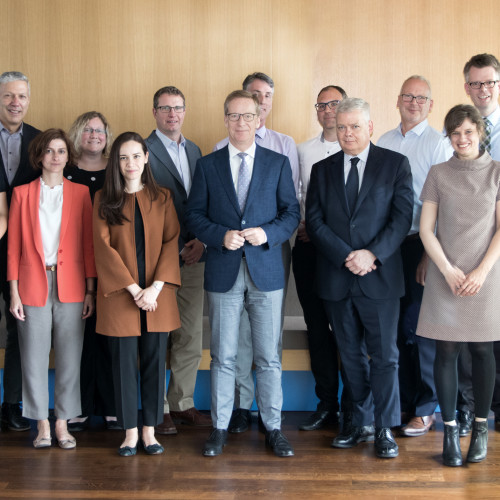
German-Canadian Dialogue on Health Policy
During a two-day workshop in Cologne, researchers from Germany and North America discussed their respective health care systems in order to improve the bilateral understanding of systemic differences and similarities and to discuss current policy options.
... more
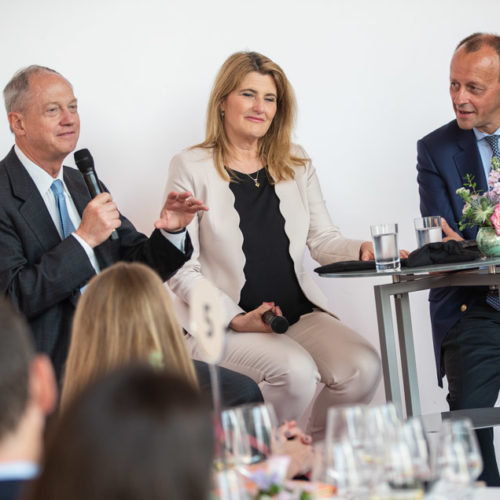
In conversation with true Atlanticists Friedrich Merz and Ambassador John Emerson
Atlantik-Brücke’s Chairman and the former U.S. Ambassador to Germany and current Chairman of the American Council on Germany look back and ahead.
... more
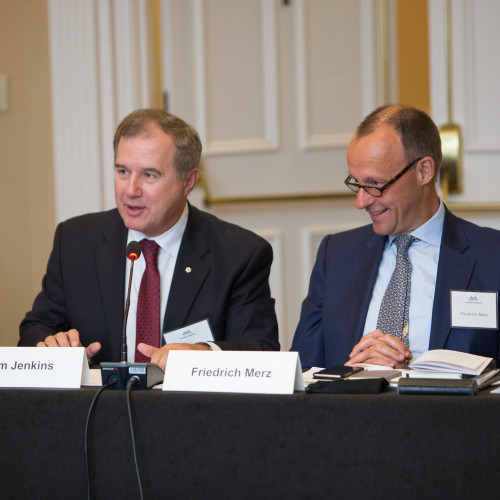
A signal of closeness from Canada
Atlantik-Brücke’s German-Canadian-Conference underscored the importance of the relationship between both countries for global questions of our time.
... more
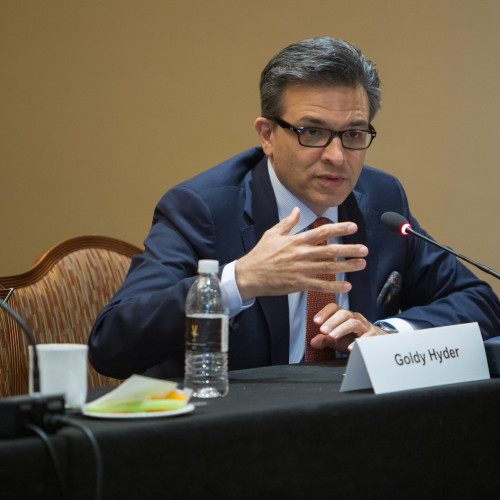
“We can’t afford not to be part of the future“
Goldy Hyder of the Business Council of Canada talks about values and trade relations and the role of EU-Canadian ties vis-à-vis China.
... more
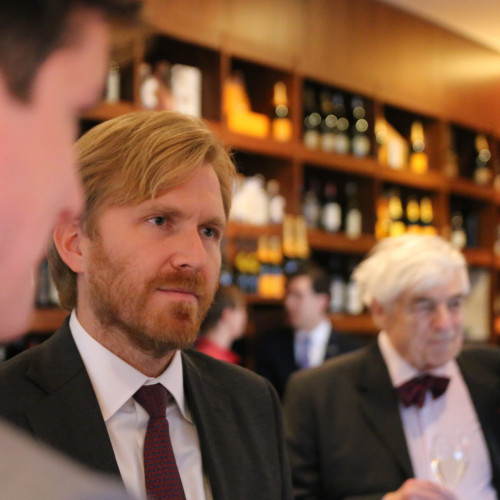
“The number one national security priority is great power competition”
Elbridge Colby, Director of the Defense Program at the Center for a New American Security, regards China and Russia as the biggest security policy threats for the USA. Germany should be more engaged within NATO, he argues.
... more
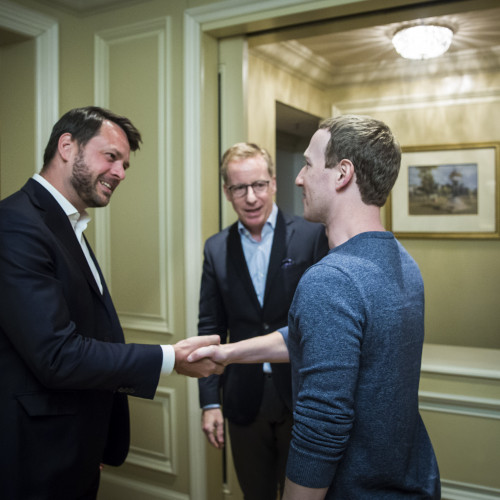
Zuckerberg: “We need a more active role for governments and regulators”
Mark Zuckerberg, founder and CEO of Facebook, discusses in this conversation with Atlantik-Brücke the social network's strategy. Within it the countering of disinformation campaigns prior to elections play a major role.
... more
Democrats can no longer threaten to impeach
Hans von Spakovsky, Senior Legal Fellow at the Heritage Foundation, argues that the failure to turn up proof of collusion or coordination should surprise no one.
... more
The fight over the Mueller investigation in Washington has just begun
Max Bergmann, Senior Fellow at the Center for American Progress, underscores how urgent the transparency of Special Counsel Robert Mueller’s full report is.
... more
A Crisis of Liberalism in the West
Torrey Taussig, Bosch Foundation Fellow and Non-Resident Fellow at Brookings, speaks about the rise of illiberal movements. She demands that democracy has to prove that it works.
... more
Time to Realign with the United States
True multilateralism can only gain momentum with the combined strength of Europe and the USA, writes our columnist Peter Rough, Fellow at the Hudson Institute. He argues that the transatlantic project needs new dedication.
... more
Lamy: „If a US-EU trade agreement is concluded, it will be very limited“
The former WTO Director General talks about the potential for a US-EU trade deal, the implications of a cooling of US-China relations for Europe, and the need for a reform of some aspects of the WTO rule book.
... more
Why the Timing is Right for a EU-US Summit this Spring
Rick Minor argues that Jean-Claude Juncker could help stabilize the EU-US working relationship by initiating a summit before the end of his term as President of the EU Commission.
... more
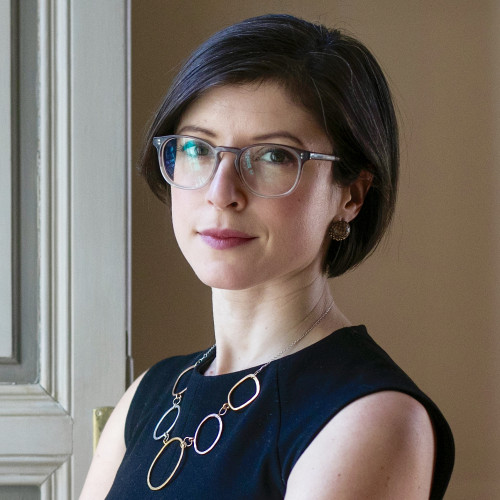
“At the tip of the iceberg with regard to disinformation”
Alina Polyakova, David M. Rubenstein Fellow at the Brookings Institution, regards the USA and Europe as inappropriately prepared for the threat posed by Deep Fakes.
... more
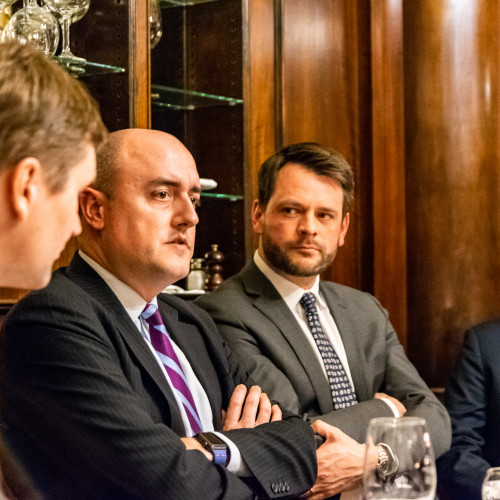
“The shutdown was a tactical misstep by the President”
Jamie Fly talked to members and Young Leaders of Atlantik-Brücke about the new political power relations in Washington. At a dinner discussion in Berlin, the Senior Fellow of the German Marshall Fund of the United States (GMF) highlighted the domestic and foreign policy implications of the midterm elections and the partial government shutdown.
... more
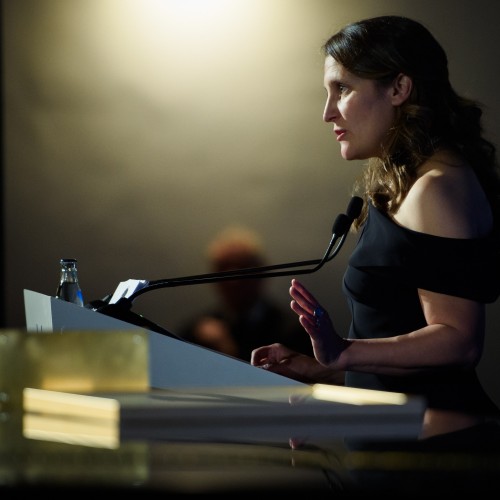
Chrystia Freeland: „Let’s not underestimate our collective power“
In her acceptance speech for Atlantik-Brücke's Warburg-Award, Chrystia Freeland emphasized how important it is for Canada and Germany to stand up for multilateralism - especially in times of growing nationalism.
... more
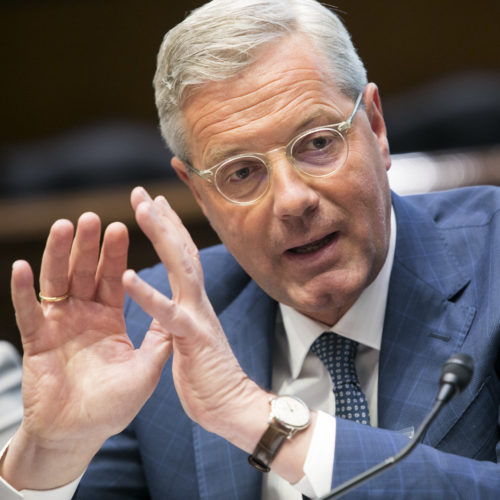
The EU’s response to Russia must be bold and unanimous
Norbert Röttgen argues that in light of the recent conflict in the Kerch strait, Europe should prepare itself for further Russian aggression and react boldly and with one voice.
... more
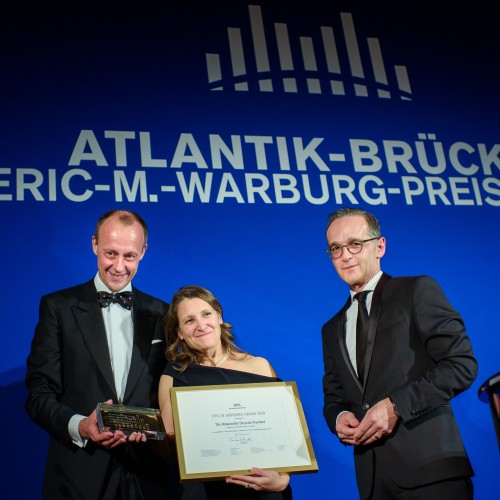
Minister Freeland honored with Warburg Award
Canada’s Minister of Foreign Affairs Chrystia Freeland was presented with the Eric M. Warburg Award by Atlantik-Brücke in recognition of her strong commitment to CETA, the trade agreement between Canada and the EU. She is the first Canadian to receive the Warburg Award.
... more
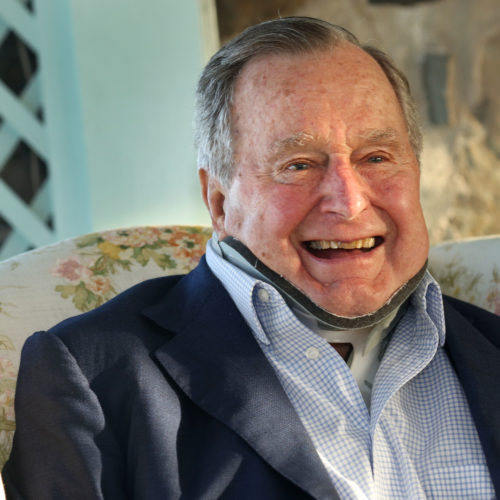
Atlantik-Brücke mourns George H. W. Bush
Atlantik-Bruecke mourns the passing of George Herbert Walker Bush. With him, we lose a close friend to Germany and a convinced transatlanticist. He was a courageous champion of the free world, without whose historical vision German reunification would not have been possible.
... more
Trouble Ahead for Transatlantic Commerce
Phil Levy argues that the USMCA is not a “done deal”; it does not provide a template for overcoming the administration's concerns; and there are serious indications of trouble for transatlantic commerce.
... more
“The most important election in modern American history”
Dr. Charles Kupchan, Professor of International Affairs at Georgetown University, regards the Midterm Elections as a referendum on President Trump’s tenure.
... more
On The Record
Since 2015 Steve Russell represents the 5th district of Oklahoma in the Congress of the United States. Russell regards the transatlantic alliance as stable and culturally ingrained. The Congressman explains in conversation with Atlantik-Brücke where Americans and Europeans should encounter each other, why Eastern Europe must concern us and why he doesn't trust Iran.
... more
“The trade war with China will be resolved within six months”
Frank Lavin, the CEO of the Export Now Incorporation, regards U.S. president Trump as the driving factor for a solution in the conflict between the USA and China.
... more
Split governance: what to anticipate from the US midterm elections
America’s economy is skyrocketing under the administration of president Trump. Despite current trends, historical reasons indicate an open outcome in the upcoming elections.
... more
On The Record
In our first episode of "On the Record", we talk to Julianne (“Julie”) Smith, former Deputy National Security Advisor to the Vice President of the United States, Joe Biden. Shortly before the Midterm elections, she speaks about the discontent of many Americans with the elites in Washington, about President Trump's foreign policy and the future of NATO.
... more
“It is important for Germany to lead in NATO on the European landmass”
General Philip Breedlove, NATO’s former Supreme Allied Commander Europe, would welcome “Germany’s recapitalization and retraining of its military forces.”
... more
“One of the key factors is our openness to the world”
Dr. Ailish Campbell is Canada’s Chief Trade Commissioner and assesses the outcomes one year after CETA’s implementation: 99 percent of the Canadian-European Free Trade Agreement have already come into force.
... more
The media is its own worst enemy
President Trump regularly attacks the media. By going into counter-attack-mode, the press has reinforced the impression of a mainstream media bias, argues Peter Rough.
... more
Nord Stream 2 – a project with geopolitical dimensions?
In recent months, the construction of the Nord Stream 2 gas pipeline has repeatedly led to irritations in transatlantic relations. Russia-expert Alina Polyakova presented her view on the topic at a discussion in Berlin.
... more
Young Leaders’ Voices
Find out what this year's German and American participants of the Young Leaders program have to say about the conference, about transatlantic relations and the issues that need to be on our agenda now.
... more
Atlantik-Brücke mourns the loss of Senator John McCain
Senator McCain's passing is a loss not only the US, but also for Europe. He was a courageous and principled champion for freedom and democracy.
... more
U.S.-Turkey Relations Hit a New Low
The U.S. and Turkey hit a new low this summer that caught many by surprise. Foreign policy expert Joshua Walker says, however, that the current crisis has been a long-time coming.
... more

Tax Policy Catches Up With the Future
By Rick Minor “Big Supreme Court win on internet sales tax – about time! Big victory for fairness and for our country. Great victory for consumers and retailers.” (@realDonaldTrump on Twitter, June 21) In this tweet, set off after the Supreme Court’s decision in the case of South Dakota v. Wayfair, President Trump praised the […]
... more
“A wake-up call”
At Schloss Neuhardenberg in Brandenburg, forty-eight young professionals met for the 40th German-American Young Leaders Conference. The discussions were shaped by one overarching topic: In the face of both external and internal pressures, what is the future of the transatlantic partnership?
... more
Uphold the transatlantic community of values!
In conclusion of this year’s General Assembly, Atlantik-Brücke e.V. issued an appeal on the future of the transatlantic relationship.
... more
“Conversations on the future of NATO“
Where does the discussion about the 2-percent-goal stand? Which role does the USA play within the alliance? How could NATO's European pillar develop? American and German experts share their insights.
... more
„When you are destroying alliances you are going to be left behind“
The three US college students Sophie al Mutawaly, Samuel Rahlke and Krister Lansing discuss the state of transatlantic relations with Atlantik-Brücke.
... more
“Does our model of a free society still have a future?”
Friedrich Merz is interviewed on German television about current EU-US relations and the importance of strong European cooperation.
... more
“Healthy skepticism is a good thing”
Tanit Koch talks about "fake news" and what journalism can do to stay relevant in our interview.
... more
Digitalization of political discourse and its threat to democracy
Andrea Römmele looks at the way social media and digital outlets influence communication, and, in the long run, democracy.
... more
“Germany has to be tougher”
Interview with Edward Luce on reestablishing trust in democratic institutions and transatlantic cooperation in the era of Trump.
... more
Russian challenges tire out our population
Part XV of our series: Lithuania’s Ambassador to Germany, Darius Semaška, represents a country on the eastern border of the NATO territory. In this essay he describes how Lithuania experiences the threat created by Russia on a daily basis. Russian cyber attacks on critical infrastructure serve as one major example of this constant insecurity.
... more
Nordenman: “Doubts about America’s commitment to Article 5 are removed”
Part XIV of our series: Magnus Nordenman calms the inhabitants of Guam and Hawaii: After initial irritations, the U.S. government under President Trump adheres firmly to the mutual defence clause.
... more
Understanding the Russia Investigation
Max Bergman gives insights into the current state of the investigation and expresses his conviction that ultimately, the strength of the U.S.' democratic institutions will prevail.
... more
Lost in Translation
Peter Rough urges Europeans to expand their view of America past their indignation over presidential tweets.
... more
Gottemoeller: “A demonstration that we stand together”
Part XIII of our series: Rose Gottemoeller regards the Alliance’s security guarantee for the Baltics and Poland as reliable. NATO Deputy Secretary General demands that Russia complies with its commitments to transparency of its military exercises in this region.
... more
Steel Tariffs are a Distraction from Transatlantic Cooperation on China
Peter Rashish argues that the EU should make a case to the US for tariff exemptions, instead of going to the WTO. The focus of the transatlantic partners should be cooperation on China.
... more
“The EU is now motivated to take real action”
Part XI of our series: Julie Smith supports the plans of a strong European Defense Union. Smith underlines that NATO would benefit if these efforts among European militaries succeeded.
... more
“The Transatlantic Alliance Post Brexit”
Sir Malcolm Rifkind, shared his insights on defense spending, the West’s stance towards Russia and China, and the future of the European Union.
... more
“We need to listen to concerns about CETA”
Dr. Ailish Campbell, Chief Trade Commissioner of Canada, speaks about the German-Canadian free trade agreement and the future of NAFTA.
... more
Nye: “Nastiness can be more effective than soft power”
Part X of our series: Joseph Nye regards President Trump’s handling of NATO as forceful. Moreover, the Professor at the John F. Kennedy School of Government at Harvard University detects that Trump has adapted to foreign policy traditions more than he expected.
... more
“Privacy is of paramount concern to us”
Jay Carney, Senior Vice President, Global Corporate Affairs, Amazon, speaks about Amazon's growth in Europe, the future of A.I. and the importance of privacy.
... more
O’Hanlon: “The goal is to normalize relations with Russia”
Part IX of our series: Michael O’ Hanlon demands that NATO’s eastward expansion must come to an end. He suggests an alternative security architecture in Europe.
... more
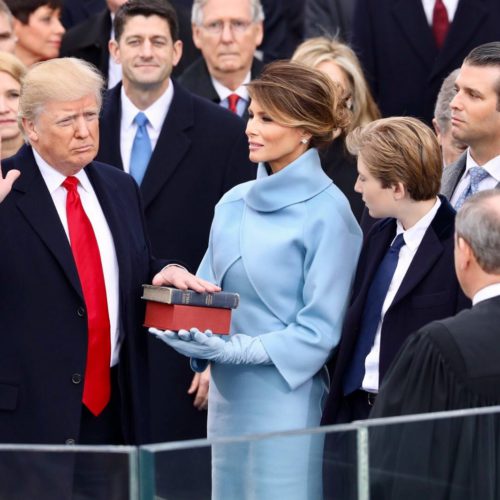
President Trump: One Year Later
By Eric Ham. U.S. President Donald Trump's improbable rise to the White House caught many by surprise. Since taking the oath of office, his Administration has been anything but smooth. Yet through it all, the former real-estate tycoon and reality television star continues to reshape Washington and the geo-political landscape issue-by-issue; challenge-by-challenge; crisis-by-crisis.
... more
Hooker: “‘America first’ does not mean ‘America alone’”
Part VI of our series: Richard D. Hooker Jr. says the American commitment to NATO is ironclad, based on fair burden sharing. The Special Assistant to President Trump and Senior Director for European and Russian Affairs in the National Security Council outlines the U.S. strategy for the alliance.
... more
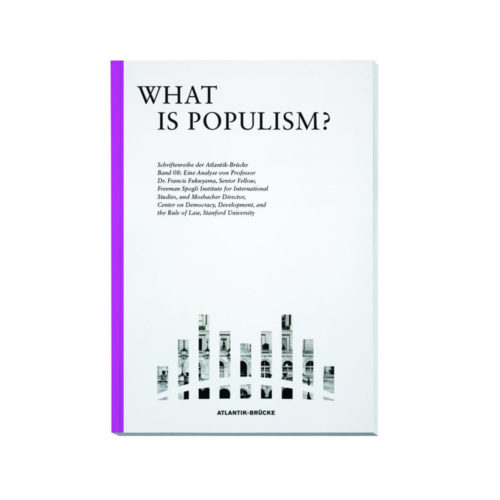
“What is Populism?” An Analysis by Francis Fukuyama
In an analysis written exclusively for Atlantik-Brücke, political scientist Francis Fukuyama examines a phenomenon that is of global significance: populism.
... more
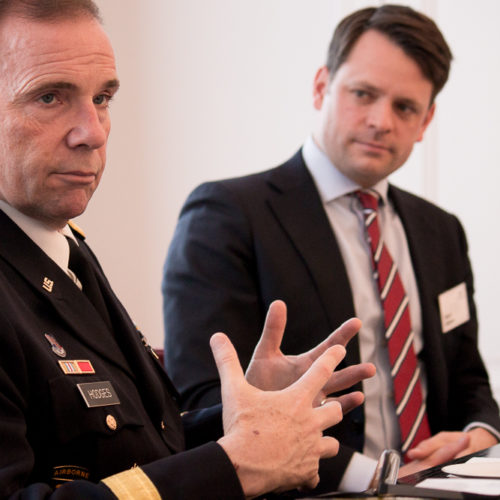
Hodges: “NATO is the most successful Alliance in world history”
Part V of our series: Lieutenant General Frederick B. Hodges highlights the value of logistics and interoperability for NATO in Europe. Hodges who has served as Commanding General of the U.S. Army Europe until December 15, 2017 also expresses his hope that the strained American-Russian relationship will improve.
... more
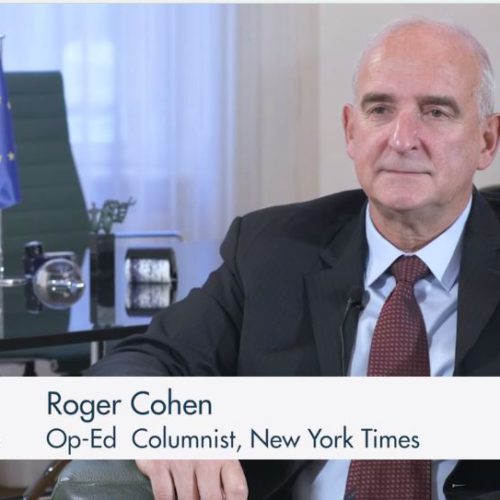
“The president is more at home in an autocratic framework” – Interview with Roger Cohen, New York Times
Roger Cohen, NY Times, speaks President Trump's autocratic tendencies, in American society and mistrust in the media.
... more
“We can work it out – or can we? Current challenges in Brexit talks”
Prof. Dr. Andreas Dombret, member of the Board of Deutsche Bundesbank, spoke about the current challenges of the Brexit talks at an event in London.
... more
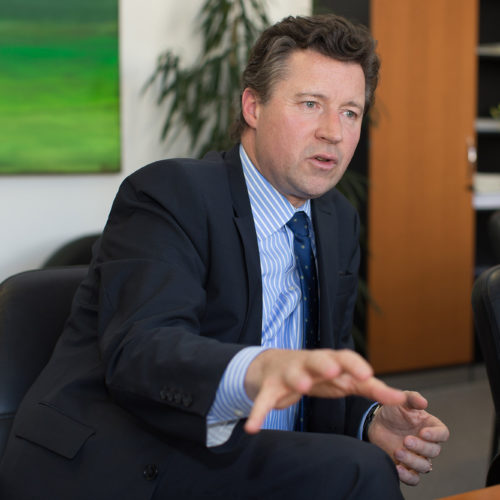
Von Geyr: “Reliability is crucial in NATO”
In the debate on NATO's two percent target, Géza von Geyr states that it is strategically imperative for Germany to increase its expenditure on security.
... more

The “New South”, New Skills, and Old Alliances
Over the course of six days, the Atlantik-Brücke delegation traveled to the United States and met with a diverse group of politicians, CEOs, journalists, academics, and others, in Charlotte, North Carolina and Washington, DC.
... more

Howard Dean: “That is not what America looks like”
Howard Dean, one of the Democrat's 2004 presidential canidates, speaks in this interview about the United States under President Trump.
... more

Atlantik Ball 2015
On November 20, the Atlantik-Brücke celebrated the transatlantic partnership with an Atlantik Ball. In her speech, Federal Minister of Defense Dr. Ursula von der Leyen, patron of the ball, reminded the guests of the Paris attacks of the previous Friday. She emphasized that the West will not let anyone take away its culture, its values […]
... more
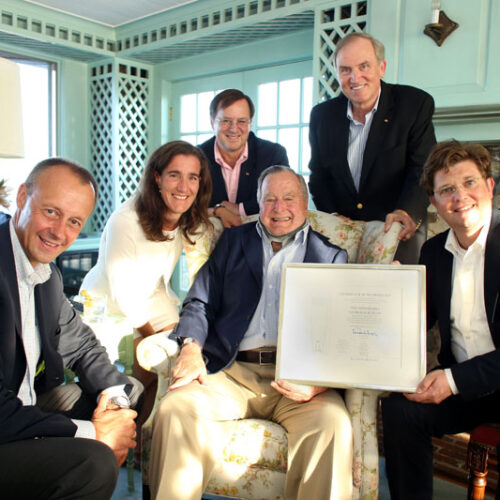
George H. W. Bush receives Award from Atlantik-Bruecke
Former U.S. President George H. W. Bush Award was the first recipient of the Atlantik-Bruecke Award he lends his name to. He was honored by Atlantik-Bruecke for his contribution to the German Reunification and the friendship between Germany, Europe, and the United States. The award ceremony took place in the evening of August 28, 2015 […]
... more
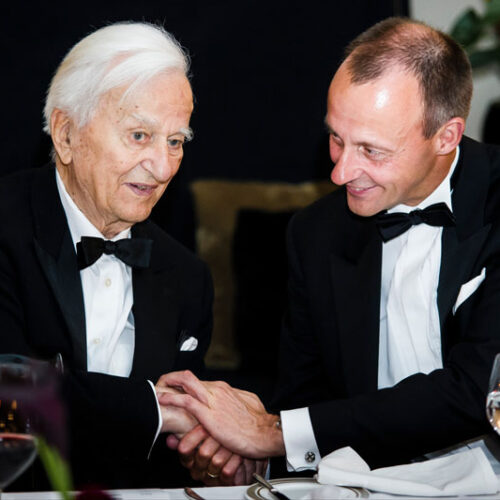
Award Ceremony for the Eric-M.-Warburg-Prize honoring Dr. Richard von Weizsäcker
On June 4, 2014, the Atlantik-Brücke recognized former Federal President Dr. Richard von Weizsäcker in Berlin for his outstanding commitment to transatlantic relations by awarding him the Eric M. Warburg Prize. Friedrich Merz, Chairman of Atlantik-Brücke, provided the laudation in front of the exclusive circle of guests. He emphasized, “You are a shining example for […]
... more
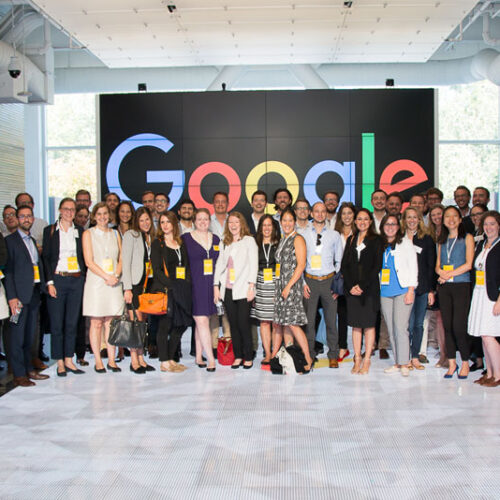
Delegation Trip to San Francisco and Silicon Valley
San Francisco was at the heart of this spring’s Atlantik-Brücke delegation trip to the USA. Located in the Bay Area to the North of Silicon Valley, San Francisco has become a rival to traditional tech boom-centers like Palo Alto, Cupertino, and Menlo Park. Many of the young employees working in the Valley’s tech businesses prefer […]
... more
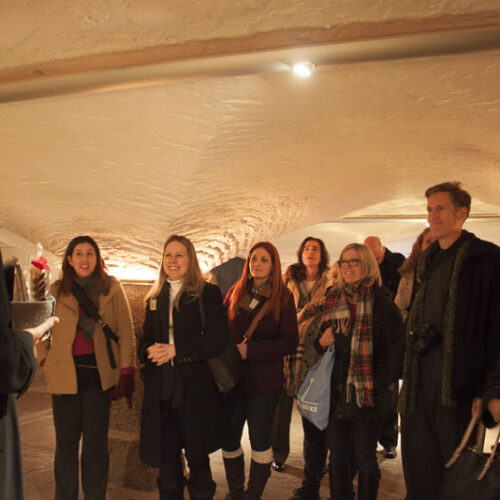
Study Trip for Social Studies Teachers 2013
From November 30 to December 8, 2013, fifteen teachers from Southern California participated in a study trip through Germany at the invitation of Atlantik-Brücke. The group visited Hamburg, Berlin, and Leipzig. Every year the Atlantik-Brücke invites a group of American social studies, German, and history teachers to participate in a week-long study trip to Germany. […]
... more
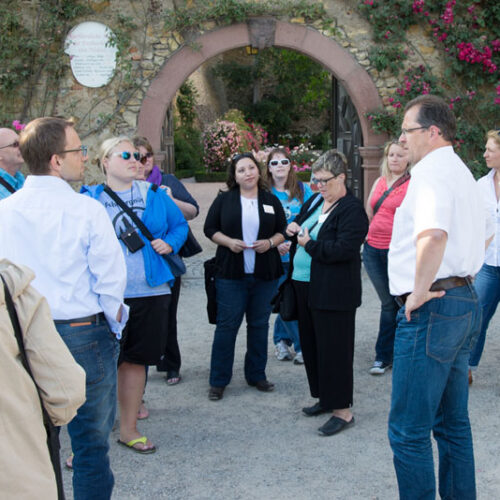
Study Trip for Social Studies Teachers 2014
Every year the Atlantik-Brücke invites a group of American teachers to participate in a week-long study trip to Germany. During this year’s trip from June 22 to 29, teachers from Texas and Oklahoma travelled to Frankfurt, Cologne, Bonn and Berlin. During their short, yet intensive stay in Germany the teachers got to know high-ranking leaders […]
... more

Study Trip for Social Studies Teachers 2015
Once a year, Atlantik-Bruecke invites a group of American social studies, history and German teachers to participate in a week-long study trip through Germany to get a comprehensive picture and understanding of the country. The different parts of the trip are carefully chosen by Atlantik-Bruecke and take the teachers to German schools, small and corporate […]
... more
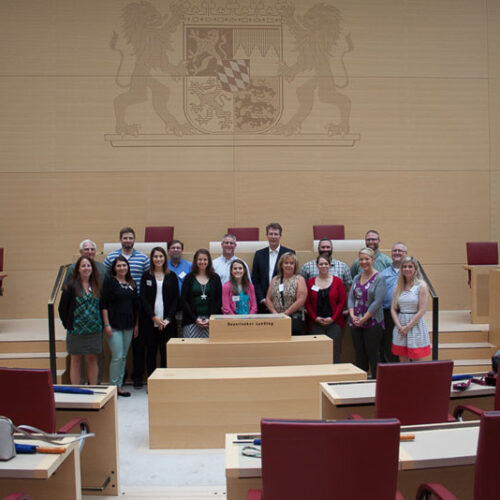
Study Trip for Social Studies Teachers 2016
„It will take me the rest of the summer to process and fully understand the impact upon my teaching.” Kristin Schnerer, World Studies teacher, Start High School, Toledo, Ohio Fifteen American social studies and history teachers participated in this year’s study trip to Germany. From June 5-12, the teachers from Ohio travelled from Munich and […]
... more
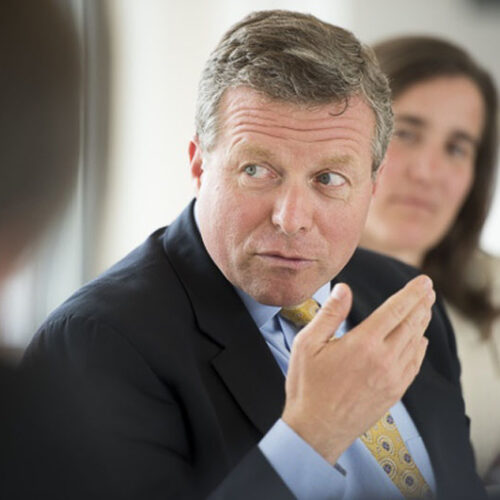
Lunch Discussion with two members of the U.S. House of Representatives
On June 4, two members of the U.S. House of Representatives, the Honorable Charlie Dent and the Honorable Marc Veasey met with Atlantik-Brücke members and Young Leaders alumni in Frankfurt for a lunch discussion about the current challenges facing the transatlantic partnership. Charlie Dent has been a member of the House since January 2005. »Link […]
... more
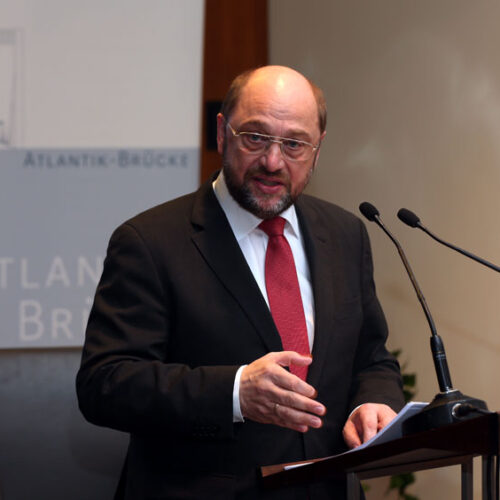
The EU Foreign Policy in the 21st Century: Visions, Ambitions, Realities
Martin Schulz, President of the European Parliament, was not afraid to speak his mind regarding the European Union’s foreign policy during his talk on February 25 in Berlin. During his speech in front of over 100 guests at a joint event hosted by Atlantik-Bruecke, the Daimler Corporation and the German Council on Foreign Relations, the […]
... more
“Mapping Out Security Policy Strategies for the Transatlantic Partnership” – Discussion with Distinguished Security Advisors
The panel of the discussion event “Mapping Out Security Policy Strategies for the Transatlantic Partnership” was occupied by distinguished guest speakers, one incumbent and three former Security Advisors. On the 14th of January, Christoph Heusgen, Security Advisor of Federal Chancellor Angela Merkel, Tom Donilon, former Security Advisor of US President Barack Obama, Jean-David Levitte, former […]
... more
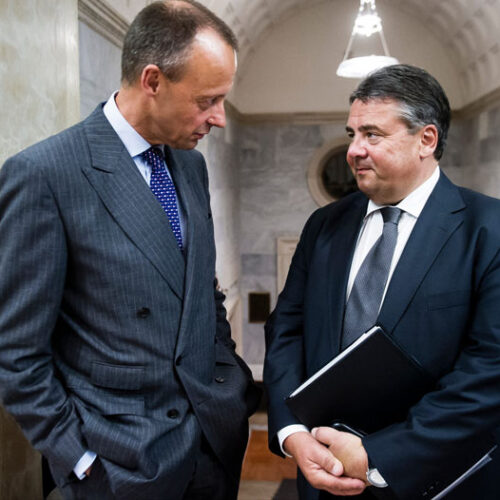
“Geostrategic Implications of Energy (In)Dependence” – Keynote Speech by Sigmar Gabriel
On October 9, 2014, Vice Chancellor and Federal Minster for Economic Affairs Sigmar Gabriel gave a keynote speech on the geostrategic aspects of energy policy. In light of the current crises in Ukraine and the Middle East, the issue of energy security was highly relevant, Gabriel stressed before 90 members and guests of Atlantik-Brücke. At […]
... more
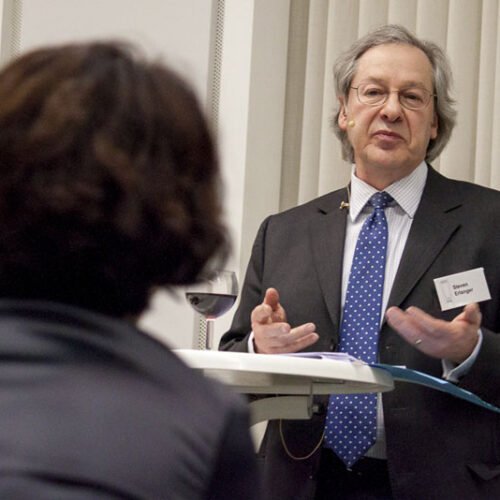
“Are We Losing One Another?” Talk by Steven Erlanger
On February 12, 2015, around 40 members and guests of Atlantik-Brücke gathered in the Berliner Magnus-Haus for a talk by American journalist Steven Erlanger on the topic of „Are We Losing One Another? US-German Relations in the Era of Snowden, Putin and the Euro Crisis“. Erlanger, who is currently the London bureau chief for the […]
... more
Jeb Bush visits Atlantik-Brücke
On June 10, 2015, the former governor of Florida, Jeb Bush, visited Atlantik-Bruecke. Bush, who announced his presidential bid for the 2016 election on June 15, 2015 in Miami, spoke to a small circle of high-ranking personalities from business and politics about current transatlantic issues. The son of George Bush Senior and the brother of […]
... more
Talk with former World Bank President Zoellick
The free trade agreement TTIP, currently under negotiation between the United States and the European Union, was the topic of a discussion in Berlin on June 9 with Robert B. Zoellick, former President of the World Bank. Zoellick, whose many high ranking positions also included that of United States Deputy Secretary of State and as […]
... more
Carter: The Cold War play book is outdated
U.S. Secretary of Defense Ashton Carter has sent out an unmistakable message to the world during his first official visit to Berlin: The play book of the conflict between the East and the West is not compatible with the challenges of the current crisis in Eastern Ukraine, the Democrat said during his speech at Atlantik-Bruecke’s […]
... more
Germany’s New Responsibilities in Global Policy
Germany has repeatedly expressed its readiness to assume increased international responsibility. The Federal Republic understands the global political framework and the available policy options; furthermore, Germany is aware of the expectations of both its European and global partners. In this context, it is particularly relevant to address the question of whether Germany recognizes its own […]
... more
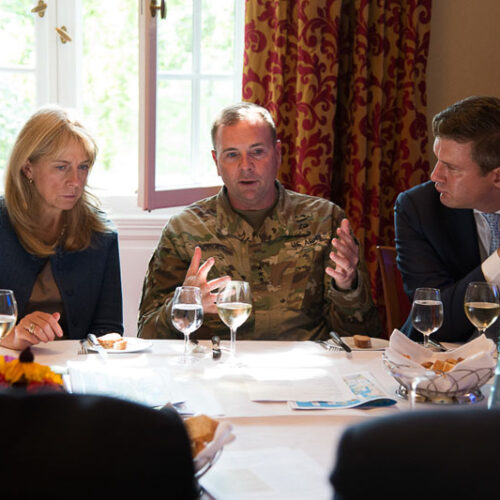
”Strong Europe”: Talk with Lt. General Hodges, Commanding General, US Army Europe
Lieutenant General Ben Hodges, Commanding General, United States Army Europe, spoke about the concept of “Strong Europe“ during a lunch talk in Frankfurt on September 9. “Strong Europe” is the US Army’s concept for strengthening the resilience of its NATO Allies – depsite the reduction of American troops in Europe. Joint European military excercises will […]
... more
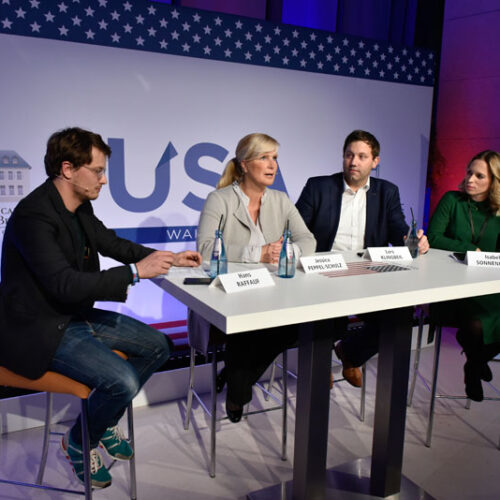
1000 guests follow U.S. presidential elections
The election of Republican candidate Donald Trump to the 45th U.S. President has kept the guests of the Election Night quite busy from the evening of November, 8th until the early morning of November, 9th. Along with Bertelsmann, CNN, ntv, Stern, the American Academy in Berlin, the US Embassy in Germany, Google, UDG United Digital […]
... more
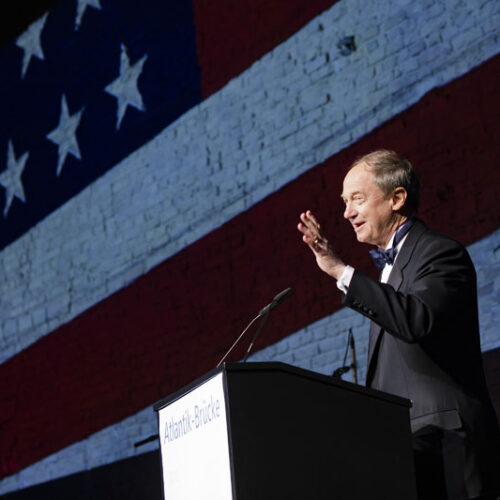
„Serving as the U.S. Ambassador to Germany has been the honor of my life“
With a festive dinner, 200 members and guests bid US-Ambassador John B. Emerson farewell on January 18. The Ambassador adressed the guests with a moving farewell speech: “Thank you, Tom Buhrow. And Friedrich, once again thank you for that warm welcome. And I say “once again” because, in addition to the many times you and […]
... more
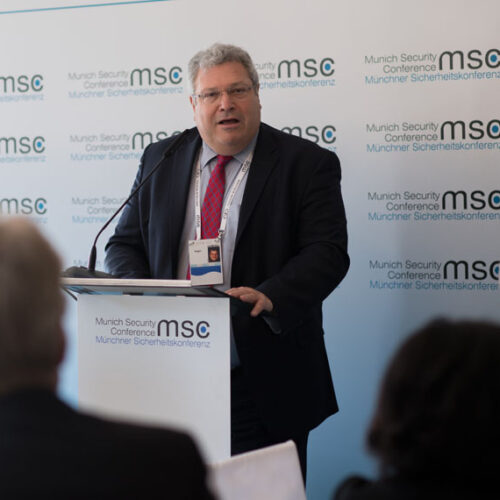
“Europe matters, this relationship matters” – a conversation with Robert Kagan, Senior Fellow, Brookings Institution
On the sidelines of the Munich Security Conference, Atlantik-Brücke held a lunch discussion at Hotel Bayerischer Hof on February 19, 2017. Dr. Robert Kagan, Senior Fellow Foreign Policy at the Brookings Institution, spoke on “The Democratic World Order Under Siege”. He expressed concerns that the current world order was coming increasingly under pressure. In his […]
... more
Losing the Bigger Brother – Foreign Policy Discussion
Donald Trump’s presidency is forcing a rethink in Germany of many things that had been taken for granted before. “The big brother, who we could always lean on when we needed to, is no longer there,” observed Dr. Thomas Bagger, the designated Director of Foreign Policy in the Office of the Federal President, on the […]
... more
“Russia is aggressive, Europe apathetic – and the US absent”
When an American journalist and Young Leader alumnus of Atlantik-Brücke pens a book entitled “The End of Europe”, there’s clearly a pressing item on the transatlantic agenda. It was no surprise, then, that around 60 members and guests gathered in Berlin to hear James Kirchick discuss his newest book with Dr. Richard Herzinger, politics and […]
... more
“Partners at eye level”: Farewell for Ambassador Marie Gervais-Vidricaire
“It is easy sometimes for Europeans to forget Canada as our big neighbour provides ample reasons to focus your attention,“ stated Marie Gervais-Vidricaire at her Atlantik-Bruecke farewell dinner on April 24th. But, she continued, Canadians and Europeans are united by a strong foundation of values held in common. These values are an obligation to face […]
... more
U.S. Congressional Staffers in Berlin
On the occasion of a visit by high-level staff members from the U.S. Congress, organized by the U.S. Congressional Study Groups, Atlantik-Brücke was happy to arrange a breakfast discussion with Roman Rochel, Managing Director of “Houzz” in Germany. The delegation learned about the start-up community in Berlin and the city’s unique digital ecosystem. Roman Rochel […]
... more
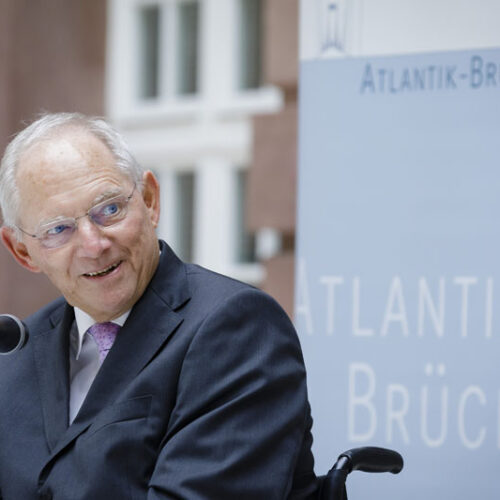
Schäuble speaking at Atlantik-Brücke annual assembly
200 high-ranking representatives of politics, economy, and the media gathered on June 28 for the annual assembly that marked the 65th anniversary of Atlantik-Brücke. Federal Minister of Finance Dr. Wolfgang Schäuble congratulated and seized the opportunity to talk about current challenges for financial policy, and the necessity for global regulations as well as transatlantic partnership. […]
... more
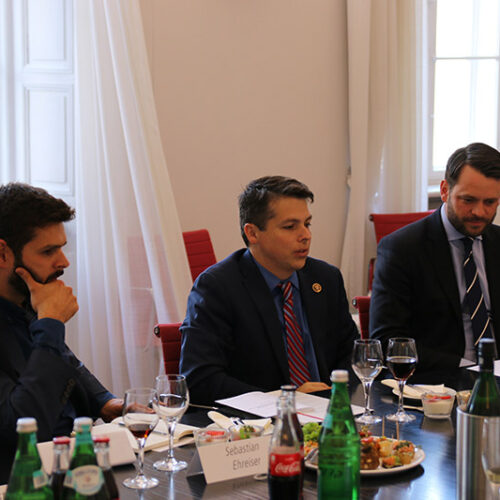
Congressman: Transatlantic Partnership still a matter of crucial importance
During a dinner-discussion hosted by the Atlantik-Brücke in Berlin, the Democratic Congressman Brendan Boyle assured the importance of the transatlantic partnership. But Boyle, who is a member of the House Committee on Foreign Affairs and has represented Pennsylvania´s 13th Congressional District since 2014, added that this partnership could not be taken for granted anymore. Nevertheless, […]
... more
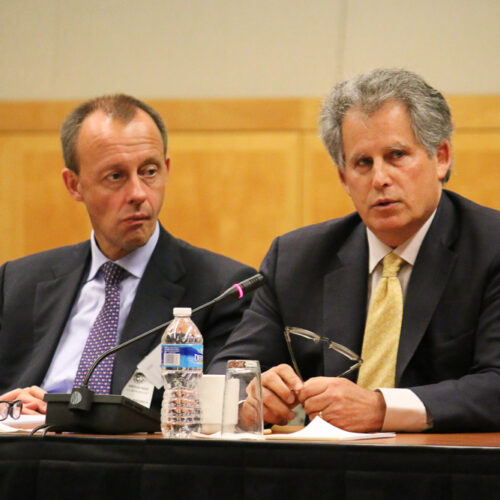
“Protectionism might lead to an interruption of trade” – Transatlantic Call with David Lipton, First Deputy Manager of the IMF
On the occasion of Atlantik-Brücke’s first Transatlantic Call, Dr. Christian Pfrang, Lex Columnist at the Financial Times in New York, interwieved Dr. David Lipton, First Deputy Managing Director at the International Monetary Fund. During their phone call they talked about the G20 and its new leaders on stage, international growth, the importance of free trade […]
... more
Alec Ross: “Name and Shame the Purveyors of Propaganda”
How can we stop extremist narratives spreading through the internet? Alec Ross argues that social media platforms, too, are responsible for publicly identifying the protagonists of propaganda. Ross, who is currently running for Governor of Maryland, also explains how Germany can prepare itself for Russian cyber attacks on the upcoming general election in this interview […]
... more
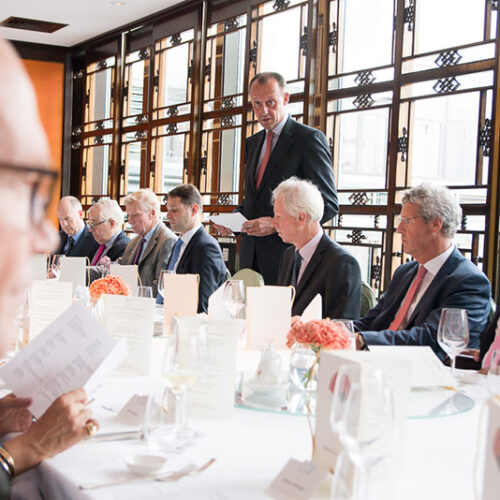
“A bridge across the Atlantic, not a wall” – Welcome for the Canadian Ambassador
“We need a bridge across the Atlantic, not a wall “- this is how the new Canadian ambassador Stéphane Dion underlined the importance of German-Canadian relations at a welcome lunch in Berlin. About 23 guests met on September 26 to welcome the new Ambassador and former Minister of Foreign Affairs for Canada, Dion. The ambassador […]
... more
Discussion of the Election Results with the Vice President of the Bundestag
The strong election results of the AfD and the poor results of the big established parties, the Christian Democrats (CDU) and the Social Democrats (SPD), were the main topics of a discussion with Edelgard Bulmahn, Vice-President of the German Bundestag. The 25 Young Leaders alumni attending the event in Berlin on Monday were concerned about […]
... more
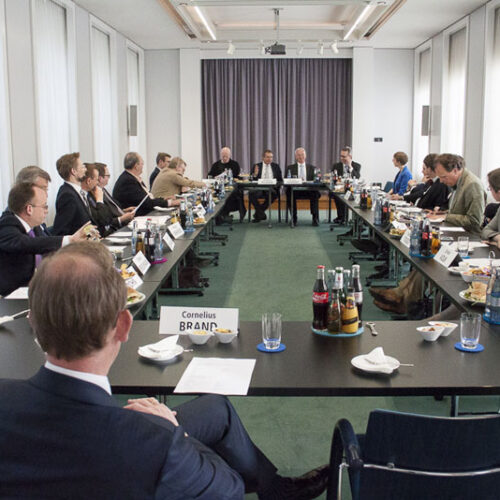
Panel Discussion “Geopolitics of Falling Oil Prices”
On the evening of Monday, May 11, 2015, Atlantik-Brueckes’s Foreign and Security Policy working group met to discuss »Geopolitics of Falling Oil Prices: Opportunities and Challenges for Germany and Europe«. The invited speakers were Michael Schmidt, Chairman of the Executive Board of BP Europa SE and Board Chairman of the Association of the German Petroleum Industry […]
... more
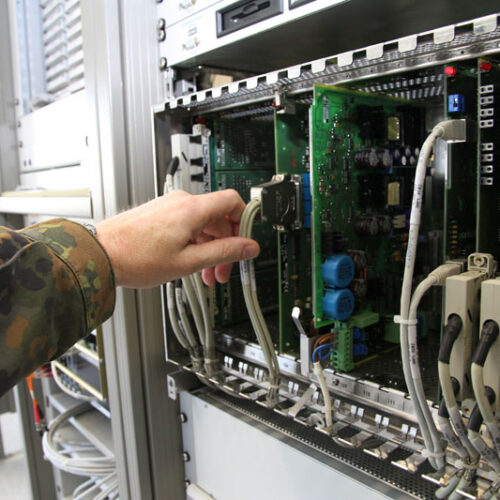
In Search of the German Bundeswehr of the Future
The 2016 White Paper working group of the Federal Ministry of Defense and additional experts have resumed the process of discussing defense and security policy guidelines for the next ten years. After the inaugural event with more than 200 participants in February of this year, further expert workshops took place in the last several weeks […]
... more
European Defense Cooperation after Post-Cold War Peace Dividends
How will the increasing cost of national defense in the European Union and in NATO be collectively financed? This long-standing and critical security policy question was addressed in an internal discussion round by a select-group of experts from Atlantik-Brücke. The discussion was part of a larger conversation and exchange with the 2016 White Paper working […]
... more
Janet Napolitano on the Refugee Crisis
On February 25, 2016, the former U.S. Secretary of Homeland Security, Janet Napolitano, gave a talk about the current refugee crisis at Atlantik-Bruecke in Berlin. Napolitano, who headed the Department of Homeland Security from 2009 to 2013, can also look back on a wide experience in dealing with the issues of border security, migration and […]
... more
Roundtable zum Weißbuch with Staatssekretärin Dr. Katrin Suder
The current security situation is characterized by a “density and concurrence of crises heretofore unknown.” This is how German Secretary of Defense Dr. Ursula von der Leyen introduced the new White Paper on security policy, which was published in July this year. Dr. Katrin Suder, State Secretary at the Federal Ministry of Defence, discussed the […]
... more
Speech by German Federal Minister of Defense von der Leyen
Berlin, 11 November 2016. At the invitation of Atlantik-Brücke, Federal Minister of Defense Dr. Ursula von der Leyen spoke on the future of German foreign and security policy in front about 100 guests at Hotel Adlon in Berlin. In the light of Donald Trump’s election as US President just a few days before, she emphasized […]
... more
“Enhancing International Collaboration among Global Financial Markets” with Rodge Cohen and Martin Blessing
On May 14th, the working group Economy, Finance and Markets gathered in the Commerzbank AG building in Frankfurt am Main. Rodge Cohen, Senior Chairman of Sullivan and Cromwell LLP, whom the Financial Times has called “one of the biggest players on Wall Street,” spoke on the problem of system-relevant banks that are deemed “too big […]
... more
“TTIP: A Historic Opportunity for the Transatlantic Partnership?”
Speech & Discussion with Jeffrey Tessler (Deutsche Börse), Kathryn Ruemmler (Latham & Watkins), Prof. Dr. Michael Hüther (Institut der Deutschen Wirtschaft Köln), and Dr. Simone Peter (Bündnis 90/Die Grünen) On March 3, close to 80 members and Young Leaders Alumni came to the Frankfurter Wertpapierbörse (Old Stock Exchange) in order to attend a speech and […]
... more
Andreas Dombret on European Integration
On April 19, Professor Dr. Andreas Dombret, Member of the Executive Board of the German Central Bank and treasurer of Atlantik-Bruecke, gave a speech with the title “Monetary Union, Banking Union, Capital Market Union – taking stock and looking ahead”. Around 40 members and Young Leaders Alumni followed the invitation to the China Club in […]
... more
“Opt in or opt out?” – Lecture by Prof. Dr. Andreas Dombret
On the occasion of the United Kingdom’s decision about whether to stay in the EU, Prof. Dr. Andreas Dombert, member of the board of Deutsche Bundesbank, delivered a speech with the title “Opt-in or opt-out? The future of the European Union in light of the UK referendum” on June 23 in Hamburg. 30 Atlantik-Bruecke members […]
... more
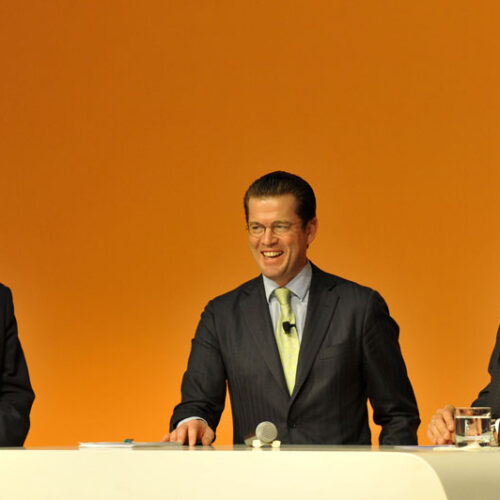
XXII Arthur Burns Memorial Lecture
Fundamentals of the German-American partnership were themes of the Arthur Burns Memorial Lecture given by German Federal Minister of Defense Dr. Karl-Theodor Freiherr zu Guttenberg on February 8, 2011. The event, which brought together 250 members and guests of Atlantik-Brücke, was held at the DZ Bank in Frankfurt am Main. Guttenberg’s speech addressed the concern […]
... more
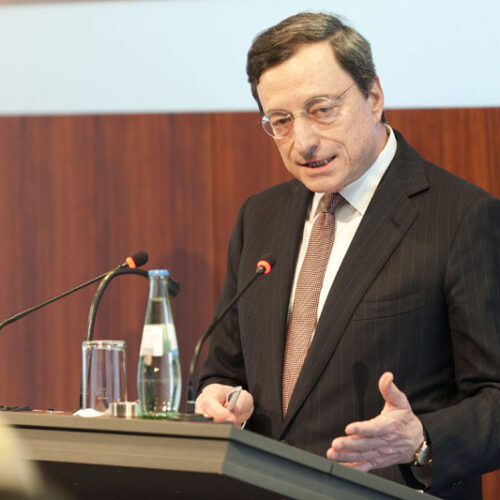
XXIII Arthur Burns Memorial Lecture
Mario Draghi, President of the European Central Bank, joined 180 Atlantik-Brücke members and guests in the Deutsche Bundesbank in Frankfurt on March 27th to deliver the XXIII Arthur Burns Memorial Lecture. His lecture on the ECB’s monetary policy in the context of the global financial crisis continued the tradition of bringing key players in the […]
... more
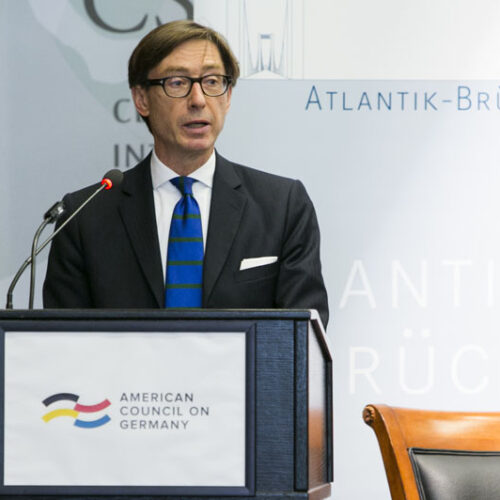
German-American Conference 2016
On May 23 and 24, Atlantik-Bruecke and the American Council on Germany held their annual German-American Conference. About 170 German and American participants convened at the Center for Strategic and International Studies, where the conference was held under the title “Toward a New Transatlantic Narrative: The German-American Partnership in Turbulent Times.” Speakers included Dr. Thomas […]
... more
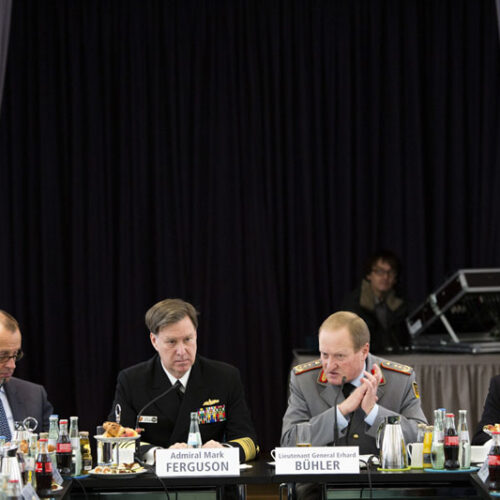
Between the Conflict in Ukraine and the Threat of ISIS
The twenty-third expert meeting with the U.S. European Command took place on November 18 in the Magnus-Haus in Berlin. Admiral Mark Ferguson, Commander Allied Joint Force Command Naples, U.S. Naval Forces Europe and U.S. Naval Forces Africa, and Lieutenant General Erhard Bühler, Director Defense Plans & Policy at the German Ministry of Defense, presided over […]
... more
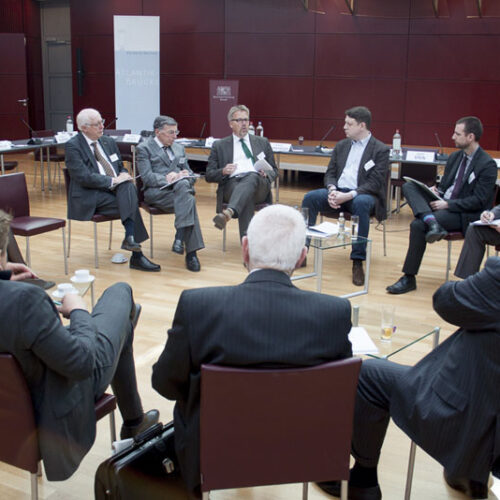
German Canadian Conference 2015 “Foreign and Security Policy”
As the de facto capital of the European Union and NATO, Brussels was the appropriate venue for this year’s German-Canadian Conference on foreign and security policy. From April 15 to 18, challenges arising through terrorism as well as energy security, hybrid warfare and cyber security were discussed. The German and Canadian conference participants from the […]
... more
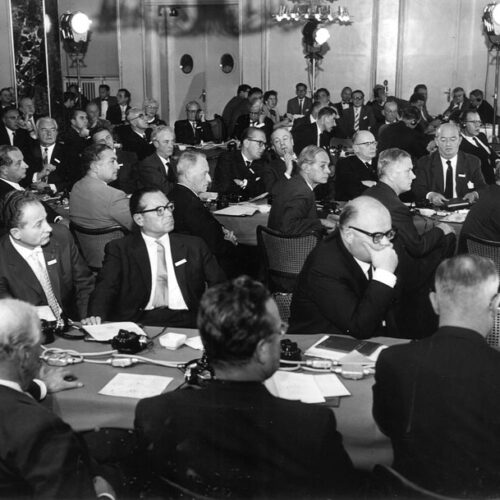
Atlantik-Brücke’s Beginnings
Atlantik-Brücke was founded in 1952. A non-partisan association, which bore the name Transatlantic Bridge until 1956.
... more
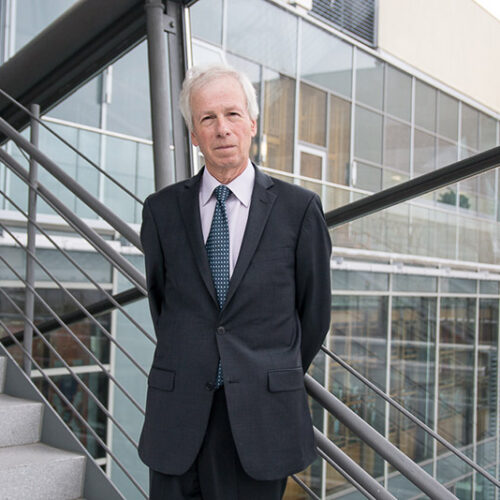
“Working shoulder to shoulder” – Interview with Canadian Ambassador Stéphane Dion
The Honorable Stéphane Dion, Canadian Ambassador to Germany and Special Envoy to the European Union and Europe, speaks about the German elections, transatlantic cooperation, immigration and integration and CETA. The most pressing issue on the table right now for Germany is the outcome of the elections. What has been the feedback in Canada to the […]
... more
Young Leaders Conference in Santa Cruz and Silicon Valley
Fourty-seven young professionals from the United States and Germany gathered in Santa Cruz, CA, for Atlantik-Bruecke’s 39th German-American Young Leaders Conference this August. The close proximity of Santa Cruz to the Silicon Valley determined many of the conference topics – e.g. discussions about the opportunities and challenges of technical innovation. The group visited companies like […]
... more
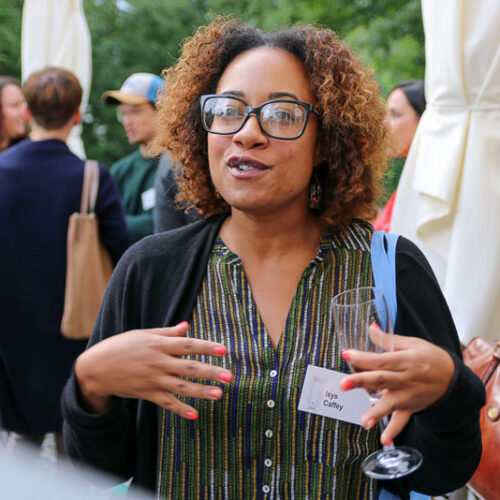
German-American Young Leaders Conference 2016
Idyllic Lake Starnberg was once again the setting for Atlantik-Brücke’s Young Leaders conference. This year’s group discussed a broad scope of topics, ranging from the opportunities of digitization to populism in Europe and the US as well as the current state of affairs in Europe. A host of prominent guest speakers joined the Young Leaders: […]
... more
“Time to brace”
By Cathryn Clüver Ashbrook Just months into his young presidency, it is clear that Europe cannot presume an even keel, firm alliance, or historically-shared interests with the United States of Donald Trump. The West, as long understood, is in hiatus. Europe must act accordingly. The presumption of a steady, stabilizing US posture in foreign policy […]
... more
“Predictable Unpredictability”
By Jeremy Shapiro Donald Trump is returning to Europe twice in July, with stops in Poland, Germany, and France. After the conspicuous disaster of his first trip to Europe at the end of May, the press is fairly quivering with excitement at the possibilities for mischief and mayhem surrounding America’s volatile commander-in-chief. And, if experience […]
... more
“Society is more open than ever before for completely new ideas”
Interview with Albert Wenger, Partner, Union Square Ventures and Hans Raffauf, Co-Founder & COO, Clue Mr. Wenger, you are originally from Germany, went to the US to study computer science, founded a company and now you are an investor. Is it still necessary today to cross the Atlantic or can someone follow the same path […]
... more
“Is the West Disintegrating?”
In the German daily Handelsblatt, Professor Dr. Michael Hüther, director of the Cologne Institute for Economic Research, and Russell Berman, Walter A. Haas Professor in the Humanities at Stanford University and senior fellow at the Hoover Institution, ask whether the West and its values have chance in the face of growing populism, authoritarianism and isolationism. […]
... more

America and Europe can only succeed together – An appeal for transatlantic cooperation by Atlantik-Bruecke
A shorter version of this appeal was published in the print version of the German daily WELT on February 12, 2017, and on February 15 on »WELT online In his inaugural speech, President Donald Trump emphasized that he does not want to dwell on the past. He only wants to look ahead now. And he feels […]
... more
For Blue Collar Workers in the United States, Donald Trump’s Victory is Personal
By Nelson D. Schwartz For nearly a quarter of a century Robin Maynard has worked at the Carrier plant in Indianapolis, Indiana, building furnaces and creating a middle-class life for himself and his family. Indeed, Mr. Maynard’s hourly salary of $24 was enough to put his two eldest children through college, and he had high […]
... more
37th German-American Young Leaders Conference
At the end of July, the 2015 cohort of Atlantik-Brücke Young Leaders came together in Queenstown, Maryland, for an intensive, week-long program under the headline »Managing Change in a Volatile World: A Task for Transatlantic Leaders«. Forty-seven participants with diverse professional backgrounds from Germany and the United States met with high-level guest speakers, exchanged views […]
... more
The Megatrend of Digitization
By Professor Dr. Michael Hüther Digitization is on everyone’s lips, not least because smartphones are in everyone’s hands. Political efforts have been made to tackle the subject and have even led to the development of a digital strategy. Economists, however, view this major trend of structural transformation more cautiously since the great promises and hopes […]
... more
Turkey Should Welcome Kurdish Gains in Northern Syria
by Max Hoffman, Center for American Progress Syrian Kurdish rebel forces fighting under the banner of the People’s Protection Units, or YPG—along with a brigade from the U.S.-backed Free Syrian Army, or FSA, and Assyrian Christian fighters—captured the town of Tel Abyad in northern Syria from Islamic State of Iraq and al-Sham, or ISIS, last […]
... more
The New North America
By Dr. Michael Werz, Center for American Progress, Washington, D.C. In two months a bridge will be completed connecting San Diego in Southern California to Tijuana, Mexico. At first sight, this may not seem like a big deal – the most important border inspection post in the world withover 150,000 travelers a day has been […]
... more